


The European Central Bank has now expanded the eligible collateral range for DLT to include assets from the EU DLT pilot mechanism platform, while maintaining safety and operational standards.
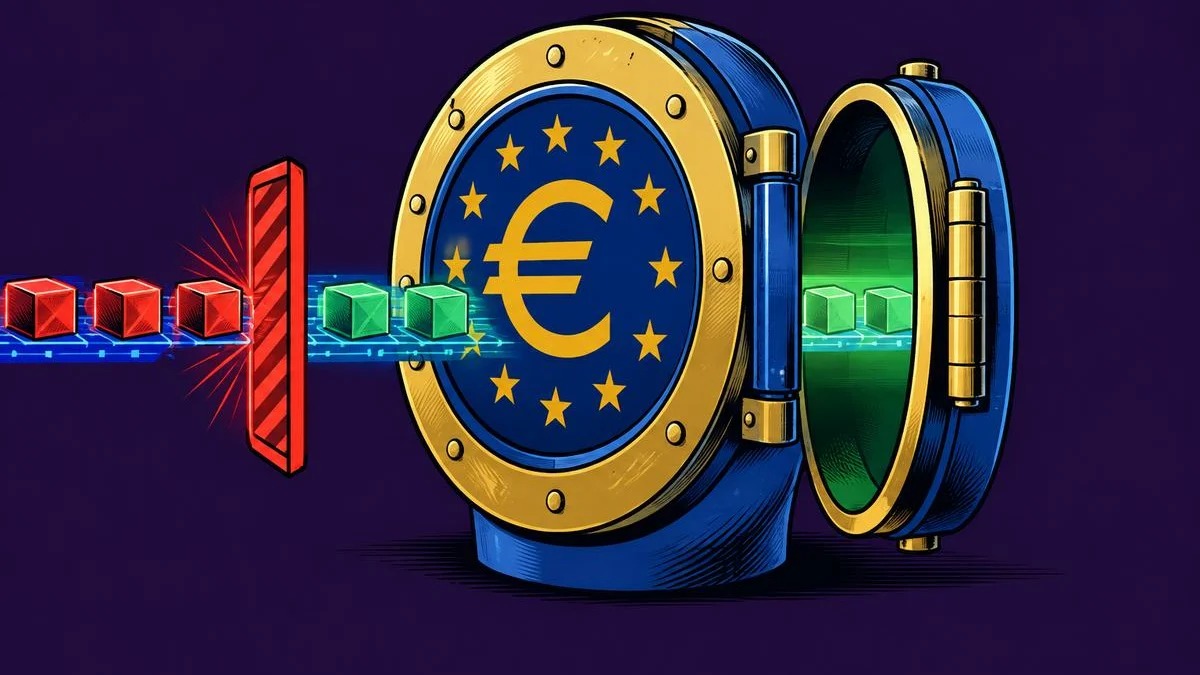
On November 23, 2026, the European Central Bank expanded the scope of eligible collateral for DLT, approving that tradable assets issued on licensed distributed ledger platforms could be used in credit operations within the euro system. This decision opens up the framework to platforms that have been licensed under the EU's DLT Pilot Mechanism Regulation, while maintaining the standard collateral review process and adding specific requirements for platforms that are scheduled to be implemented in June 2027.
Key Points
- The licensed DLT platform has obtained a pathway to conditionally enter the Eurosystem collateral framework.
- Eligible assets must be connected through central securities depositories that provide settlement using TARGET2-Securities.
- The platform requirements will be announced in the spring of 2027, with implementation expected to begin in June 2027.
Under the existing safeguards, the European Central Bank expands the eligibility of DLT collateral
The scope approved by the Management Committee covers tradable assets issued on the eligible DLT platform, but these assets must still meet all the standard collateral qualification requirements. The arrangements for providing these assets to the euro system must also comply with their applicable requirements.
This requires it to have a qualified connection with a central securities depository institution, which must operate a securities settlement system that meets the requirements. The system must comply with the 'Central Securities Depository Institutions Regulations' and provide settlement through TARGET2-Securities.
This decision was made on the basis of an earlier measure announced on January 27, 2026, which covered assets issued by central securities depositories that used services based on DLT. That earlier framework came into effect on March 30, 2026; the decision in November expanded the scope to include platforms that were licensed under the pilot mechanism.
Isabel Schnabel, a member of the Executive Board of the European Central Bank, summarized this expansion as supporting innovation while maintaining existing safeguard measures. She stated, "We support innovation, but we will not lower our standards." She added, "A future-oriented collateral framework must embrace new technologies without compromising on security or the rigor of our risk assessment."
The platform's additional requirements are scheduled to be implemented in June 2027.
A pilot mechanism license alone is not sufficient to meet the European Central Bank's DLT collateral qualification requirements. The platform must also satisfy specific conditions of the euro system in order to address issues of legal certainty and operational security.
The European Central Bank pointed out that settlement finality designation and the outsourcing of key functions are examples of areas that these requirements will cover. These conditions will operate in parallel with existing eligible collateral and its allocation rules, rather than replacing them.
The euro system is expected to announce detailed requirements in the spring of 2027 and plans to implement them in June 2027.
A Hybrid Path to Tokenized European Finance
The European Central Bank stated that this decision supports the interoperability between the DLT platform and traditional financial systems. The bank views this expansion within the current mixed environment, and its broader roadmap also includes exploring the qualification of assets that are issued and settled entirely on the DLT network.
The roadmap is still studying how to accept and allocate tokenized assets in their native form. The European Central Bank describes this approach as controlled and technologically neutral, and it is in line with its broader work on tokenization and the Appia objectives.
Executive Committee member Piero Cipollone linked the changes to the collateral rules with Pontes and Appia, stating that these measures support Europe's ambitions in tokenized finance. He mentioned that adjusting the framework enables this market to grow while maintaining a safe, efficient, and fair competitive environment.