

On November 20th, Google was announced. Watch Duty used Gemini tools to process fire radio audio, reducing the word error rate of damaged VHF audio from 38% to 22.34%. The system can now detect dispatch signals more quickly, although the verification of fires and the issuance of alerts are still completed by the team.
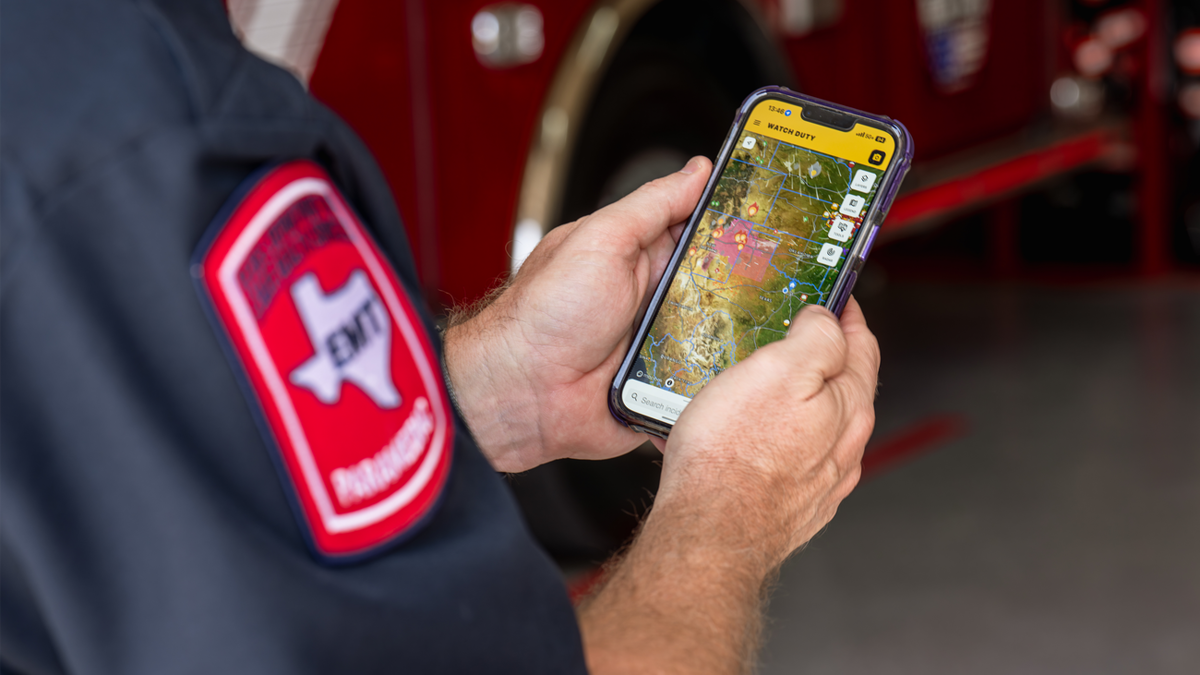
Watch Duty is a non-profit wildfire alert application operated by active and retired firefighters, dispatchers, and emergency personnel. Engineers and researchers from Google worked full-time for six consecutive months through Google.org and Fellowship, using over twenty thousand hours of historical radio recordings to build this tool.
Signal detected in 30 seconds, followed by further verification.
According to the official account, the incident took place in July 2026 at Railroad Fire in Washington State. As the fire spread at night, a 911 dispatch message was overwhelmed by radio noise. A Gemini tool transcribed and marked the message from the noisy audio, and within thirty seconds, it passed the signal on to the Watch Duty team.
Subsequently, there was manual confirmation of the fire situation, followed by the issuance of Critical Alert. According to Google, this gave the team time to verify the situation and help residents evacuate before the flames reached their homes. It was also the first time that Watch Duty issued such an emergency alert at night. Critical Alert allows for a bypass of the device's do-not-disturb mode in emergency situations, which is a different process from regular transcription prompts.
Therefore, the "thirty seconds" referred to here is the speed at which detection and marking of dispatch signals are completed; it cannot be interpreted as the user receiving a verified evacuation command within thirty seconds. For readers concerned about the security applications related to AI, the most useful criterion for judgment is to clearly distinguish between the three stages of detection, verification, and notification, and then to identify which specific phase each number represents.
Four hundred routes are in operation; ten thousand routes represent our design and testing capabilities.
The difficulties in radio communication stem from the actual working environment. In many regions of the United States, analog VHF radios that have been in use for years are still relied upon to transmit information about new fires. Engine noises, wind sounds, static electricity, and rapidly exchanged tactical terms can all interfere with comprehension. In the past, reporters had to manually monitor up to twenty audio channels, which made it easy to miss early signals when they were busy.
The new tool converts audio with a lot of noise into clear, searchable text and handles fire-related terminology. Officials say that it fills in the coverage in areas where there is no other automatic dispatch detection, allowing reporters to receive new dispatch alerts even if they are not listening to a particular radio station at the time. This is a supplement to the existing coverage process, and the announcement did not provide a national rate of missed reports.
The current operational scale is about 400 active audio streams, with over 200 hours of radio speech transcribed daily. Another statistic is that the system has been designed and tested to handle more than 10,000 audio streams simultaneously. It is important to distinguish between the actual operational volume and the testing capacity; therefore, the 10,000 streams cannot all be considered as actual networks that have been connected.
The word error rate has decreased from 38% to 22.34%, which describes the transcription performance on the damaged VHF audio. Subtracting these two numbers, there is a decrease of 15.66 percentage points; however, this is just the author's calculation and cannot replace the accident recognition accuracy rate. The announcement did not disclose the sample size of this test, the distribution of different noise intensities, or the number of false alarms.
Volunteer journalists' satisfaction with radio transcription tools has increased from 35.3% to 92.3%. This indicator reflects user feedback, and it serves a different purpose from the word error rate. Replacing satisfaction directly with success rate in security would confuse subjective experience with the outcome of an event into the same measurement.
Cloud push is also part of the delivery process.
This system is built on years of collaboration. In 2024, Google.org provided Watch Duty with two million dollars in funding and a quota of three hundred thousand dollars from Google Cloud to collect satellite, camera, and radio data for verifying new fires. The resources invested in this project are not the only ones disclosed in the announcement.
During the fires in Palisades, Eaton, Hurst, and Auto, Google Search also included Watch Duty along with official emergency guidelines in the SOS alerts. The search entry provided here represents another level of connection to radio detection; the original text does not equate search results with official recognition of all application content.
It is mandatory to use Firebase Cloud Messaging. According to the official statement, after Watch Duty reached an audience of over 16 million last year, Google Cloud increased its message limit from 600,000 to 1,000,000, ensuring that alerts are delivered in a timely manner. The original text does not specify the time unit corresponding to these two limits, so they cannot be interpreted as throughput per second or per minute.
For readers who follow Google AI and cloud services in the US stock market, this material demonstrates the actual deployment from audio processing to information distribution, and also illustrates that public welfare funds, engineering support, and cloud services can all be involved simultaneously. It does not disclose contract revenues or profit contributions, so the audience size cannot be directly equated with the number of paid cloud customers.
Watch Duty is also involved in the collaboration with AI Collaborative and Wildfires to transform models and data into tools that can be used by institutions, communities, and emergency responders. The change that has been confirmed this time is that volunteer teams receive searchable scheduling clues earlier, and they then follow the same responsibility chain for verification and alert issuance. The improvement in transcription error rates does not eliminate the need for manual confirmation at this step.