

OpenAI Chief Scientist Jakub Pachocki discussed in a new blog possible ways to limit the development of AI, with a focus on a measurement indicator called Confusion Level ( perplexity ).
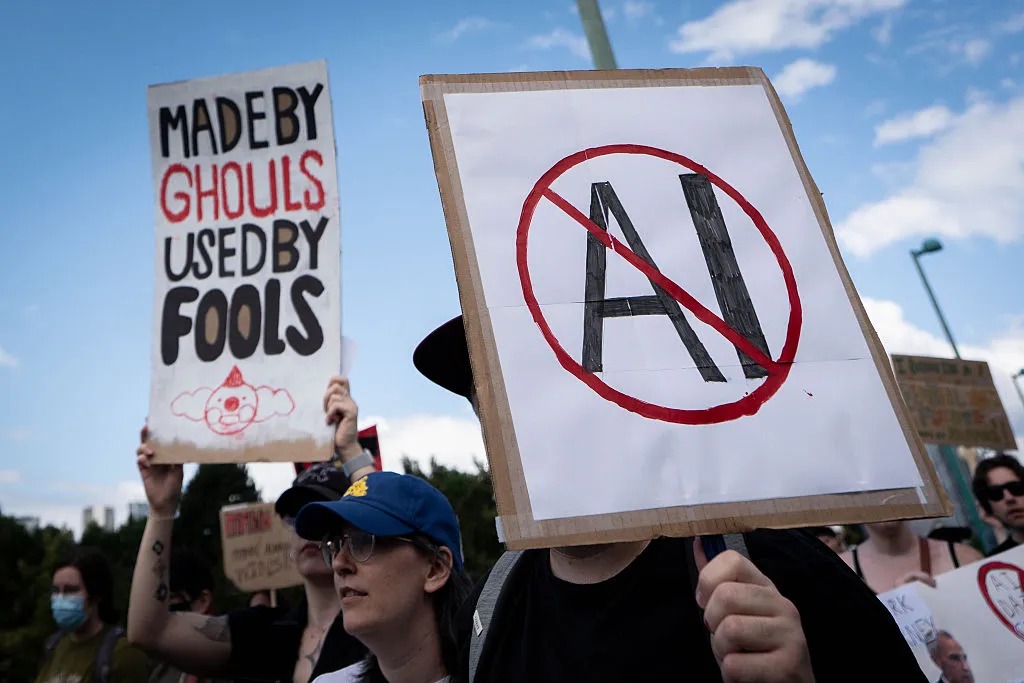
After researchers OpenAI and Anthropic stated that these companies are "gambling with our lives," slowing down the development of AI has become a particularly hot topic. Even the IPO regulatory documents from Anthropic imply that this technology may pose "catastrophic or existential risks" to society.
Subsequently, Anthropic CEO Dario Amodei announced a plan to "slow down at the forefront," which seemingly gained the support of OpenAI CEO Sam Altman and SpaceX CEO Elon Musk. Among other things, Amodei called on companies to agree to "common safety standards and to set limits on the unregulated progress rate of AI."
But to set an upper limit on the development speed of AI, it is first necessary to reach an agreement on how to measure "speed." This article by Pachocki – which Altman calls "the most important content released by OpenAI recently" – suggests that the level of confusion might be able to serve as such a measurement standard.
In the discussion of Pachocki, it is pointed out that the benchmark tests for AI's "downstream capabilities" will quickly become obsolete with technological advancements. However, the concept of "confusion" – which "measures the model's average ability to predict the next token; the lower the confusion, the better the prediction" – continues to "hold reference value".
The article with Pachocki also includes a chart that shows the decrease in confusion level of the OpenAI model since GPT 3.5.
“The confusion level of GPT-4 is about 0.91, and it is already capable of using thought chains for reasoning skillfully and effectively. This inspired us to further develop this ability specifically, leading to the creation of modern reasoning models,” he wrote. “Now, when our loss values drop below 0.8, we have seen transformative capabilities in fields such as network security and mathematics.”
Therefore, in his view, the degree of confusion can provide a basis for a "shared benchmark of general intelligence," and subsequently, AI company can set "common limitations" based on this. If the degree of confusion becomes the standard for measuring the progress of AI, these companies will commit not to exceed a certain threshold until "our ability to understand and monitor the behavior of AI reaches a specific milestone."