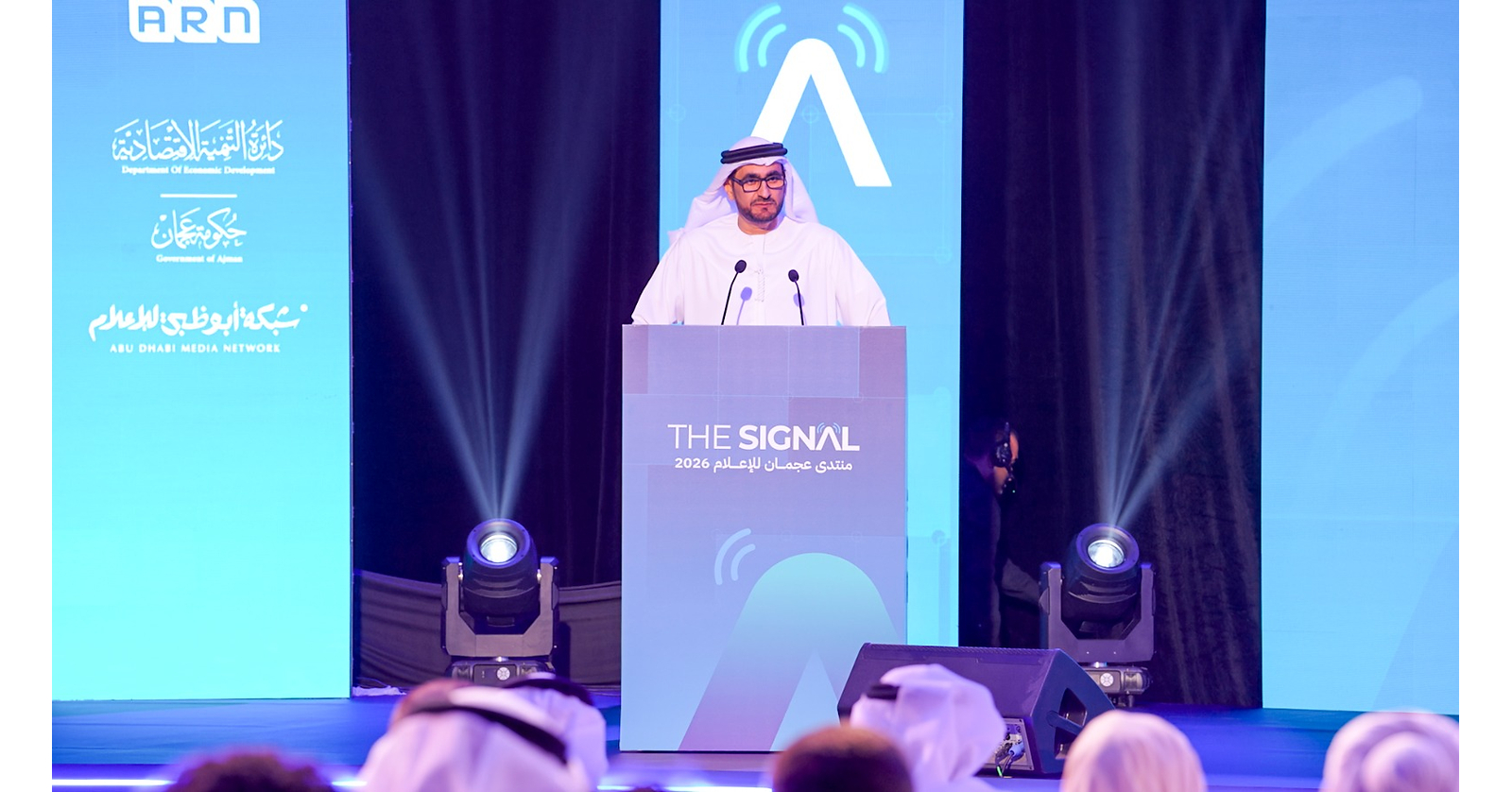
Ajman, United Arab Emirates, November 22, 2026 / PRNewswire / -- The Deputy Secretary of State for Foreign Affairs of the United Arab Emirates, H.E, stated that diplomacy and media share a common fundamental mission, which is dialogue, understanding, and building bridges between nations and peoples. Both rely on the power of language, trust, and the ability to establish connections with others.
On the second day of the 2026 Ajman Media Forum, during a session titled “The UAE’s voice to the world”, he stated that the core issue of the forum, “Who owns the signal?”, is one of the most profound issues of our time. He pointed out that this issue is not only related to media but also touches on the very core of diplomacy; those who possess “signals” shape the future by telling their stories in a genuine manner and thereby earning the trust and respect of the world. “The United Arab Emirates is not just seeking signals; it is creating them,” he said.
He explained that the global media landscape is changing at an unprecedented pace, with digital platforms shaping public perception and attitudes. He added that merely owning a media platform is no longer sufficient, and reach is no longer a measure of influence. Today, those who truly possess "the signal" are those who understand change, know their audience, and present a complete national narrative with a clear vision and information.
Alshshami emphasizes the importance of communication tools in modern diplomacy, stating that building trust is no longer limited to dialogue forums and bilateral meetings, but has extended to media interactions as well. Audiences look beyond official statements to images, stories, and positions.
Under the leadership of the President of the United Arab Emirates, Sheikh Mohamed, bin, and Zayed Al Nahyan, the UAE recognized this change at an early stage and adopted a forward-looking vision. The UAE has regarded the media as an important partner in diplomacy, conveying its stance on dialogue, tolerance, coexistence, and openness to the world. The cooperation between the two sides also highlights the joint efforts of the UAE and its partners to promote development and humanitarian initiatives, in order to foster progress, prosperity, and stability for all people.
He added that under the leadership of the Vice Prime Minister and Minister of Foreign Affairs Sheikh Abdullah bin Zayed Al Nahyan, the Ministry of Foreign Affairs continues to develop tools for public diplomacy by strengthening cooperation with local and international media organizations, reiterating the UAE's firm stance, and highlighting its active role in regional and international affairs.
He also pointed out that the UAE is one of the first countries to prepare for the era of advanced technology and to participate in shaping this era. Relevant efforts include launching a national artificial intelligence strategy, appointing the first Minister of State for Artificial Intelligence, as well as establishing specialized universities and leading research centers. The UAE also contributes to the development of global AI standards and governance frameworks through multilateral platforms.
He explained that the Ministry of Foreign Affairs has also adopted this approach, deploying the AI solution to improve services and proactively deliver results. The underlying philosophy is that modern technology should serve people and help in addressing common challenges.
He added that these national-level efforts require the continuous development of public diplomacy tools and the strengthening of partnerships with the media industry. Today's diplomats need the tools of media professionals, and media professionals also need diplomats' understanding of backgrounds and positions.
Finally, he expressed his hope that the Ajman Media Forum would lead to insightful discussions and concrete actions, marking a new phase of closer cooperation between diplomacy and the media. He stated that these efforts would enhance the UAE's international presence and influence, further solidify its reputation and status in global forums, and strengthen its position as a model of development and innovation, as well as an active regional and international partner.