On November 20th, Bitcoin fell by 3.08% to $59,610, marking its first drop below $60,000 since July; the global sell-off in AI stocks has spread to the crypto market as well.
- Bitcoin fell below $60,000 for the first time since July, while Ethereum briefly dipped below $1,750 earlier on Friday.
- Among the tracked crypto-related stocks, IREN and MARA led the decline, while Coinbase was relatively more resilient to the drop.
- US spot Bitcoin ETF recorded a capital outflow of $582.3 million on Thursday, of which BlackRock IBIT had an outflow of $541.1 million, setting a one-day record.
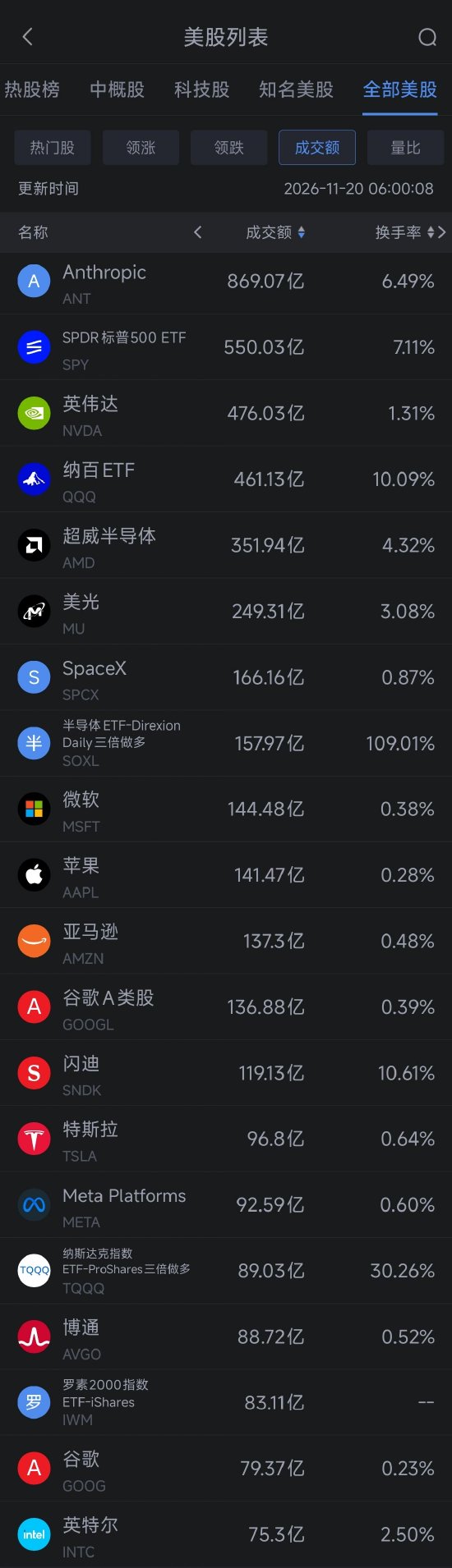
- After the listing of Anthropic failed to restore market confidence in AI shares, Asian stock markets recorded their worst single-week performance since 2020.
Reuters reported this trend during U.S. stock trading on Friday. Earlier in the day, Bitcoin was still trading near the $62,000 level. The stock prices of Bitcoin mining companies and those that have included digital assets in their balance sheets also fell, while U.S. spot Bitcoin funds entered trading on that day against the backdrop of capital outflows for the third consecutive trading day.
Bitcoin and major altcoins decline
A Friday market snapshot released before Bitcoin fell below $60,000 showed that the total market value of cryptocurrencies was $2.20 trillion, a decrease of 1.6% within 24 hours. Ethereum fell 1.9% to $1,746, BNB fell 1.3% to $574.69, and Solana fell 1.2% to $72.87. XRP was quoted at $0.96, with a decrease of 0.7% during the same period.
This downward trend has lasted for several days. The aforementioned snapshot shows that Ethereum has fallen by 13.3% in 7 days, BNB has fallen by 12.2%, and Solana has fallen by 10.6%. In previous reports on altcoins, crypto.news mentioned that Litecoin, Cardano, and Dogecoin all experienced double-digit declines week-on-week. The report also noted that Federal Reserve officials expressed concerns about inflation in the minutes of their October meeting.
An earlier market report showed that Bitcoin was trading at $61,546, a decrease of 2.89% within 24 hours, following a 10.8% drop in the previous week. By the time Reuters reported that it had fallen below $60,000, Bitcoin was nearly $2,000 lower than its previous price. This fluctuation occurred during U.S. trading hours, while trading in Taiwan, China, South Korea, and Japan had already concluded for the day on Friday.
Securities related to encryption concepts decline, with IREN and MARA leading the drop.
A snapshot from Friday for Stock Analysis shows that IREN fell by 11.1% to $12.81. The company operates Bitcoin mining farms and sells AI cloud computing services, so it is exposed to two pressure-bearing areas at the same time. Another snapshot indicates that Bitcoin mining company MARA Holdings fell by 9.4% to $5.66; previously, the stock had already fallen by 4.8% on Thursday.
Strategy, which holds Bitcoin as a reserve asset, fell by 4.2% to $82.51, following a 4.6% decline on the previous trading day. Ethereum reserve company Bitmine fell by 5.9% to $14.18. The issuer of USDC, Circle, saw a smaller decline of 3.8% to $49.90; the crypto exchange Coinbase fell by 0.5% to $108.33 in the observed quotes.
The sell-off also affected trading platforms. Robinhood, which provides stock and cryptocurrency brokerage services, fell 3.4% to $66.29 in the Friday trading snapshot; previously on Thursday, the decline was less than 1%.
In November, Bitcoin ETF saw capital outflows of $3.47 billion.
According to Farside Investors data, US spot Bitcoin ETF saw a net outflow of $582.3 million on Thursday. BlackRock iShares Bitcoin Trust ( IBIT ) accounted for $541.1 million of this, which is the largest single-day outflow on record for that fund. Fidelity FBTC had an outflow of $45.9 million, while Morgan Stanley MSBT recorded an inflow of $49.6 million.
According to the daily data from Farside, on Thursday, the total net outflow for the first 14 trading days of November reached approximately $3.47 billion. In a report covering the previous 13 trading days, Bitfinex estimated that the trading price of Bitcoin was nearly 25% lower than the average entry price for investors at ETF. American spot Ethereum ETF saw an outflow of $131.2 million on Thursday, of which BlackRock ETHA had an outflow of $124.2 million.
According to Farside data, from November 17th to November 19th, there was a net outflow of a total of 1.13 billion US dollars over three consecutive trading days. Just on Thursday alone, it accounted for slightly more than half of that amount, exceeding the total of the previous two trading days.
Anthropic's listing failed to stabilize global stock markets
Anthropic issued 980 million shares at $83 per share in its initial public offering (IPO), and before the underwriters exercised their over-allotment rights, the transaction volume reached $81.34 billion. Reuters reported that on Thursday, the stock closed at $97.17 on NASDAQ on its first day of trading, and then fell by about 10% before the market opened on Friday.
This listing had already attracted the attention of crypto traders prior to its launch. Bitquery statistics show that from its launch in August to November 18th, the transaction volume related to Anthropic in the three Hyperliquid markets amounted to approximately 2 billion US dollars.
Anthropic stated in the closing announcement that the underwriters purchased an additional 147 million shares at the issue price. The extra shares raised the total funds raised by IPO to approximately $93.5 billion, of which $91.6 billion will go to the company. Another private placement raised $26 billion from investors including NVIDIA, Microsoft, and Google.
According to Reuters, global stock market sell-offs caused the MSCI global stock index to fall for the seventh consecutive day, marking the longest streak of declines since 2023. China's Taiwan benchmark stock index fell by 6.2%, South Korea's Kospi index fell by 5.2%, and Japan's Nikkei index dropped by about 5%. Excluding Japan, MSCI Asia-Pacific stock indices recorded their worst single-week performance since March 2020.
Reuters also reported that U.S. Treasury yields rose, pushing the 10-year Treasury yield below 5%, while the dollar hovered near a 20-month high. Spot gold fell to $3,513.54 per ounce, the lowest level since September 2025, before rebounding to around $3,571 in early trading in the U.S. Spot silver declined by 1.5% to $42.09 per ounce.