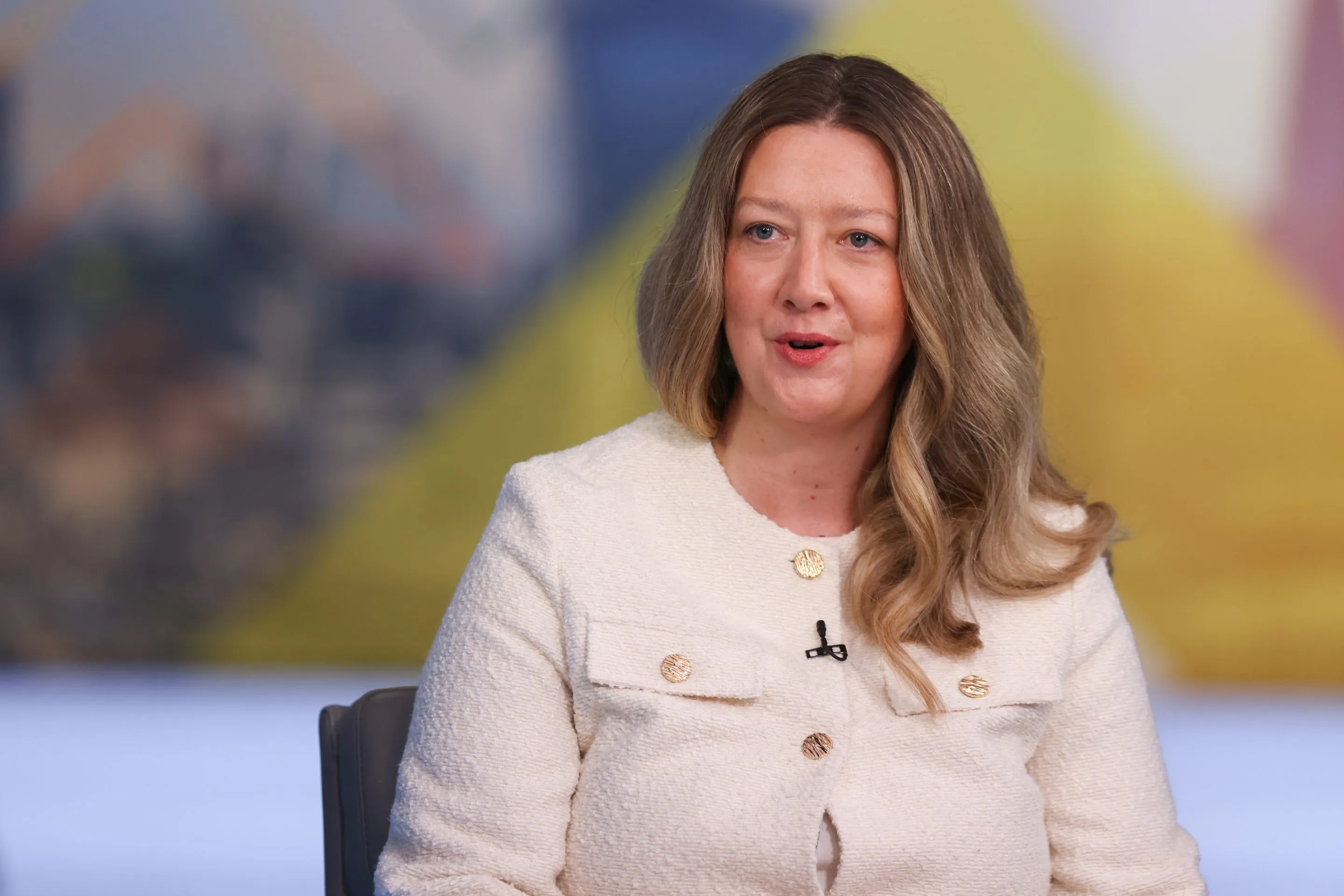














Good morning, I am financial editor Jeff Roberts. Today, I am substituting for Allie to publish this article. In my career, I have interviewed hundreds of venture capitalists, and I have observed that many of them see themselves as non-traditional thinkers, but once the topic turns to the conventions of their industry, they tend to converge quite significantly. Bradley Tusk is not like that, however. VC
Tusk is known for his strong approach and straightforward manner. He initially gained fame as the chief of staff for former New York Mayor Mike Bloomberg, and also helped Uber establish a foothold during early struggles with municipal officials and the taxi industry. Not long after, he utilized his reputation as a political intermediary to found Tusk Ventures, assisting startups such as Lemonade, Bird, FanDuel, Ro, and Coinbase in dealing with various regulatory challenges.
In 2025, Tusk made another bold bet. Despite his quite successful experience as a traditional VC, having raised $300 million through three funds, he decided to abandon this approach and try something new: exchanging services for equity instead of collecting cash.
I took a step back and asked myself, ‘What do I like about this process, and what don’t I like?’ There are two things I enjoy: I like to legitimize disruptive ideas, and I like to bet on and collaborate with interesting founders. What I don’t like are fundraising, dealing with LP, serving on board of directors, and the process of piecing things together. I also don’t like giving away 80% of my profits to others,” Tusk explained.
In practical operations, Tusk indicates that this shift means his company devotes almost all of its time to several core areas: helping startups obtain licenses and comply with regulations; appearing in financing calls to assure potential investors that the government will not stifle a rising industry; providing communications advice to help startups avoid spending large amounts of money on public relations consultants; and introducing them to other CEO.
This model is very suitable at the individual level for Tusk, but considering the difficult period that traditional VC companies are going through, it also appears to be a shrewd choice. As Allie pointed out last week, venture capital firms are facing a series of severe challenges: slowed exits, high valuations, and rising interest rates. In this context, the transformation of Tusk may be both necessary and a voluntary decision. The question is whether this transformation will be effective.
So far, the answer seems to be yes. Tusk says that his company is currently offering this "equity for services" arrangement to about 21 startups. "Our fees are based on the company's valuation, ranging from $50,000 to $200,000 per month, paid in the form of preferred stock. The collaboration usually lasts for about 18 months," he explains, adding that this equity typically comes from a pool reserved for employees and accounts for less than 2% of the total share capital. One of the great advantages of this arrangement is that if the startup encounters difficulties, the company can stop losses in a timely manner. As Tusk says, the company does invest time and internal resources for nothing, but it's still better than watching $5 million or $10 million in cash go down the drain.
Tusk refers to this model as a “scalable equity-for-service fund” (he admits that the name is not very catchy), and in the current venture capital environment, it may also be very attractive to other VC companies. Of course, the challenge lies in the fact that to launch this model, a considerable amount of capital reserve is required.
“If we can generate approximately 20 to 30 million dollars in earned equity each year over a 10-year investment period, that amounts to 200 to 300 million dollars in total,” said Tusk. “That’s equivalent to the size of a 200 million dollar fund, but five times that, because you get to keep all the profits. Obviously, I have some costs that regular venture capital funds don’t have, since I have to pay everyone’s salaries every two weeks without any management fees to offset those costs.”
Even though Tusk made these large upfront investments, he also allocated a portion of his wealth to several projects with a charitable focus. Among them was a bookstore in the Lower East Side of Manhattan called P& T Knitwear, which was named in memory of an old clothing store operated by his grandfather; his grandfather was a survivor of the Holocaust. Tusk admits that he lost quite a bit of money on this project, but he considers this bookstore to be a form of charity.
In the coming year, Tusk says he plans to move to Los Angeles for part of the time, as his company has a branch office there. I suggest that once he gets there, he use his strong political connections to address one of the city’s most intractable problems: a monorail line that has been fully constructed around Los Angeles International Airport but has not been put into operation due to the continuous incompetence of the Los Angeles government. Tusk says he will consider it.
See you tomorrow,
Jeff John Roberts
jeff.roberts @ fortune.com
@ jeffjohnroberts
Submit the transaction information for the Term Sheet newsletter here.
Today's news section for trading updates is compiled by Joey Abrams.
Venture Capital
- AI, a provider of intelligent agent development and management software headquartered in San Francisco, has completed a $300 million Series C financing round. The round was led by CapitalG, with participation from GIC, DFJ Growth, IVP, and others.
- AI, a native customer relationship management software provider headquartered in Sacramento, California, has raised $53 million in financing. The investors include Accel, Together Fund, and Premji Invest.
- Los Angeles-based company AI, a provider of intelligent management software Kindo, has raised $30 million in financing, led by Crosspoint Capital and Forgepoint Capital.
- San Francisco AI, a developer of inference compilers and cloud infrastructure software, Luminal, has completed a $25 million Series A financing round, led by Standard Capital.
- New York-based consumer tax and civil affairs firm Accountable has completed a financing round totaling $20 million, which includes a seed round co-led by Acrew Capital and M13. The company was co-founded by Acorns as its CEO and Jeff Cruttenden.
- AI, a provider of hospital management software and services based in São Paulo, Brazil, has completed a round of additional financing worth approximately 15 million US dollars. This round was led by Valor Capital Group, with Monashees also participating in the investment.
- Athlete To Athlete, located in Santa Monica, California, raised $8 million in Series A financing to provide an online mentorship service that connects young athletes with college athletes; Rally Ventures led the investment, with Newbound VC, Scrum Ventures, and UpHonest Capital also participating.
- Sleep intelligence software provider Sleep.ai raises $5.3 million in funding, led by Treasure Coast Ventures.
Private Equity
- Branford Castle Partners has acquired Floratine Products Group, a specialty plant nutrition product developer and manufacturer located in Collierville, Tennessee. The products are used for golf courses, sports lawns, and agricultural applications. The terms of the transaction have not been disclosed.
Funds and Master Funds
- The investment firm headquartered in Menlo Park, Norwest, has closed its 18th fund, with a size of $4 billion, which is used to invest in technology, healthcare, and consumer companies in the United States, India, and Israel.