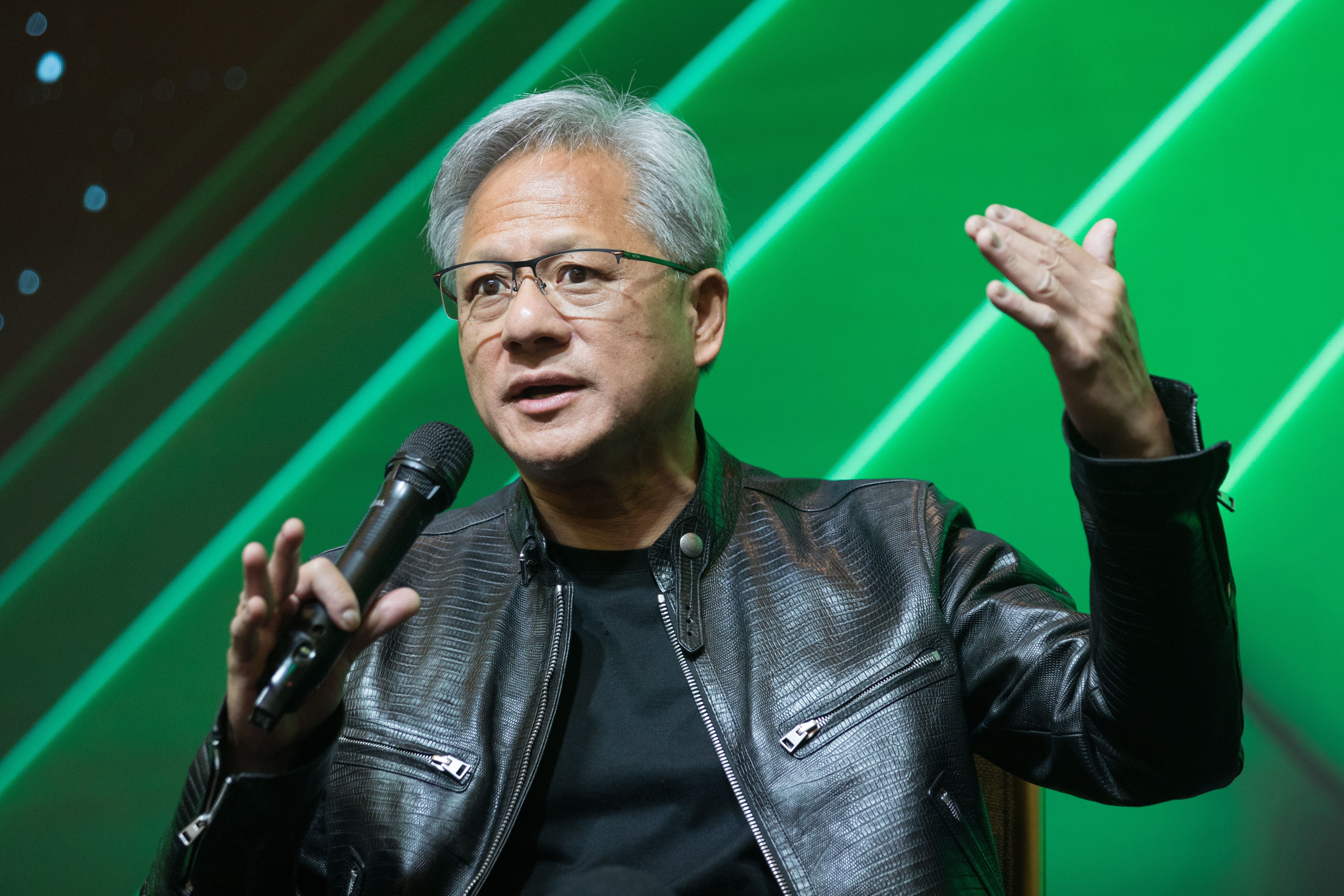
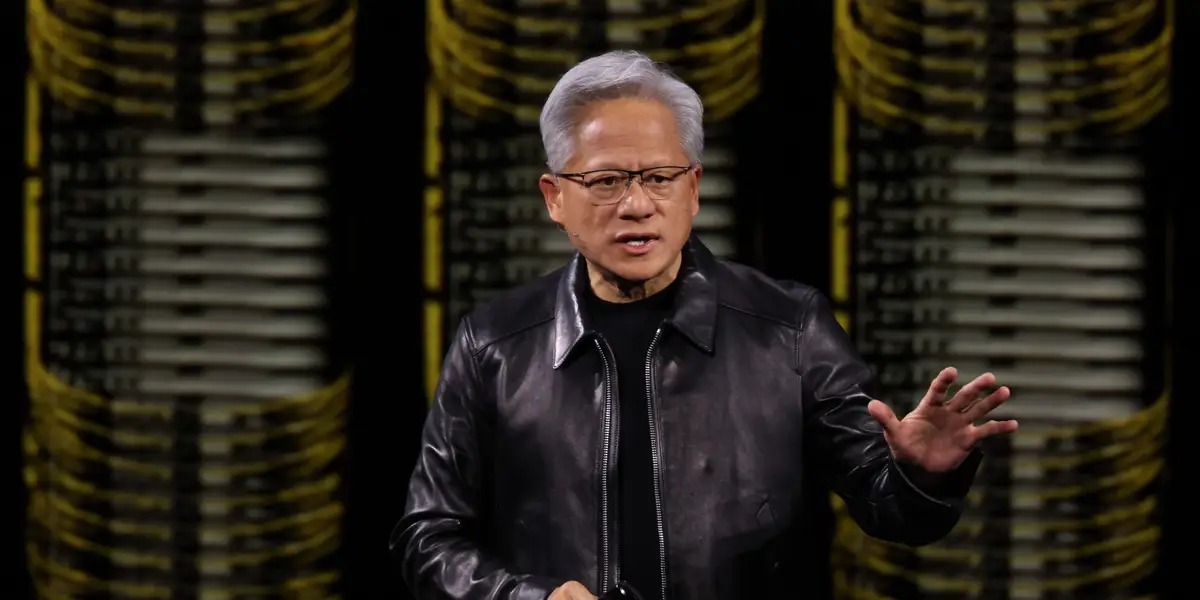
Without a doubt, Jensen Huang, the founder and CEO of NVIDIA, is a visionary genius. As the "godfather" of AI, his vision has improved the lives of billions of people around the world and has also made significant contributions to the prosperity and innovation of the United States. He attended our CEO forum held at Yale and was admired by professionals from various industries worldwide for his bold entrepreneurial vision and revolutionary technological achievements. In addition, he is also a guest contributor to our upcoming new book, When Machines Act: The Promise and Perils of our Agentic AI Future, which will be published by MIT Press and co-written by me and David Siegel, one of the co-founders of Two Sigma.
However, it seems that the board of directors clearly ignored some obvious warning signs at the leadership level recently.
In October 2025, The New York Times reported that a little-known Singaporean company, Megaspeed, purchased billions of dollars worth of NVIDIA chips. There were suspicions that the company was using neutral countries to "launder" the chips, which were on the US export ban list, in order to help China circumvent US restrictions. NVIDIA stated that their review found no evidence of the chips being re-exported. However, later in May 2026, a short-selling firm, Culper Research, released a explosive report claiming that there was an "uncomfortably close connection" between the person in charge of Megaspeed, Alice Huang, and Jensen Huang. Jensen Huang described his dealings with Megaspeed as normal, and it seems that NVIDIA's board of directors was also satisfied with that explanation.
At the end of last month, The New York Times reported again that U.S. intelligence agencies believed that Alice Huang was a Chinese asset. A company spokesperson stated that the claim of chip transfer had been disproven and described this relationship as nothing unusual. Ten days later, Jensen Huang admitted to being unfaithful to his wife and provided an explanation in a statement that mentioned media concerns regarding national security – all of which is troubling after a series of repeated denials.
Neither genius nor admiration can bypass the entrusted responsibility.
The Caremark principle, established in 1996 by the Delaware Court of Chancery, stipulates that corporate directors have a duty of supervision; if a director fails to monitor risks that are crucial to the business in good faith, or deliberately ignores them despite being aware of red flags, it constitutes a breach of the duty of loyalty.
Under this principle and its derived rules, the Delaware Court of Chancery has previously brought trouble to several boards of directors due to similar failures in supervision. In 2019, the Supreme Court of Delaware reinstated a lawsuit against the directors of Blue Bell Creameries. The board of directors of that ice cream company had not established any food safety supervision system before the outbreak of a fatal listeria outbreak. In 2021, the Court of Chancery allowed the lawsuit against Boeing's directors to proceed, as the board had not set up a committee responsible for aircraft safety before the MAX 737 air crash. The case was ultimately settled for $237.5 million. The lesson from both cases is clear: for risks that could cripple a company, the board of directors must personally monitor them; even if the risks are unforeseeable or unanticipated, the board cannot rely solely on management.
Risks that NVIDIA's directors should have probed further
Therefore, the plaintiff's lawyer will raise the questions that the directors should have asked months ago. Who conducted the review that allowed Megaspeed to pass? Was the review reported to the independent directors or to the management? Did any directors know that the CEO had a personal relationship with a senior executive of this client who was under review? Did the board of directors discuss Megaspeed or the relationship between Jensen Huang and Alice Huang? Were there any members of the board of directors who truly cared about these issues?
The answer lies in the minutes of the board of directors meetings. What is concerning for NVIDIA’s board of directors is that shareholders can now obtain these minutes with almost complete transparency. NVIDIA is more aware of this than most companies, and for somewhat ironic reasons. In 2022, NVIDIA even took its request for “audit and record-keeping” all the way to the Supreme Court of Delaware. Even though Delaware narrowed such access rights last year, the minutes of board meetings and board materials are still within reach for plaintiffs in lawsuits. This is how the plaintiffs in the Boeing case constructed their case.
All the major risks that now fall upon NVIDIA are precisely those that directors should be most vigilant about.
First and foremost, any board of directors entrusted with protecting the interests of minority shareholders should be vigilant against conflicts of interest among management. A related party of Megaspeed purchased approximately $4.8 billion worth of NVIDIA driver devices in less than two years. If a CEO has a personal relationship with an executive from such a client, this clearly constitutes a conflict of interest, and NVIDIA's own code of conduct likely requires them to disclose this fact. Moreover, Megaspeed is no ordinary client: as of October 2025, both Washington and Singapore were investigating it.
This conflict could contaminate compliance records. When doubts first arose, NVIDIA claimed that they had visited the site identified as Megaspeed, and there was no reason to believe that the chips were transferred elsewhere. This statement came from someone who reported to the CEO, who has a personal relationship with the client under review, a fact that investors were not aware of prior to this. Bloomberg reported that NVIDIA's chief legal officer even contacted a senior official from the US Department of Commerce to discuss the government's investigation into Megaspeed. Did the board of directors authorize this call? Were they aware of it?
Next is the issue of national security and avoiding export controls, which are as critical for ice cream companies as food safety is for Boeing. NVIDIA produces some of the most strategically sensitive products on Earth; however, a report from The Information today indicates that companies associated with Alice Huang helped Chinese buyers obtain $7.5 billion worth of NVIDIA chips, including embargoed chips that were "laundered" through third parties. This report has not been confirmed, and Megaspeed has also denied any improper conduct. However, the penalties for violating export regulations range from fines to criminal prosecution, and even loss of export qualifications. The board of directors should not wait for a ruling before starting to ask questions. According to NVIDIA's own mandate, the board committee responsible for trade compliance held three meetings in the previous fiscal year, yet the company does not have a chief compliance officer. How much do they know? And when did they find out?
The national security risks are even greater. According to The New York Times, American officials have concluded that Alice Huang was recruited by China's National Security Department with the aim of gaining access to Jensen Huang and influencing his views on selling chips to China. Jensen Huang has consistently and clearly advocated in Washington and the media that the United States should continue to sell chips to China to prevent China from developing its own chip manufacturing capabilities. No one has alleged that Jensen Huang was aware that he was a spy, and Beijing has described such claims as slander. However, it is reported that the president was briefed at the end of 2025, and a secret memorandum circulated among policymakers this spring. In the same year, Jensen Huang was appointed to the President's Science and Technology Advisory Committee. Now, three chairmen of House committees wish to hold a closed-door briefing with him, while the president indicates that the Federal Bureau of Investigation (FBI) is reviewing the matter. As Semafor pointed out, none of NVIDIA's directors have any background in national security; what questions did the board ask, and what due diligence steps were taken?
There is also a risk that the board of directors is most concerned about: the management has not been truthful with the board. On October 29th, a company spokesperson described Jensen Huang's interactions with Alice Huang as "not unusual or unexpected," stating that it was just the kind of regular client contact any CEO would have. In the same week, Jensen Huang claimed that his dealings with Megaspeed were normal. Nine days later, he admitted to his employees that he had been unfaithful to his wife and linked this admission to national security concerns mentioned in the media. If the board of directors approved these statements from October while being aware of the situation, they could be in trouble; if the board never questioned them, then that would be a Caremark issue.
Shareholders have already paid a price. NVIDIA closed at $168.89 today, down nearly 10% in the two trading days since this admission, with its market value evaporating by over $400 billion, and about 30% lower than its record high at the beginning of October. No one can attribute this decline solely to a mass sell-off in the AI sector, as evidence indicates that this is a trend specific to this individual stock. On Monday, NVIDIA fell 4.3%, while the semiconductor index rose nearly 7%, and its direct competitors, including those in the AMD category, also saw gains.
The last type of risk is one created by the board of directors themselves. Jensen Huang has over 50 direct subordinates, yet there is no clear successor in place; a well-known analyst estimates that without him, NVIDIA’s valuation would be 25% to 30% lower. This is not a good look for the board of directors. Arranging for succession is a primary responsibility of directors, yet these directors left a person who was essentially equivalent to the entire company with no obvious plan for succession in place until it was too late.
Even now, it seems that the board of directors' instinct is still to comply. The statement that initiated the board investigation claimed that there was "no reason to believe that national security or NVIDIA's secrets had been compromised" before any employee was interviewed, and expressed confidence in Jensen Huang. A board of directors that announces its conclusions on the very day the investigation begins inevitably raises doubts: whether the board had preconceived a preferred outcome, rather than acting based on facts to protect all shareholders.
No dual-class shares, nor is there a lack of solid control.
As readers of Fortune will be aware, we have consistently criticized Vice Judge Travis Laster of the Delaware Court of Chancery. In his Cloudflare opinion, he erroneously labeled us as “advocates of dual-class shares” and, more broadly, as supporters of founder control. Vice Judge Laster clearly failed to understand that we do not advocate for any particular stance; on the contrary, we simply speak based on facts and our 50 years of experience as widely recognized scholars in corporate governance.
We have published a large amount of research on dual-class shares, discussing when they are effective and when they are not, and have presented extensive quantitative and academic analyses in academic journals as well as in numerous media outlets such as the Harvard Law School Corporate Governance Forum, FORTUNE, and Chief Executive Magazine.
In our extensive and rigorous research, we have discussed on multiple academic platforms when dual-class share structures function well. For instance, this occurs when founders or families with genuine financial interests utilize such protections to navigate through cycles and outlast short-sighted investors, such as Berkshire Hathaway, Alphabet, and The New York Times.
Similarly, we have also studied when dual-class share structures should be phased out, for example, when they are used by controllers with ulterior motives to conceal the consequences, such as during the Adam Neumann period with WeWork, or Paramount under the control of the Redstone family.
Those who oppose founder control often view dual-class stock structures as a "straw man" behind every founder who seeks to maintain rigid control, and see the principle of "one share, one vote" as a solution. NVIDIA is a prime example of overthrowing this outdated and mediocre theory. NVIDIA has only one class of common stock and does not employ a dual-class stock structure. Jensen Huang holds about 3.5% of the shares and also possesses about 3.5% of the voting rights. The board of directors has abolished tiered terms of office; each director is elected annually, and he can be replaced as CEO at any meeting with a simple majority vote from the board. On paper, he is just as replaceable as any hired manager; in reality, however, there is no CEO in the United States who is less subject to proper scrutiny and oversight than him.
What solidified Jensen Huang's power was not the company's capital structure, but rather the adoration that the board of directors seemed to have for him—they bowed to him both socially and personally. He indeed earned this admiration through his abilities: he transformed a company from a small stall at a diner into one that was once the most valuable in the world. However, the directors who were supposed to effectively supervise and protect the interests of shareholders clearly joined in this adulation as well. There were no provisions in the company's articles of association that led to this situation, nor were there any advisory agents that would have noticed it. NVIDIA met all the superficial conditions rewarded by the checklists of ISS and Glass Lewis: a majority of independent directors, a chief independent director, annual elections, and a single class of shares.
Moreover, the principle of "one share, one vote" has never been a solution to prevent scandals. Enron, Tyco, Wells Fargo, and Boeing all had this system in place. One of our authors wrote in the Harvard Business Review in 2002, following the Enron scandal, that failing boards of directors usually passed every structural test; what truly distinguishes an excellent board is a culture that encourages dissent, where board members dare to challenge the CEO as well as each other. This was true back then, and it is just as true today at NVIDIA.
In terms of providing effective oversight, what is truly important is the culture of oversight within the board of directors and the quality of that board, rather than those "checkbox" criteria often misleadingly promoted by "governance theorists," such as "one share, one vote."
Potential liabilities that NVIDIA's board of directors may face
Delaware does not need to invent new legal theories in order to determine whether NVIDIA’s board of directors has fulfilled its supervisory duties. If shareholders file a lawsuit against NVIDIA’s directors, the court will examine what the board knew and what it did to ascertain the facts. We have previously criticized such overstepping of authority by the Delaware Court of Chancery, and we will continue to do so in the future. However, in a situation where a client is under federal investigation, the board failed to question a renowned CEO, which cannot be considered a sound business decision at all. NVIDIA’s directors are employed to supervise Jensen Huang, no matter how outstanding he may be. In this regard, they clearly failed in their duty, as observed from an external perspective.
Aristotle once warned, "Without a touch of madness, there would be no great geniuses." Psychiatrists refer to shared disorders as "dual pathology" ( folie à deux ). The board of directors has the responsibility to ensure that the company's owners can benefit from the founder's genius while also protecting themselves from the harm of that madness.
The views expressed in the articles commented on by Fortune.com represent only the author's own opinions and do not necessarily reflect the views and positions of Fortune.