

Goldman Sachs' Asia team recently released a report to clients, expressing optimism about Chinese stocks related to AI. The reasons are that valuations have been significantly compressed, policy support continues to increase, and foreign investor positions are at historically low levels.
On November 4th, analysts from the team Finn Dattenberg to Doyle and Janvi Sharma wrote in a client report titled "China: Buy on Dips? ( China : Buy The Dip? ") that the Chinese stock market "rebounded significantly today, led by A-share AI and the semiconductor sector. Investors responded positively to a series of policy support measures and renewed confidence in the theme of domestic substitution."
Analysts wrote: "After a correction of nearly 54% from the summer highs, the AI related targets in China are now approaching their levels at the beginning of the year, and it increasingly seems that they are ready for a rebound."
This sector is promising with its "China domestic AI basket" ( GSXACADO). This basket encompasses chip devices, storage, AI computing power, optical modules, and power-related assets, with an average daily trading volume of about $4.3 billion. Currently, it has fallen by approximately 55% from its peak at the beginning of July, and the index has dropped from around 260 points to around 116 points, almost erasing all of the gains made throughout 2026.
In terms of valuation, the forward price-earnings ratio of this basket reached a peak of around 53 times in July, but it has now fallen to around 25 times, which is roughly equivalent to the level before the start of the AI market in the summer of 2025. The constituent stocks of this basket include Tuojing Technology, Changchuan Technology, Hua Hong Semiconductor, Zhongwei Company, among others, and Changxin Storage and Cambricon are also included.
Analysts wrote: 'Reports of Oracle canceling chip leasing agreements with major manufacturers, coupled with NVIDIA's ongoing supply restrictions, strengthen market expectations that Chinese cloud computing and AI companies will increasingly rely on domestic semiconductor suppliers.'
The market reacted immediately. On November 4th, the Shanghai Composite Index soared by 2.2%, closing at 3,686 points. Cambricon and Higuang Information both rose by over 10%, North China Huachuang rose by 10%, SMIC rose by 9%, Zhongji Xuchuang rose by 11%, and Yifeitong rose by 13%.
Policy support is also an important reason for Goldman Sachs to be bullish.
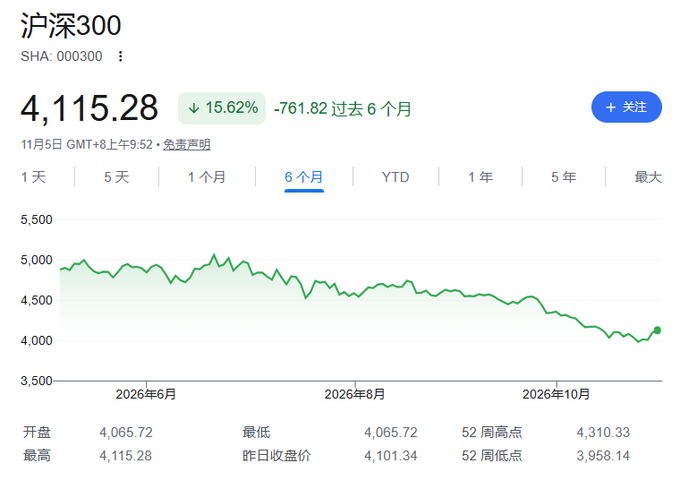
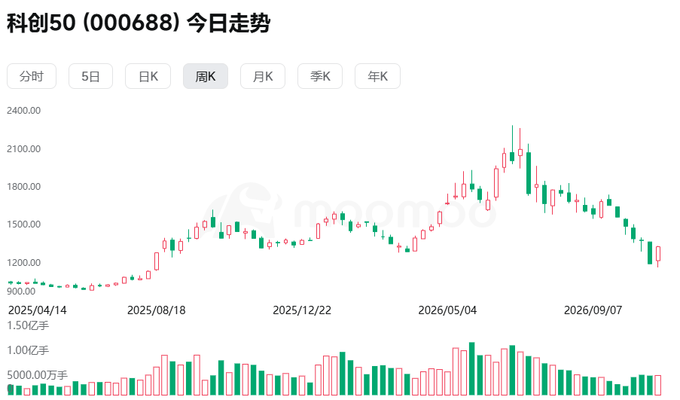
Analysts pointed out that "in the past three weeks, the top ten national teams have seen a total net inflow of approximately 260 billion yuan into ETF," and that "the monthly purchase volume has reached its highest level in the past three years." Among them, the CSI 300 and Sci-Tech 50 ETF indices have absorbed the majority of the funds.
This line also lists a series of recent policy actions: regulatory authorities have held meetings to advance the stock repurchase refinancing program, introduced a $15 billion swap facility for securities firms and funds to exchange assets for central bank liquidity before entering the market to buy stocks, etc. Analysts wrote:
"Policy-related ETF has recently set one of the highest single-day net inflow records in history. At the same time, regulatory authorities have announced additional measures to improve market liquidity, support stock repurchases, and accelerate the deployment of ETF. There are also signs of improving corporate confidence—ChangXin Memory has proposed increasing the repurchase authorization from the previous 1 billion to 2 billion yuan to 2.5 billion to 5 billion yuan."
Foreign capital positions are near historical lows, which is also considered by the bank to be an important structural factor supporting a rebound.
The report indicates that "the allocation of global active funds to China has continued to decline to 5.5%, approaching the lowest point of the past five years." This level is at the 60th percentile since 2015, representing a reduction of two-thirds from the peak of about 15% in 2020, and it is 215 basis points lower than the benchmark allocation.
Analysts wrote, 'From a position perspective, after the recent adjustments, the layout conditions seem more constructive.'
The report also indicates that uncertainties regarding data center regulation may diminish over time, "as the focus will shift to the development and implementation of AI," while global spending on AI infrastructure is expected to remain "strong."