After the U.S. midterms, the cryptocurrency market rebounded from its initial sell-off, with Bitcoin once again exceeding $78,000. Investors have now turned their attention to what it might mean for digital assets if Democrats take control of Congress.
- After the U.S. midterms, Bitcoin rebounded above $78,000, with reduced volatility and new buying pressure driving a broader recovery in financial markets.
- CoinShares It is expected that under the scenario where Democrats control Congress, the advancement of cryptocurrency legislation in the United States will slow down. However, the impact of regulatory uncertainty on Bitcoin may still be less than that on exchanges and token issuers.
- According to Talos, the overnight trading volume of Hyperliquid's major stock index perpetual contracts reached 848 million US dollars, which is approximately 81 times the trading volume of tokenized spot platforms.
- Ebury believes that the election results are slightly negative for the US dollar, but the more important market drivers remain Federal Reserve policy, inflation, and US Treasury yields.
- Bitcoin's rebound in November still faces selling pressure from institutions. The outflow of funds from spot ETF and the historically weak performance after "a negative October" remain the main concerns.
Although the election results may slow down the process of encryption legislation, market analysts who have expressed their views to crypto.news believe that the next move for Bitcoin will depend more on the macroeconomic environment, institutional capital flows, and the Federal Reserve's monetary policy, rather than political changes in Washington.
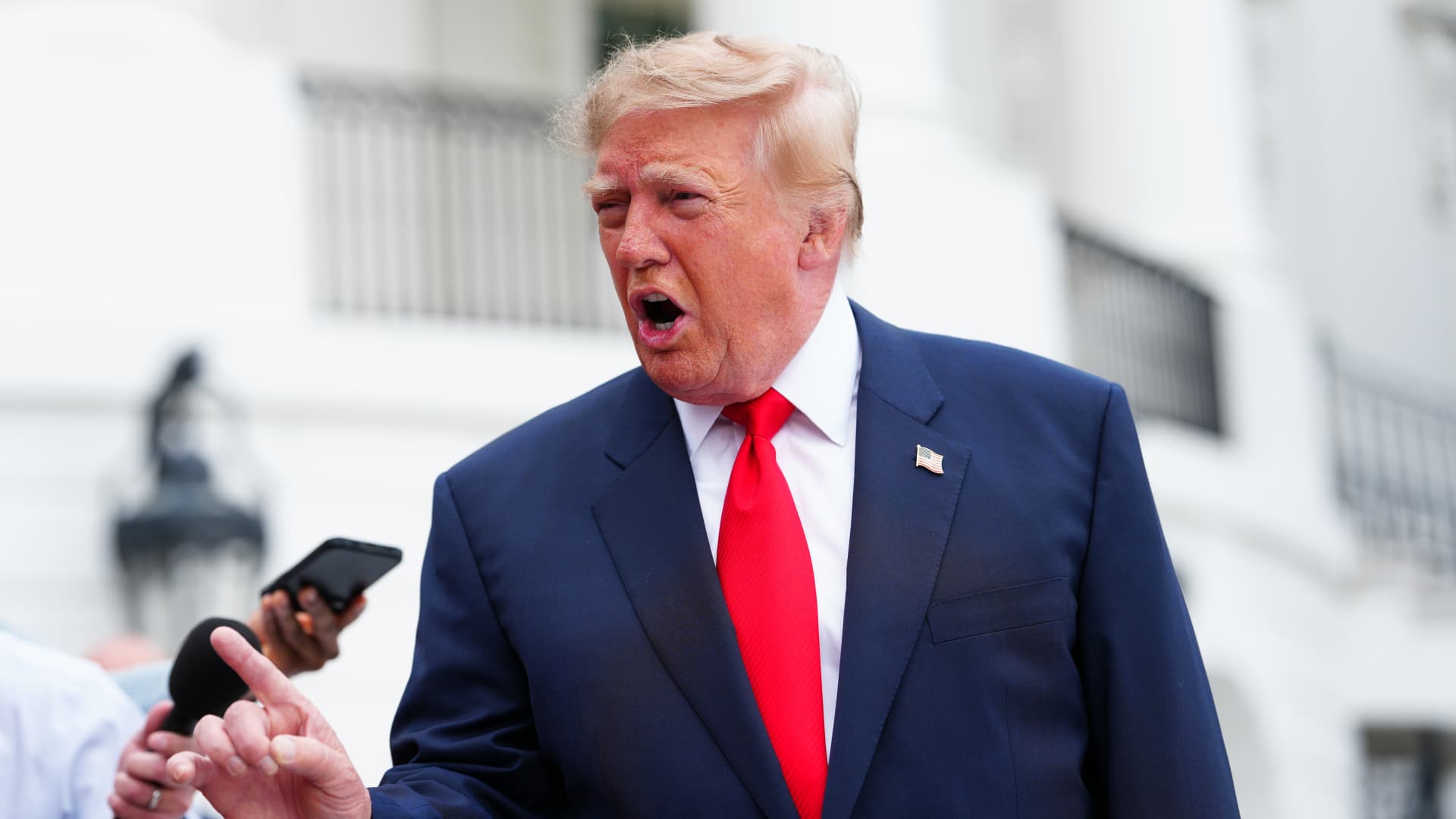
According to the price data from crypto.news, Bitcoin rebounded to around $78,300 on November 4th, after having fallen to $75,600 when the election results were announced. With the Democratic Party taking control of both the House of Representatives and the Senate, President Trump will have to work with a Congress controlled by the opposition during the remainder of his term, which put pressure on Bitcoin for a time.
This rebound came alongside a decrease in market volatility and a recovery in stock index futures. However, analysts warn that the initial reaction to the election results may not necessarily determine the next direction of prices.
After the results of the U.S. mid-term elections, Bitcoin experienced a relieving rebound.
CoinShares Research Supervisor James Butterfill told crypto.news that before the election results were confirmed, Bitcoin seemed to have already absorbed the possibility of Democrats sweeping Congress.
"My feeling is that Bitcoin has basically been factored into the expectation of a Democratic Party sweep, so once the uncertainty is eliminated, the market has room to rebound," said Butterfill.
He added that the expected results do not necessarily mean that a new round of selling is about to occur, especially since investors have already adjusted their positions before the vote.
Data provided by the institutional digital asset trading platform Talos to crypto.news shows that the market's immediate reaction was accompanied by a significant decrease in expected volatility.
The Bitcoin DVOL index, which measures the implied volatility of the cryptocurrency options market, fell by 6%, while the CBOE Volatility Index, also known as the VIX, fell by 10%.
Talos, the research supervisor, stated that although the settlement of individual contracts will still take a longer time, the market quickly absorbed the election results. Kelly Ye
“The forecast market has already priced in the results of the mid-term elections within a few hours, although the settlement process will take longer. Consequently, there has been a relieving rebound in the traditional markets as well,” Ye told crypto.news.
Talos indicates that as the results become increasingly clear, the prices on Kalshi and Polymarket for non-US platforms are rapidly converging. Since the settlement mechanisms of these two platforms differ, even though market prices have already reflected the results, the time required for contract settlement may still vary.
This rebound also extended to the decentralized derivatives market, allowing traders to respond to the latest developments during the overnight period before the reopening of traditional U.S. stock markets.
Talos reports that the Hyperliquid perpetual contracts, which track the NASDAQ 100 Index and the S&P 500 Index, regained ground lost on election night after hitting lows around 9 to 10 p.m. Eastern Time.
Subsequently, the proxy contracts of QQQ and SPY rebounded by approximately 3.0 points and 2.2 points from their lows at 10 p.m., respectively, and closed the overnight trading session with positive values.
At the same time, when regular trading closes, the corresponding spot-traded open-end index funds cannot respond in the same manner; pre-market trading does not begin until 4 a.m. Eastern Time.
Trading volumes also reveal significant differences between perpetual contracts and tokenized spot markets.
According to Talos, the overnight total trading volume of perpetual contracts tracking XYZ100 and SP500 on Hyperliquid amounted to 848 million US dollars, while the total trading volume of all tokenized spot platforms was approximately 10.5 million US dollars.
This means that during that period, the trading volume of perpetual contracts was approximately 81 times that of the tokenized spot market.
Among them, the trading volume of the XYZ100 contract was approximately 5.4 times its usual hourly trading volume, while the activity level of SP500 reached about 6.3 times normal.
Ye indicates that these data show that when traders wish to position themselves for major market events, especially when traditional stock markets are closed, they prefer perpetual contracts.
Talos also attributed part of the overnight rebound to systematic strategies and buying by commodity trading advisors, as lower volatility, reduced demand for downside hedging, and previously light positions prompted traders to increase their exposure.
However, Ye warns that "the initial reaction is not always correct," which means that a market's initial rebound should not be automatically regarded as confirmation of a sustained upward trend.
After Democrats take control of Congress, crypto regulation faces a more difficult path
Although the immediate market reaction was relatively positive, the long-term impact of the election results on the crypto industry may be more complex.
Butterfill believes that one of the main concerns after the Democrats swept Congress is the slowdown in regulatory reform, especially for companies that rely on new legislation to expand their business.
The greater concern is the slowdown in crypto reforms. “It will be more difficult to advance the CLARITY legislation,” he said.
CLARITY The bill aims to establish a clearer regulatory framework for the US digital asset market and has always been an important legislative priority for the crypto industry.
With the Democratic Party now controlling both houses of Congress, the prospects for advancing this bill may become more difficult, especially in light of the disagreements among lawmakers regarding the division of regulatory responsibilities and investor protection requirements.
Butterfill also warned that Congress may launch investigations into business projects related to Trump, which could draw political attention and further increase scrutiny of the crypto industry.
At the same time, he pointed out that changes in congressional control will not automatically reverse the regulatory progress that has already been made.
"The government is still in power, and the progress made in regulation, including GENIUS, will not disappear as a result," he said.
GENIUS The legislation establishes a federal framework for payment-style stablecoins and is an important component of the regulatory changes introduced during Trump's tenure.
Butterfill It is expected that the slowdown in legislative progress will have different impacts on various sectors of the crypto industry.
US exchanges, token issuers, and companies seeking additional regulatory approvals may face even greater uncertainties than Bitcoin itself, as Bitcoin is already traded through mature investment products and does not rely on the same legislative approvals.
He also believes that more mature companies with stronger regulatory compliance arrangements may benefit if additional scrutiny falls on their competitors, who tend to have weaker regulatory practices.
This distinction may also extend to listed crypto companies. Butterfill expects that they will be more susceptible to changes in regulatory prospects than Bitcoin.
However, encrypted mining companies that operate data centers may be an exception, as their existing infrastructure may still attract large-scale artificial intelligence companies seeking power and computing capacity.
The US dollar, the yield on US Treasury bonds, and Federal Reserve policy remain important variables in the crypto market.
In addition to encryption regulation, the election results may also alter the financial environment by affecting the US dollar, the yield on US Treasury bonds, and expectations of government spending.
Matthew Ryan, the head of market strategy at the global financial services company Ebury, told crypto.news that a Democratic victory could be slightly negative for the dollar, but he does not believe that this would fundamentally change the trend of the dollar.
"We believe that the results of the mid-term elections are slightly bearish for the dollar, but they will not trigger a directional change," said Ryan.
He explained that a Congress controlled by Democrats could limit Trump's ability to further increase fiscal spending, thereby alleviating concerns about the federal deficit and reducing some of the pressure that led to the selling of U.S. Treasury bonds.
Lower yields on U.S. Treasury bonds could narrow the yield spread between U.S. assets and those of other major economies, while a more stable bond market might reduce the market's demand for the dollar as a safe-haven asset.
These changes are related to the crypto market, as fluctuations in the liquidity of the US dollar and borrowing costs affect investors' willingness to hold high-risk assets.
However, Ryan warns that one should not expect significant changes in the bond market merely based on the election results.
Trump still retains the presidential veto power, and for Congress to override it, a two-thirds majority in both houses is required. Ryan believes that although lawmakers can prevent new spending measures from advancing, their ability to reverse already implemented policies is limited.
He also expects that U.S. Treasury yields will continue to be supported by the Iran war, the relative resilience of the U.S. economy, and higher inflation expectations.
"Even if control of Congress changes hands, as long as the war in Iran continues, the U.S. economy remains strong, and inflation expectations remain high, it is unlikely that yields will fall significantly," said Ryan.
Therefore, the policy decisions of the Federal Reserve are likely to have a greater impact on the US dollar than the results of the mid-term elections.
Ryan acknowledges that theoretically, the Democratic control of the Senate could limit Trump's ability to appoint more dovish Federal Reserve governors. However, considering that there are only a few vacancies expected in the central bank's board of directors before the end of Trump's term, he believes the actual impact will be limited.
Butterfill has also made similar judgments regarding the factors that will affect Bitcoin in the coming months.
"For Bitcoin, real interest rates, US dollar liquidity, and ETP capital flows are still more important than elections," he said.
He also pointed out that a decline in oil prices could help ease inflation expectations, thereby reducing the likelihood of further interest rate hikes.
If this allows the Federal Reserve to have more room to avoid further tightening of monetary policy, lower inflationary pressures could improve the outlook for risk assets.
However, this impact depends on how the economic situation evolves, especially in the context where geopolitical risks continue to affect energy prices and inflation expectations.
Investors will now turn their attention to the U.S. non-farm payroll report on Friday, which Ryan considers to be the next important economic data point after the elections.
Employment data may affect market expectations regarding the Federal Reserve's next policy decisions, which in turn could influence the direction of the US dollar and US Treasury yields.
Can Bitcoin maintain its rebound from November?
Bitcoin's historical performance in November provides another reason for investors to remain cautious about the latest rebound.
Although November is traditionally considered a favorable month for Bitcoin, Talos points out that after a negative performance in October, Bitcoin's performance in November was not stable.
According to the company's historical analysis, in the previous five instances where there was a decline in October, November also ended with negative results on three occasions.
These periods include 2018 and 2025, while in October 2026, Bitcoin fell by 7.4%.
These data indicate that when Bitcoin enters November after experiencing a period of sustained selling pressure, the "historically strong" impression of November does not necessarily translate into an upward trend.
The latest rebound also occurred against the backdrop of continuous capital withdrawals by institutions.
As reported by crypto.news earlier on November 4th, US spot Bitcoin ETF recorded a net outflow of approximately $115.6 million on November 3rd, experiencing capital outflows for the third consecutive trading day.
This results in a total net outflow of approximately $1.16 billion over the past three trading days, indicating that despite Bitcoin's rebound from its lows on election night, institutional demand has not yet recovered.
From a price perspective, after Bitcoin rebounded to around $78,300, the resistance level of $79,500 has once again become a focal point, followed by the psychological barrier of $80,000.
If it can continue to maintain these levels, it will strengthen the reasons for a continuation of the rebound; however, if selling pressure returns again, market attention will shift back to the $75,600 to $76,000 range tested during the decline on election night.
In Butterfill, even if regulatory reforms slow down under the new congress, the long-term adoption prospects for institutions regarding crypto assets remain constructive.
He also believes that how Trump responds to the political constraints brought about by the election results is a more difficult factor to predict in the industry.
For now, the immediate focus of the market is shifting from the elections themselves to economic data, monetary policy expectations, and institutional investment flows. These factors will determine whether Bitcoin can continue its latest rebound.
Disclosure:This article does not constitute investment advice. The content and materials on this page are for educational purposes only.