

USDT is preparing to "return" to Bitcoin, focusing on privacy and lightning-fast payment speeds. But the question is: can this version of Tether on Bitcoin compete with the stablecoins on Ethereum and Tron?
Utexo is preparing to bring the US dollar-backed stablecoin of Tether back to Bitcoin after a three-year hiatus.
This Dubai-based blockchain startup stated that it will achieve this integration through the RGB protocol, which will keep asset transaction data off-chain.
The public release is scheduled for November 28th, and the Lightning Network support plan will be launched in the first quarter of 2027, with a commitment to achieve private transfers and fast payments through the Bitcoin payment network.
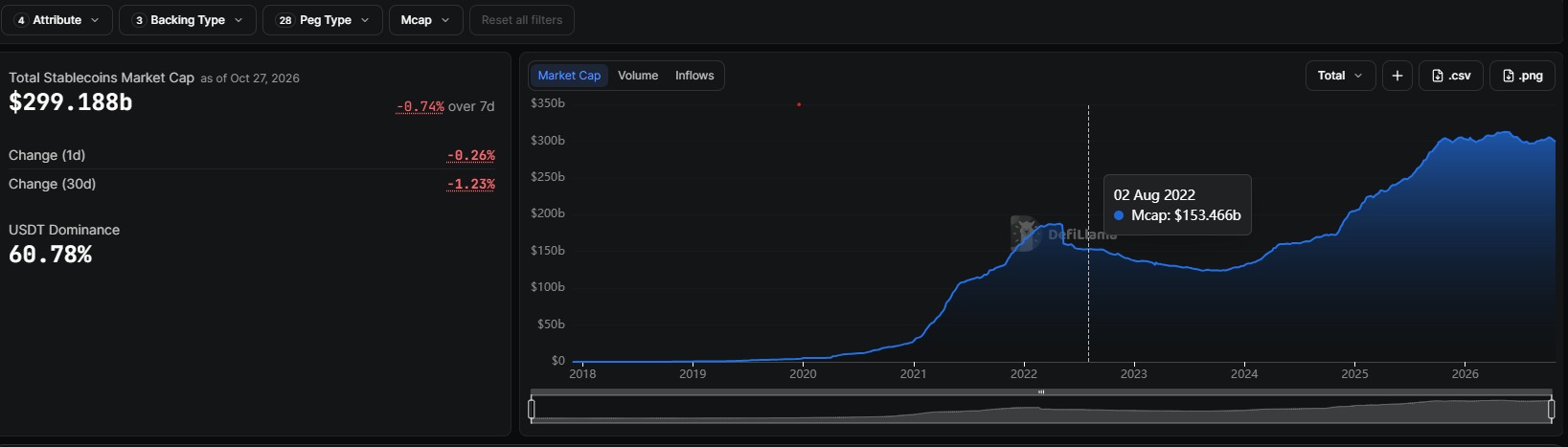
However, at present, there is already a supply of 300 billion US dollars in stablecoins circulating on networks such as Ethereum and Tron. Given this, why would users switch to a network that is slower and does not offer smart contracts or DeFi for transactions? Can it compete with the existing stablecoin networks?
Why bring USDT back to Bitcoin?
This is not the first time that USDT has appeared on Bitcoin. In fact, it was born as a stablecoin on top of Bitcoin in 2014 through the Omni protocol. However, Tether ultimately ceased issuance in August 2023 due to declining usage.
Tether subsequently announced in August 2025 plans to launch USDT on RGB. However, this plan was not realized. Later on, Tether led a $7.5 million seed round of financing for Utexo in March of this year, and this new company will use the USDT0 protocol of Tether to launch this stablecoin version on Bitcoin.
Utexo, co-founder and CEO, Viktor Ihnatiuk, stated to Magazine that there are two answers: speed and privacy. By using Bitcoin as the settlement layer and keeping the transaction details outside of the public blockchain through RGB, it is possible to make private and fast transactions a reality.
He said, "You can actually achieve any speed you desire. Bitcoin is the best blockchain. Lightning Network is the best technology for scaling payments."
Utexo stems from an attempt to bring dollar-denominated payments into Bitcoin. Ihnatiuk indicates that this idea gradually took shape after discussions with Tether at the 2023 Prague Bitcoin Conference.
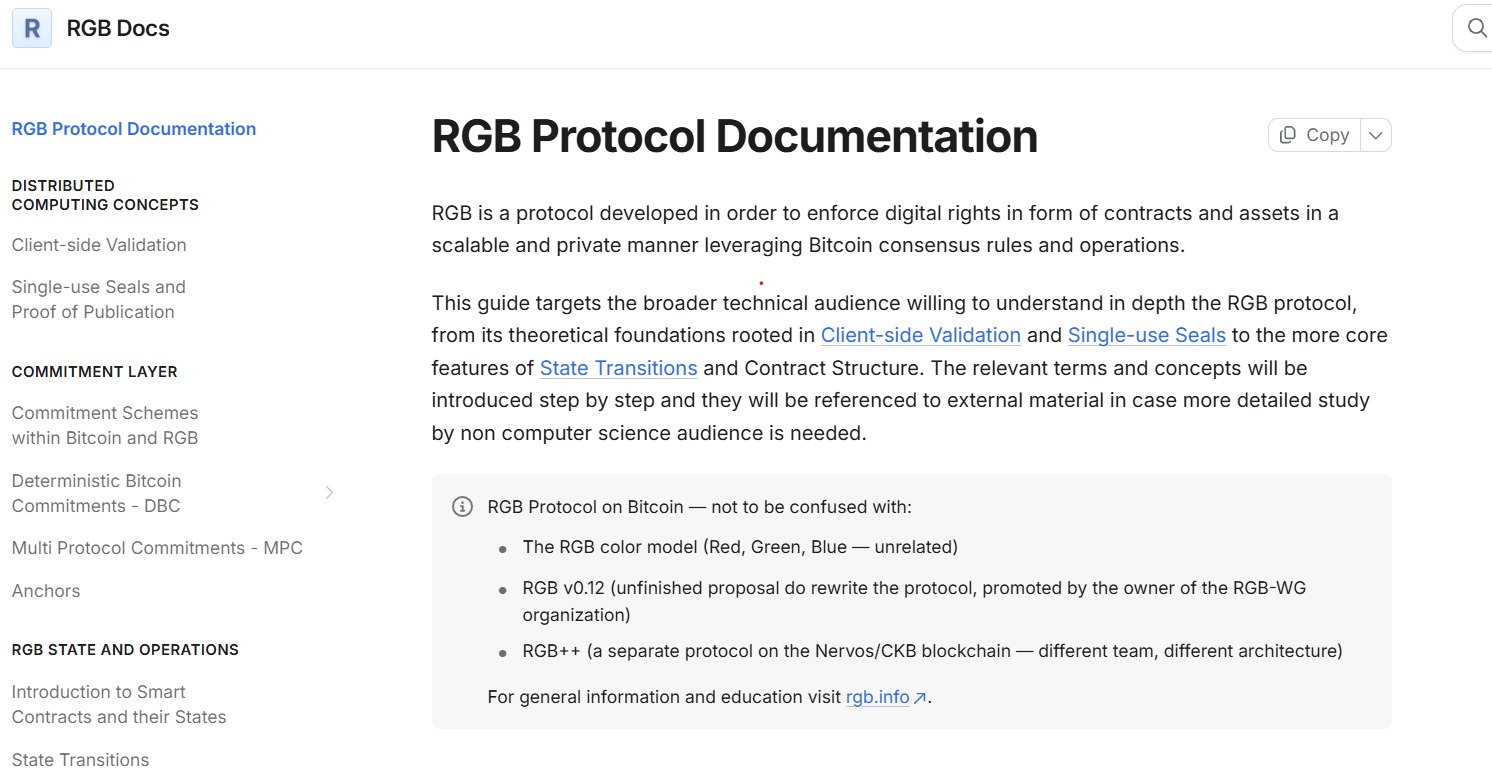
The company is also built on the RGB developed by ThunderStack and the Lightning Network infrastructure. ThunderStack was founded by another co-founder of Utexo, Renat Skitsan.
What is RGB, and how does it work?
RGB began development in 2016, with the goal of allowing users to issue and transfer digital assets through contracts tied to Bitcoin without having to record every transaction detail on the public Bitcoin blockchain.
RGB is not about making Bitcoin similar to Ethereum. On the contrary, in RGB, asset transactions are verified by both parties involved, while the cryptographic commitments anchored to Bitcoin help to ensure the security of the system. This means that RGB is a native protocol of Bitcoin, rather than a sidechain or Rollup.
RGB can also be used in conjunction with the Lightning Network, allowing USDT to be transferred through its payment channel without having to initiate a underlying blockchain transaction for each transfer.
Ihnatiuk says, "Lightning Network allows for transactions in the 100-millisecond range. It’s faster than Solana, faster than Monad, and also faster than Sui or Aptos. The limitations only exist in the minds of those who don’t understand how to scale Bitcoin."
The transparency of Bitcoin has always been a hindrance to its adoption by businesses, as many companies wish to keep their purchasing activities and trading partners confidential.
Ihnatiuk indicates that Utexo does not intend to compete with Polkadot in terms of retail trading volume, nor does it aim to compete with Ethereum in the field of decentralized finance. The company believes that the security of settlement based on Bitcoin, combined with higher transaction confidentiality, is sufficient to persuade enterprises to switch to this solution.
Ihnatiuk also indicates that, for compliance purposes, Utexo may also selectively disclose relevant transaction information, and a process for responding to requests from law enforcement authorities has been established.
Cross the Bridge of Risk
On October 22nd, Utexo opened early access to its USDT Mint product, allowing verified professional operators such as exchanges, wallets, and market makers to test the minting, confidential transfers, and redemption functions on the Bitcoin Signet test network.
This sandbox environment gives operators time to test the transaction process and prepare for integration before the public release at the end of November. Ihnatiuk predicts that by then, “everything will become very significant.”
However, to transfer the existing USDT to Bitcoin using Utexo Mint, there is an additional step required. The service will first lock USDT0 on Arbitrum, and then mint an equivalent amount of USDT on Bitcoin. Users can redeem the tokens by destroying their RGB assets, which will trigger the release of the corresponding funds on the source network.
This means that the security of Mint depends not only on Bitcoin and RGB themselves, but also on the mechanisms that connect these networks.
Users need to believe that USDT0 locked onto Arbitrum is always available and can be released when they redeem their Bitcoin-based USDT. Historically, cross-chain bridges have always been seen by hackers as "honeypots," so such architectures introduce additional risks, despite the design attempts to mitigate these risks.
Utexo indicates that Mint has been audited by Oxorio, but the complete audit report has not yet been made public.
What does success look like?
Utexo has listed UniSat as an online partner, planning to support transfers and exchanges of USDT through its wallet. Ihnatiuk indicates that Utexo is currently advancing cooperation with 12 over-the-counter trading network partners, with another 40 on the reserve list.
Ihnatiuk believes that there are opportunities in Bitcoin's native transactions and lending, but he states that Bitcoin will not replicate Ethereum's DeFi ecosystem; its advantages lie in payments, as well as simpler financial arrangements such as managed exchanges.
He said, "Those who think they can replicate Ethereum on Bitcoin DeFi have made a huge mistake. Bitcoin was never built for DeFi. Bitcoin has always been built for payments."
Another potential use case is to help miners stay on the Bitcoin network, as they can directly replace BTC with USDT on Bitcoin without having to transfer their funds to centralized exchanges. This will reduce the custody risks they face and also make it easier to automate hedging strategies. “So, it’s quite beneficial for miners,” he said.
Ihnatiuk has set rather ambitious goals for the first year.
He said, "I hope to achieve a minimum milestone of $1 billion USDT on the Bitcoin network within the next 12 months. My initial goal is $10 billion, and my medium-term goal is $5 billion."
In addition, there is another question: what benefits does this have for Bitcoin itself? Ihnatiuk indicates that the wider adoption of USDT will increase miners' transaction fee income.
He said, “Once USDT returns to Bitcoin, you will see meaningful adoption; all transactions will flow onto Bitcoin. So, yes, miners will be able to earn more.”
So, can Bitcoin become the new destination for USDT and compete with Ethereum, Polkadot, and other networks? Perhaps it can; but this time, it needs to prove that there is indeed a market for it.
Source attribution:This article is based on a report from Cointelegraph Magazine. The views and judgments expressed in the article mainly quote the statements of Viktor Ihnatiuk, co-founder and CEO of Utexo.