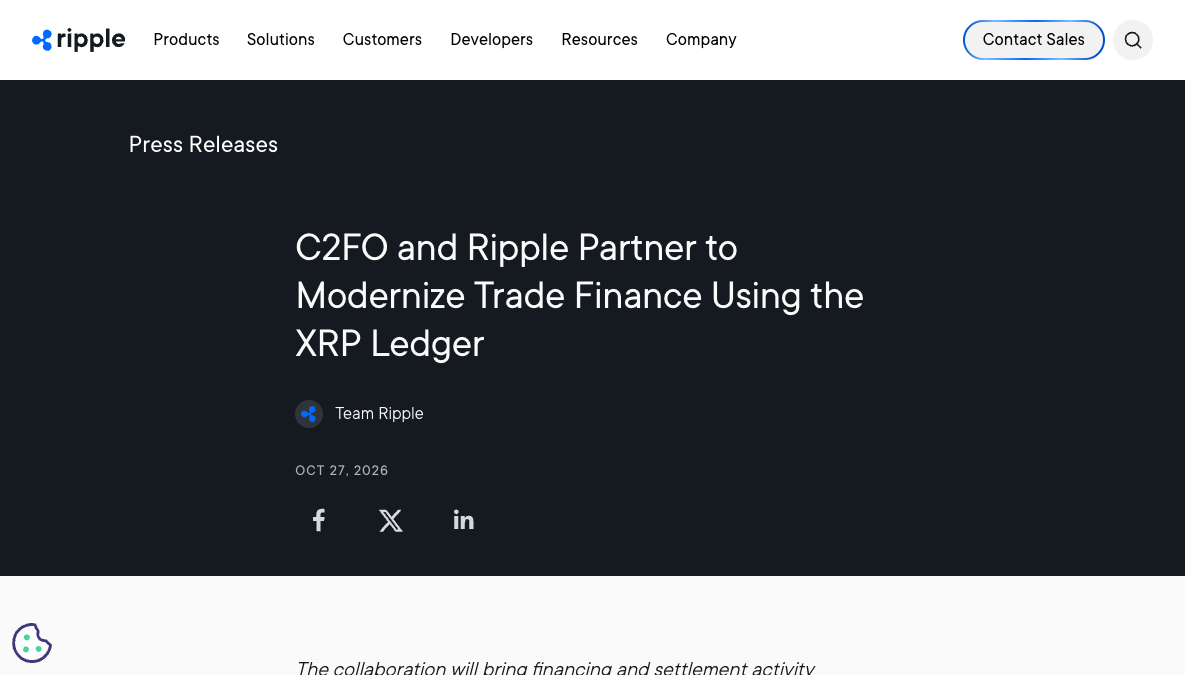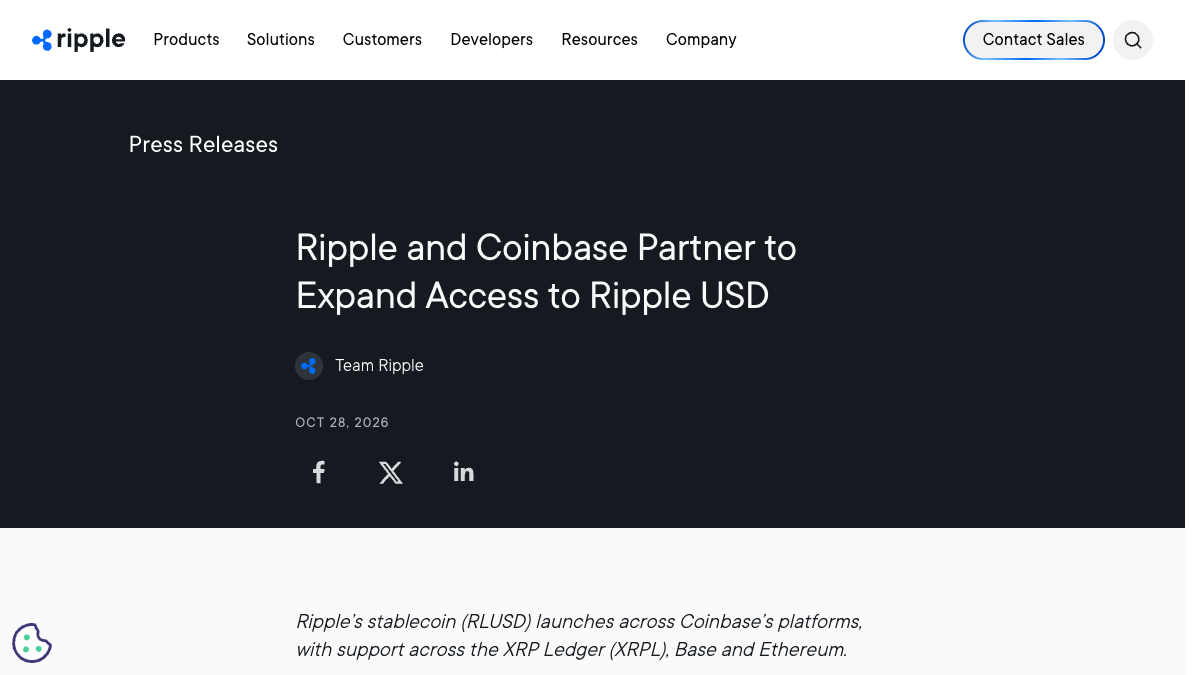


A supplier has delivered the goods, and the invoice has been approved, but the payment is still in process. In the cooperation announced on [October 27th] (https :// ripple.com / ripple-press / c2fo-and-ripple-partner-to-modernize-trade-finance-using-the-xrp-ledger /), C2FO and Ripple proposed to move the financing and settlement activities related to C2FO Instant Pay to XRP Ledger and use RLUSD for settlement. At the end of the announcement, companies are still invited to join the waiting list. This is a plan that is still in progress and cannot be described as available to all customers yet.
The process deliberately retains the familiar entry points for users: enterprises can continue to apply for early payment through C2FO, with the funding provided by the participating parties, and settlement is completed through XRPL. Suppliers do not need to renegotiate the terms and due dates of the original invoices just because of the new settlement method. What the news promises to shorten is the payment execution process, while the existing business relationships continue to remain in place.
This distinction can easily be lost in communication. The announcement mentions waiting 30, 60, or 90 days after delivery to highlight the pain points of working capital, and also notes that traditional bank settlements may require several additional days. Combining these two points into one sentence, such as “On-chain, a 90-day payment period is reduced to just a few seconds,” can mislead readers: the payment period and the duration of payment settlement are two different stages, and making early payments still requires someone to provide the funds.
The blockchain is faster now, but a balance sheet is still required for upfront funding.
The fund providers have not disappeared from the process. While blockchain can handle settlement records and asset transfers, it cannot generate out of thin air the money that a company receives in advance. Who provides the funds and what conditions are required for financing remain at the core of whether the plan can be implemented.
Ripple claims that XRPL can settle transactions within 3 to 5 seconds and operates 24/7. This is the official statement regarding the network layer's capabilities, and it should not be automatically assumed to represent the total time required for a supplier's bank account to receive fiat currency. There may be other steps involved between putting RLUSD into an available wallet and completing a local bank payment; this announcement does not provide detailed rules sufficient to calculate the full process costs and time limits.
The process is broken down as follows: the supplier submits a request for advance payment first, and then the funding provider decides whether to contribute according to the specified conditions. Only after that does the asset settlement proceed. The main change in the on-chain system relates to how the third step is executed; the first two steps still require platform rules, transaction documentation, and capital judgment. Even if the network is operational 24/7, the review processes, compliance checks, and local account management by participating institutions may have their own working hours. Therefore, "3 to 5 seconds" is a suitable description for the confirmation time of XRPL, but it is not appropriate to use this to represent the entire service timeline from application to the final availability of funds.
RLUSD plays a role in settling assets here, rather than automatically undertaking credit assessments. It allows participants to transfer value on a unified digital asset platform, but the authenticity of invoices, the buyer's ability to fulfill their obligations, the cost of funds, and the arrangements for recourse are still subject to business rules. If future plans disclose customer cases to assess whether it truly improves working capital, one should compare the approval rate, the cost of funds, the time from approval to fund arrival, and the handling of exceptions, rather than relying solely on the speed of transactions on the blockchain.
From this, it can be seen that Instant Pay is attempting to change the execution path after the approved accounts receivable financing has been granted. Even though on-chain settlement reduces waiting times, whether the invoices are genuine, whether the transactions are approved, and whether capital is willing to provide funding will not be determined merely by faster block generation. The risk assessment here comes from the division of process responsibilities; network performance indicators cannot replace credit arrangements.
The waiting list is closer to the current state than it has ever been before in history.
C2FO not only has the scale of advance payment business, which indicates that the company has existing customers and working capital needs, but it cannot be recorded as the on-chain transaction volume of Instant Pay. To connect the existing market with the new settlement scheme, there is a need for real participants, actual transactions, and verifiable settlement evidence.
The two companies have not disclosed in this material sufficient customer coverage, fee structures, or actual processing volumes to assess the overall availability. For suppliers, the action that can be taken at this point is to learn more or join the waiting list; for observers, what can be confirmed is the cooperation structure and the settlement assets planned to be used, but it is still not possible to provide figures for the undisclosed usage results.
This solution preserves the relationship between the platform and suppliers, moving the back-end settlement to a different track. If implemented, suppliers are expected to be able to reduce the time they wait for funds to be transferred after their financing is approved; the fund providers still decide on the capital supply, and both issuance and on-chain execution retain their respective responsibilities. The change lies in how the funds are transferred, but the payment terms and credit costs do not cease to exist as part of the transaction as a result.