The Asia-Pacific market sought support amid sharp fluctuations on Monday morning. The South Korean stock market turned from a significant decline to a rise, and U.S. stock futures rebounded, temporarily alleviating the risk pressures brought about by the sell-off of chip stocks last week.
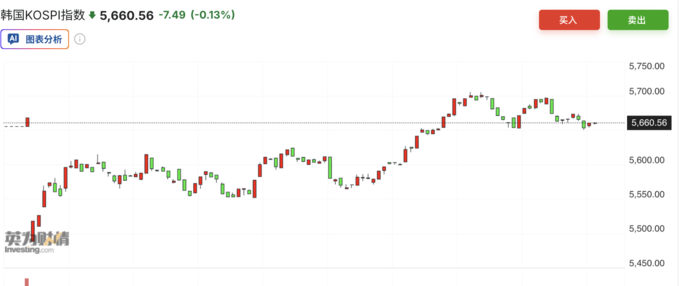
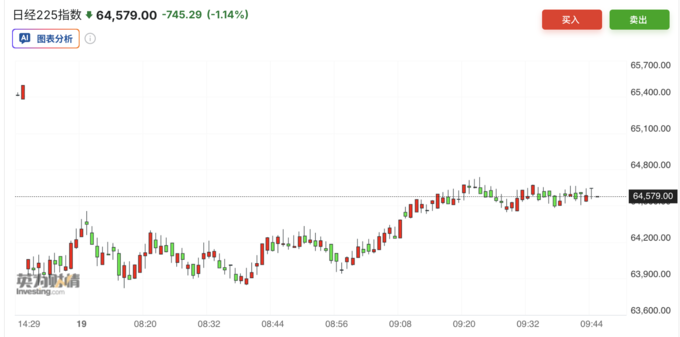
The South Korean Seoul Composite Index briefly turned higher, boosted by gains in Samsung and buying from local funds, after previously falling by more than 3%. The decline in the Japanese stock market also narrowed accordingly, with the Nikkei 225 Index's drop narrowing to about 1%, from a previous decline of over 2%.
U.S. stock futures rose, with the Nasdaq 100 index futures increase expanding to 1%, and the S&P 500 index futures rising by 0.5%. This provided some support during the Asian trading session. Previously, U.S. tech stocks and chip stocks were under pressure, and the market re-priced the sustainability of AI trades.
Oil prices fell from their five-month highs, also alleviating some of the pressure on inflation and risk assets. Brent crude oil dropped by 1.7% to $108 per barrel as traders weighed the escalating geopolitical conflicts against regional supply levels approaching pre-war levels.
Korean stocks rise, while the decline in the Asia-Pacific region narrows.
The South Korean stock market became a key factor in the early trading in the Asia-Pacific region. The Seoul Composite Index turned from decline to rise, reversing an earlier trend of falling by more than 3%. The rise in Samsung shares and purchases by local funds were seen as the main driving forces. Previously, the South Korean small-cap Kosdaq index had fallen by 0.93%.
The Japanese stock market is still in a correction phase, but the decline has significantly narrowed. The Nikkei 225 index fell by more than 2% at the beginning of trading, but then the decline narrowed to around 1%. The Japanese Topix index previously fell by 1.12%. In contrast, Australia's S&P/ ASX 200 index rose against the trend, with an increase of about 0.37%.
MSCI In the early session of trading in the Asia-Pacific region, stock indices fell by 0.5%, mainly due to the decline in the Japanese and Korean markets at the beginning of the day. As South Korean stocks rebounded and U.S. stock futures turned higher, the pressure on regional markets eased to some extent, but overall risk appetite remains influenced by the trading volatility of AI.
Local macroeconomic expectations in South Korea are also under attention. According to Yonhap News, the South Korean Finance Minister estimates that the economic growth rate for 2026 will be between 3.4% and 3.6%.
US stock futures rebound, AI trading enters profit verification phase
The rebound in U.S. stock futures is the key factor in improving sentiment in the Asia-Pacific market. S&P 500 index futures rose by 0.5%, and the increase in Nasdaq 100 index futures expanded to 1%, continuing the recovery trend.
This rebound occurred after a sharp decline in tech stocks last week. The Nasdaq 100 index fell 5.5% last week, and a closely watched semiconductor indicator recorded its longest consecutive decline since 2008. CNBC data shows that the S&P 500 index fell nearly 2% last week, marking the largest single-week decline since late June, while the Nasdaq index fell 4.5%.
This week's financial reports will be key to determining the market direction. More than 70 companies comprising the S&P 500 index will release their earnings, including Tesla, Meta, and other members of the Mag7 group. Investors will focus on assessing whether the infrastructure spending of AI will generate sufficient returns.
Senior analyst Kyle Rodda stated that the market is in a "typical period of high uncertainty," with AI financial reports, interest rate uncertainties, and the upcoming mid-term elections all affecting investors' judgment at the same time.
AI Credit pressure remains a hidden concern for the market
The pressure on AI transactions has not subsided. According to sources cited by CNBC, Anthropic reported revenue of $16.8 billion in the third quarter, which is higher than the $11.6 billion in the second quarter. However, the growth rate still raises concerns among investors regarding the construction cycle of AI.
CoreWeave has become a focal point of market concern. The company relies on substantial debt to build data centers and leases them to tech companies; its stock price fell by 25% last week, marking the largest single-week decline since November 2025. CNBC stated that the CoreWeave credit default swap has reached a distressed level.
Goldman Sachs traders pointed out last Friday that the credit spreads related to AI, especially those related to the largest cloud service providers, are at their widest levels of the year. Their view indicates that the focus of market debates is shifting from short-term profitability to AI capital expenditure, financing sustainability, and capital returns.
According to Bloomberg strategist Mark Cranfield, investor sentiment is cautious, geopolitical situations are still changing, and this week there is a dense period of financial report releases. However, following the recent significant decline in chip stocks, buying on dips might be seen as an opportunity to enter the market at current levels.
Bonds and gold reflect the demand for hedging.
Volatility in risky assets has drawn attention to bonds and gold. The yield on 10-year U.S. Treasury bonds fell by about 17 basis points last week, remaining around 5.06% on Monday. There are signs that U.S. Treasuries are once again playing a role as safe-haven assets.
Bond volatility remains high, and pressures from fuel and food inflation continue to affect central bank expectations. Traders are cautious about the Fed's interest rate path, while the market is also paying attention to the impact of rising corporate financing costs on AI related companies.
Gold rose on Monday. Spot gold increased by 0.2% to $4,173.15 per ounce. Previously, traders reduced their bets on interest rate hikes this month after Federal Reserve Chairman Jerome Powell's speech last Friday.
The volatility in the foreign exchange market is relatively limited. The Bloomberg US Dollar Spot Index remainedほぼ unchanged, the Japanese yen rose by 0.1% to 157.83 yen per US dollar, and the Australian dollar rose by 0.3% to 0.6966 US dollars.
Oil prices have fallen, but energy risks still affect the market.
Oil prices fell on Monday, providing some respite for the stock market. Brent crude oil declined from a five-month high, with WTI crude oil dropping 1.32% to $97.71 per barrel.
Traders are still concerned about energy supply risks. The market remains vigilant regarding the increased attacks on vessels in the Persian Gulf, as well as mutual attacks between Ukraine and Russia over energy infrastructure. Longer-term crude oil futures have risen due to expectations that disruptions to energy infrastructure may continue until 2027.
In the short term, a decline in oil prices can help alleviate inflation-related trading pressures, but the uncertainties in the energy market may still exacerbate fluctuations in stocks and bonds.