Economists say that driven by rising gasoline and energy prices amid the Iran war, inflation rates increased in September, further straining household budgets and potentially putting pressure on the Federal Reserve to raise interest rates.
The U.S. Bureau of Labor Statistics reported on Wednesday that the Consumer Price Index (CPI) in September rose 3.7% year-on-year, higher than the 3.4% annual rate in August. Economists believe that what is more noteworthy is the “core” CPI – this indicator excludes the more volatile prices of food and energy, and is commonly used to observe the potential inflation trend in the U.S. economy. In September, the core CPI rose 2.6% year-on-year, up from 2.4% in August.
Morgan Stanley's chief economist, Mark Zandi ( Mark Zandi ), stated: "The overall report indicates that inflation is uncomfortably high."
He said, "Traces of war are evident throughout this report. It has contributed to a rise in inflation in many areas."
Cost of living pressure
At the time these inflation figures were released, there was less than a month left until the upcoming mid-term elections, and affordability is widely regarded as one of the issues that voters are most concerned about.
In addition to the increase in prices of goods and services, the yield on U.S. Treasury bonds has also risen significantly in recent months, putting upward pressure on interest rates for mortgage loans, car loans, and other types of consumer debt.
Economists say that the Federal Reserve, the U.S. central bank that uses interest rate policy as a tool to control inflation trends, may raise its benchmark interest rate at upcoming policy meetings in order to curb persistently high inflation. This benchmark interest rate will also directly affect credit card interest rates and indirectly impact other borrowing costs.
The Federal Reserve's long-term annual inflation target is around 2%. Inflation has been above this target for more than five consecutive years.
Zandi stated that the CPI report released on Wednesday "further supports the view that the Federal Reserve will continue to raise interest rates."
According to an analysis released on Tuesday by Wells Fargo Investment Institute ( Wells Fargo Investment Institute ), inflationary pressures are likely to drive the Federal Reserve to raise interest rates between now and the spring of 2027.
Against the backdrop of rising prices, consumer confidence indicators have dropped to multi-year lows. The University of Michigan Consumer Confidence Index fell to its second lowest level on record in September.
Joanne Hsu ( Joanne Hsu ), the director of consumer surveys at the University of Michigan, stated: "The pressure of living costs continues to increase, as consumers from all political backgrounds believe that the economic trend has weakened since the beginning of this year."
The Social Security Administration announced on Wednesday that benefits in 2027 will be adjusted by 3.6% for cost of living ( COLA ). The calculation of Social Security COLA is based on a subset of the Consumer Price Index, namely the Consumer Price Index for urban wage earners and clerical workers ( CPI-W ).
However, a recent survey by AARP found that 76% of respondents stated that 3.5% of COLA is still not enough.
The Impact of the Iran War and Oil Prices on Inflation
Economists say that the war in Iran, which began at the end of February when the United States and Israel launched attacks on Iran, has pushed up oil prices.
Conversely, the prices of fuels such as gasoline, diesel, and aviation fuel, which are refined from crude oil, have also risen, imposing higher costs on various sectors of the U.S. economy.
Michael Reed ( Michael Reid ), the head of economic affairs for Royal Bank of Canada ( Royal Bank of Canada ) in the United States, stated: "Inflation is a 'petroleum story.' This will be the story for the coming months."
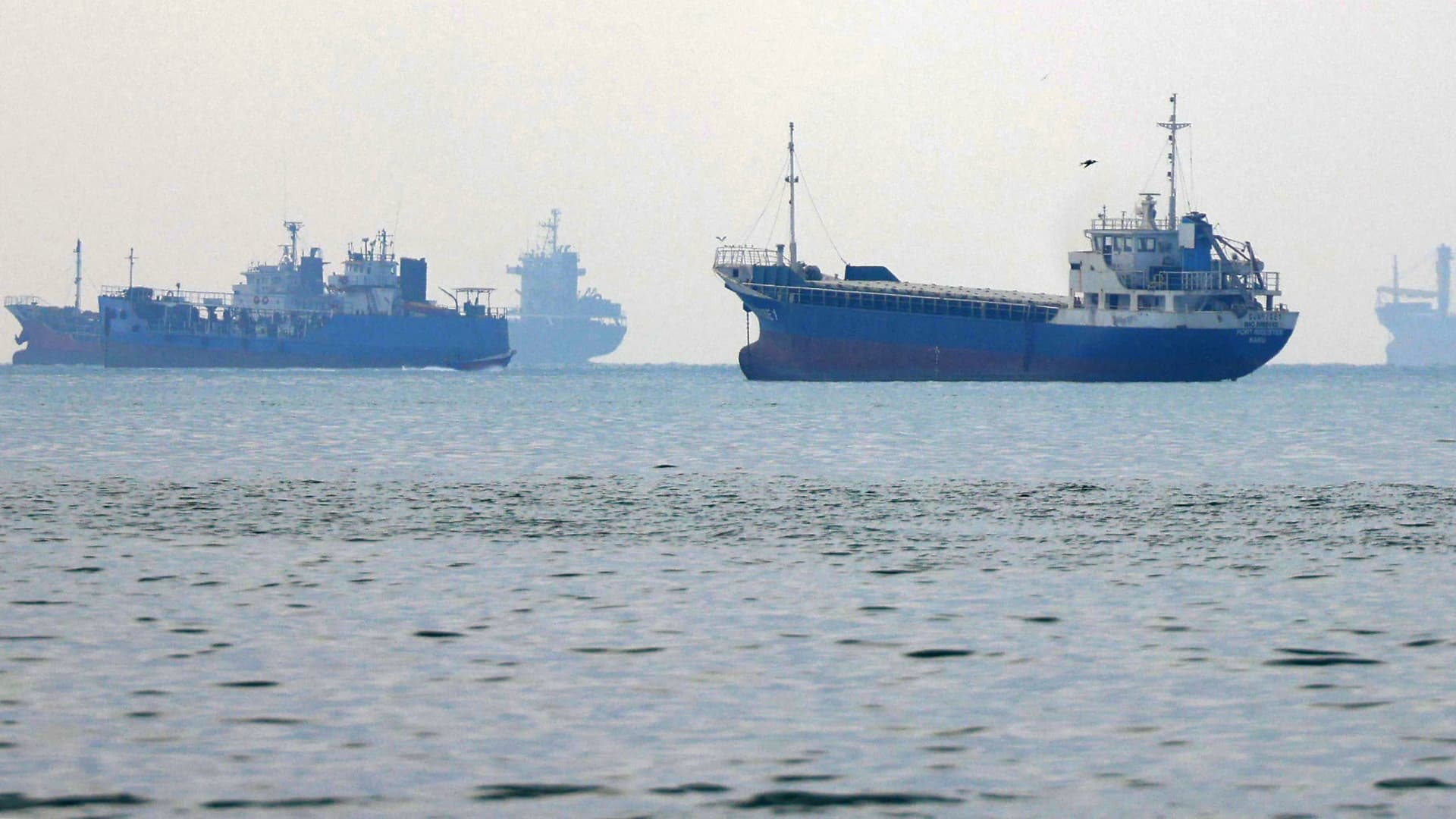
War has severely restricted the flow of oil through the Strait of Hormuz. The Strait of Hormuz is an important passage in the Middle East, through which a large portion of the world's oil supply is transported. The conflict has also damaged the region's refining infrastructure and limited the supply of other materials such as fertilizers, thereby putting upward pressure on global food prices.
Economists say that Russia's war in Ukraine has also pushed up diesel prices, mainly because Kiev bombed Russian refineries.
According to an analysis by the Investment Research Institute of Wells Fargo, "Crude oil is still flowing through the Strait of Hormuz, but at a rate lower than that before the war. Even if the key waterway is fully reopened, the loss of refining capacity and distribution issues could delay a decline in energy prices until mid-2027."
The U.S. Bureau of Labor Statistics reported on Wednesday that gasoline prices rose by 9.1% in September, accounting for more than half of the CPI monthly increase. The agency also stated that gasoline prices have risen by 34% year-over-year.
AAA data shows that on Wednesday, the average national gasoline retail price in the United States was $4.33 per gallon, a 45% increase from $2.98 per gallon on February 27, the day before the outbreak of the Iran war.
Although higher gasoline prices have already squeezed drivers' budgets, high diesel prices also pose a strain on a broader range of consumers.
Diesel is used in trucks, trains, and ships as a fuel for transporting goods to stores. In addition to transportation, it has many other applications, including in agriculture, manufacturing, as well as for heating residential and industrial buildings.
AAA data shows that on Wednesday, the average price of diesel in the United States was $6.30 per gallon, which is an increase of about 68% from $3.76 per gallon before the outbreak of the Iran war.
Reid said, "Someone has to pay for it."
However, he stated that higher fuel prices will not be immediately passed on to consumers and may take several months to manifest.
As the winter holiday shopping season approaches, retailers typically attract consumers with enticing discounts. Reid mentioned that he will be paying attention to whether companies will offer smaller discounts than usual, or perhaps not offer any discounts at all.
According to CPI data, airfares have increased by 22% in the past year. Economists say that this largely reflects the higher costs of aviation fuel.
But economists also say that the rise in travel prices is also due to strong consumer demand.
For example, according to the CPI data, hotel and motel prices have also increased by more than 4% in the past year.
Zandi said, "I think this is largely related to the demand for high-end travel. As stock prices rise and net assets increase, many wealthy Americans travel more often. This is driving a significant amount of spending."
Other sources of inflation
Economists say that the war in Iran and energy prices are not the only sources of inflationary pressure.
Reid said, "Tariffs are also added on top of that, slightly increasing the pressure, and it is transmitted layer by layer along with energy prices."
A research report from the economic research department of Royal Bank of Canada on Wednesday stated that the combination of tariffs and transportation costs is beginning to be reflected in the prices of entertainment goods.
The report mentioned that in September CPI, "toys and other entertainment products – which rely largely on imports – recorded the largest monthly change ever."
Economists also stated that the construction of data centers that support artificial intelligence is one of the sources of inflation.
The reason is that this has driven the demand for computing chips required by the AI data center, and has exacerbated the chip shortage. Manufacturers use these chips in a variety of consumer electronics products, including laptops, gaming consoles, and cars.
For example, in June, Apple announced an increase in the prices of MacBook and iPad, citing soaring costs for memory and storage. Not long after, Microsoft also stated that for similar reasons, it would raise the price of its Xbox gaming console.
Zandi said that there is one highlight in this inflation report: despite higher diesel prices, the price of food and groceries still decreased by 0.1% that month.
According to CPI data, beef prices decreased by 1% that month. Zandi stated that this is at least partly attributed to U.S. President Donald Trump's announcement in August of a temporary relaxation of beef tariffs.