Brief
The Commodity Futures Trading Commission (CFTC) of the United States announced two measures on Friday: one proposed rule expands the definition of "swap" to include event contracts, while another temporary final rule excludes casino-style betting such as sports betting and casino games.
Chairman BJW_KEEP_00002 stated that the contract in question is a "product derivative that clearly falls within the regulatory jurisdiction of BJW_KEEP_00003" and is subject to its "exclusive jurisdiction"; while "casino-style betting products are not derivatives."
These rules formalize the proposals submitted to the White House last month. Meanwhile, as state-level lawsuits and disputes with the Supreme Court continue, the agency is also asserting its own authority.
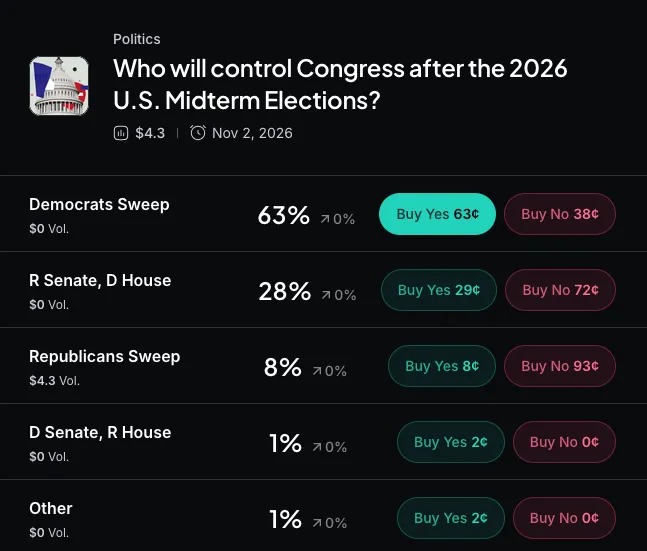
The Commodity Futures Trading Commission (CFTC) in the United States is strengthening its stance on predicting markets. On Friday, the agency announced two measures: it plans to officially define event contracts as "swaps" under federal law, while also establishing boundaries for traditional gambling.
The first item is a proposed rule for public consultation, which aims to clarify the definition of 'swap' and include event contracts within it, encompassing those related to sports, politics, cultural events, and weather.
CFTC indicates that these types of contracts are financial instruments commonly referred to as swaps in transactions, and this move will eliminate any ambiguity regarding their legal status. Selig states in the declaration: 'These products are clearly within the regulatory jurisdiction of CFTC, are subject to the Commodity Exchange Act, and fall under the exclusive jurisdiction of that authority.'
The second item is a temporarily final rule that takes effect immediately, drawing a clear line against the contrary view held by this institution for a long time: Casino-style gambling products, including sports betting and casino games, do not fall under the definition of swaps.
Selig indicates that 'casino-style gambling products are not derivatives', and this move is described as clarifying 'the boundaries of their regulatory authority.' Both measures come with a 30-day comment period for public feedback.
These two rules together reinforce the core distinction in this intense jurisdictional dispute: if the event contracts are considered swaps, they fall under the authority of CFTC, while Selig has always argued that such authority is exclusive, which would mean that platforms such as Kalshi and Polymarket would not be subject to the regulations of state gambling authorities. Multiple states have sued prediction market operators, accusing them of engaging in illegal gambling, and CFTC has also filed counterclaims to defend its own jurisdiction.
These documents formalize the proposals that the institution submitted to the White House for review at the end of last month, and they are also part of its broader efforts to advance these initiatives. In this process, CFTC chose to proactively assert its authority rather than wait for congressional legislation.
The institution has generally taken a pro-industry stance towards both traditional and crypto markets. Recently, the committee issued a relief measure not to take enforcement actions, allowing crypto applications to provide regulated derivatives, and has also promoted the formulation of several additional rules for the crypto market.
The legal risks associated with predicting the market are on the rise. Courts are divided over whether event-based contracts fall under federal regulatory oversight for swaps; disputes between NFL and Kalshi have attracted the attention of the U.S. Supreme Court, which means that issues that CFTC is attempting to resolve through regulation may ultimately be decided by the justices.