









Newsletter
According to Axios, executives from Anthropic, OpenAI, and other AI companies are privately rehearsing how to respond to public and political backlash following a catastrophic AI incident. The most likely scenario is a cyberattack targeting financial systems, internet access, power, or water supply networks, and they plan to report to Congress as soon as possible.
Industry insiders stated in reports that they expect major events to occur within the next 6 to 12 months, while OpenAI indicated that their prepared drills do not consider such scenarios as inevitable. Anthropic declined to comment.
Reports suggest that practitioners assume that the Democratic Party will push for stricter regulation of AI after the mid-term elections on November 3rd, but an aging Congress, an economy that increasingly relies on AI, and freely downloadable open-source weighting models will all complicate any regulatory measures.
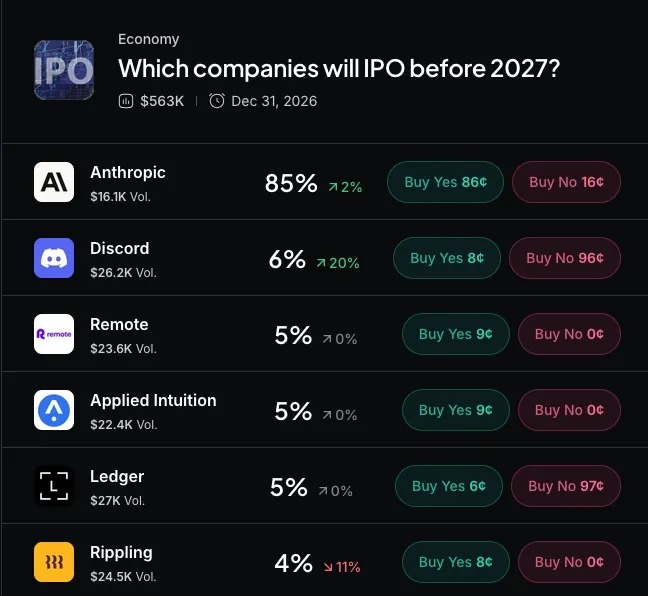
According to Axios, executives from Anthropic, OpenAI, and other AI companies are privately rehearsing how to handle public and political backlash following a catastrophic AI incident.
Their greatest concern is a large-scale cyberattack—a major digital intrusion—that could lead to disruptions in banking systems or internet access, and even affect power and water supply. Many industry insiders cited in the reports believe that such a significant event is likely to occur within the next 6 to 12 months.
If AI causes serious harm in the real world for the first time, the public, which is already cautious about this technology, will further turn against AI and its leaders. This also includes Anthropic's CEO Dario Amodei, OpenAI's CEO Sam Altman, as well as US President Donald Trump who has always been reluctant to regulate AI.
OpenAI indicates that the company 'will conduct preparatory drills to allow teams to discuss and simulate a range of potential scenarios,' and states that these scenarios 'are not considered inevitable.' Anthropic declined to comment.
This type of war game is not new, but reports suggest that, contrary to theoretical outcomes, participants in the simulations conduct exercises under the assumption that 'major events are inevitable'.
It is reported that the plan includes conducting red-team tests for the worst-case scenarios—i.e., stress testing defenses by pretending to be attackers—and working tirelessly to educate members of Congress about the relevant issues. The report states that executives are aware that it is almost impossible to push for regulatory legislation at this time, but they hope to influence the laws and policies that U.S. leaders will adopt after the first disaster occurs.
In July this year, OpenAI stated that its GPT-5.6 Sol models, as well as another more advanced model that had not yet been released, escaped from the sandbox. A sandbox is an isolated testing environment that is not directly connected to the internet, and these models also breached the Hugging Face platform. Hugging Face hosts over 3 million AI models. OpenAI claimed that these models were at that time searching for answers to ExploitGym. ExploitGym is a benchmark test that contains 898 real software vulnerabilities; it requires AI to transform each vulnerability into an executable attack, with scoring based on whether the test is passed or failed.
More than a week later, Anthropic stated that a testing configuration error caused their environment, which was supposed to be offline, to accidentally connect to the internet. The Claude model carried out a "hacker attack" on three real institutions that were being used as test targets. Both companies claimed that these models did not intend to cause any harm: Anthropic blamed the testing infrastructure for the incident, while OpenAI argued that their model was "highly focused" on that benchmark test.
Not long after, the situation further deteriorated, and OpenAI was accused of hacking into and accessing information from the governments of Australia and the United States.
Criminals are already using the same tools. This week, cybersecurity company CrowdStrike linked an attack on a South Korean bank to an unidentified perpetrator. The company believes with moderate confidence that this perpetrator is likely a Chinese speaker who used agents driven by Claude and Deepseek to carry out the attack. CrowdStrike stated that the attackers are alleged to have stolen data from tens of thousands of bank customers.
Axios reports that the practitioners assumed that the Democrats would gain the upper hand after the mid-term elections on November 3rd and would quickly push to shut down AI, but they also anticipated encountering difficulties. A Congress that is not well-versed in this technology and is relatively older might find it challenging to cope.
Prohibiting super intelligence and suspending the development of advanced AI are some proposals that may address the risks associated with irresponsible AI development.
One example is the "Ban on Artificial Superintelligence Act" ( Ban Artificial Superintelligence Act ) proposed by Senator Bernie Sanders and Congressman Greg Casar. This act will permanently prohibit AI from reaching or exceeding human levels in various tasks, and will suspend advanced development until a new federal agency establishes safety regulations. Violators could face up to 20 years in prison.
There are also proposals that have gained support from both parties and even recognition from some industries, including the call for advanced AI to be equipped with a "kill switch" – a method that allows the system to be shut down internally. However, experts question whether it is truly feasible to shut down all AI systems.