
















Say goodbye to working on Fridays – and perhaps even to work itself. Jeff Bezos, the founder of Amazon, predicts that this could be the future brought about by AI.
Unlike technology peers such as Anthropic CEO Daniel Amodio ( Dario Amodei ) and OpenAI head Sam Altman ( Sam Altman ) who have warned about technical risks, Bezos recently stated that he sees a not-too-distant future where productivity improvements driven by AI will enable people to support themselves more easily, thus requiring less working time.
"Some people decide that working three days a week is enough to support their families. This is what productivity means in economics," Bezos said in an interview with Fox News this week.
He added that during the AI era, there was an abundance of wealth and resources, which could even lead to a shortage of labor force, as many families would revert to a single-income model, meaning that if a family member did not want to work, they did not have to.
"You don't need a dual-income family. If you do want one, that's certainly possible. If not, one of the partners might have to step back," Bezos said, "…Recruiting will become more difficult because productivity in the economy will mean that people won't have to work two jobs if they don't want to."
Bezos says AI poses a challenge to investors, but his own company will benefit.
While seeing the long-term potential of AI, Bezos also acknowledges that as this technology reshapes the economy, the paths faced by investors will become more uncertain.
When asked whether the AI craze was a bubble, Bezos said it was "difficult to know." He believes that the technology itself is real, even though the rush to embrace it means that funds are flowing towards companies that may not ultimately succeed.
"What I know is that this technology is real. I think it's a good thing for society," Bezos said, adding, "But it's tricky for investors. Every experiment gets funding support—good ideas and bad ideas alike. Right now, in this struggle, it's very difficult for investors to distinguish between good ideas and bad ideas."
Amazon, founded by Jeff Bezos in a garage in 1995, is one of the many large corporations that have bet heavily on AI. The company plans to spend over $200 billion in capital expenditures this year, mainly due to investments in data centers. At the same time, since the end of last year, Amazon has laid off about 30,000 employees, which highlights the tension between the promise of AI to bring higher productivity and the uncertainty faced by employees in the context of the company's restructuring.
Bezos may also benefit from the AI craze through his space exploration company, Blue Origin. The company intends to build data centers in space and ultimately expand human activities to the moon and beyond. It is reported that Blue Origin raised $10 billion in its latest round of financing, increasing the company's valuation to $140 billion, which also boosted Bezos's net worth to $365 billion.
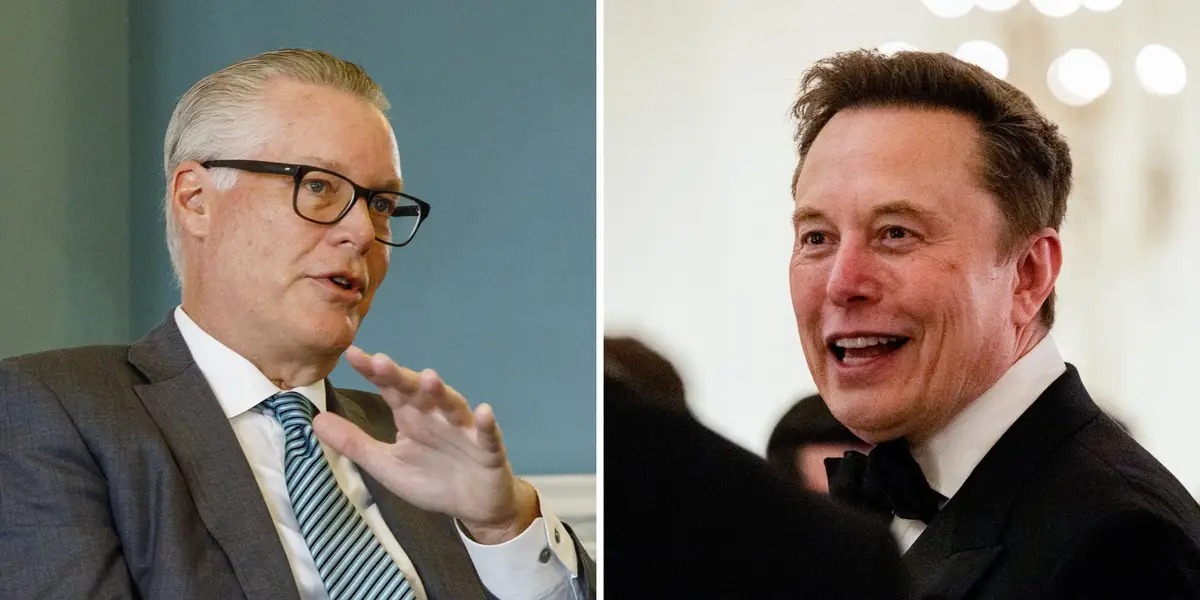
From Jamie Dimon to Elon Musk, business leaders predict that AI will shorten the workweek, but there are differing opinions on the extent of such reduction.
Bezos is not the only business leader to predict that AI will increase productivity and give employees more flexibility. However, there is disagreement among business leaders regarding to the extent to which this technology will reshape the workweek and whether it will ultimately make work a choice option.
NVIDIA CEO Jensen Huang once stated that AI "is very likely" to lead to a four-day workweek; JPMorgan Chase CEO Jamie Dimon predicted that employees might eventually work only 3.5 days a week; Bill Gates went even further, suggesting the possibility of a two-day workweek.
But perhaps no executive has made more radical predictions than Elon Musk. This founder, SpaceX, has stated that AI and robotics technology could usher in an era of “high income for all,” reducing the importance of money and making work no longer necessary for people.
At the end of last year, Musk said, "In less than 20 years – but perhaps as soon as 10 or 15 years – advancements in AI and robotics will bring us to a point where work will become an optional choice."