

After U.S. President Donald Trump stated that the United States would not attack Iran before the midterms on November 3, Bitcoin rebounded to around $82,500, but it was still about 4% lower than a week earlier.
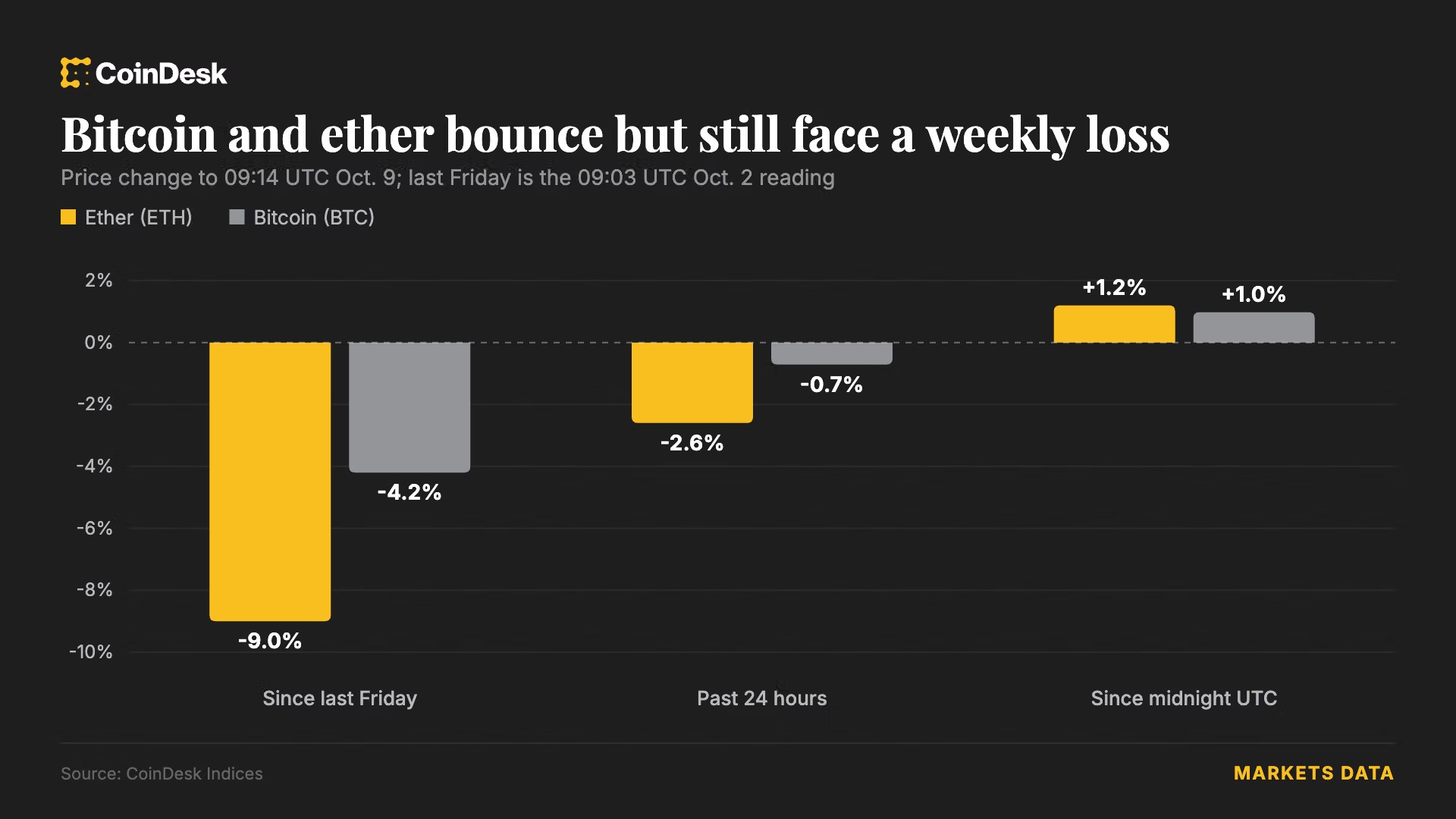
Small-cap tokens led the rally this time, with the CoinDesk 80 index rising by 2.2% since midnight Coordinated Universal Time (UTC). However, the CoinDesk 100 index still fell by 2.2% in the past 24 hours.
The STRK of Starknet has soared by 33%. Previously, the network stated that it was considering transforming into an independent Layer blockchain in order to achieve full quantum resistance by 2027.
Small-cap tokens lead the recovery in gains, with CoinDesk rising 2.2% since midnight Coordinated Universal Time (UTC), exceeding twice the increase of CoinDesk which is 5%.
However, this rebound has not yet erased the losses from Thursday. CoinDesk fell by 2.2% in the past 24 hours, and DeFi token lost nearly 4%. Bitcoin, Ethereum, and zcash ETF listed in the United States experienced outflows on Thursday, making XRP fund the only crypto product to record inflows.
Ethereum Foundation researcher Justin Drake called for entering a “bunker mode,” a statement that, along with the sell-off on Thursday, sparked negative sentiment and was also met with opposition. Cryptographer Yehuda Lindell, also known as Coinbase, dismissed these concerns as “fear, uncertainty, and doubt,” stating that there is no evidence to suggest that the elliptic curve assumptions upon which Bitcoin and Ethereum rely have been compromised.
Boosted by Trump's statements, U.S. stock index futures also rose. Nasdaq 100 index futures have risen by 0.83% since midnight Coordinated Universal Time, and S&P 500 index futures have risen by 0.44%.
Derivative positions
According to the data from Coinalyze, the open interest in Bitcoin futures has decreased by 1.9% over the past 24 hours to $27.1 billion. Although Bitcoin has rebounded to around $82,500, there has been almost no change in the open interest since the sharp decline on Thursday afternoon, indicating that this rebound was not driven by new leverage.
The funding rate remains positive, at around 5% annually. The predicted rate is slightly higher, which means that long positions are still incurring costs. The annualized basis for futures expiring on October 30th is approximately 7%. Deribit
The number of accounts holding long positions in Bitcoin is nearly twice that of those holding short positions. The long-to-short ratio summarized by Coinalyze is 1.85, which means about 65% are long positions, higher than the nearly balanced level at the beginning of this month.
CoinGlass data shows that within the past 24 hours, the total amount of margin calls across the market reached 1.09 billion US dollars, of which long positions accounted for 931 million US dollars, approximately 85% of the total. Ethereum led with 345 million US dollars, followed by Bitcoin's 266 million US dollars and solana's 65 million US dollars. The largest single margin call occurred on a ETH-USD position worth 20 million US dollars on Hyperliquid.

Token Dynamics
STRK of Starknet has risen by 33% in the past 24 hours. Previously, the network stated that it was actively considering breaking away from Ethereum to become an independent blockchain, with the goal of achieving full quantum resistance by 2027. This plan has not yet been approved. This move comes a few days after Abstract of Pudgy Penguins became the second Ethereum network to be shut down within a week.
Kaia ( KAIA ) is trading at $0.03783. This project, Layer, which was formed by the merger of Klaytn under Kakao and Finschia under LINE, has seen a 40% increase since midnight Coordinated Universal Time (UTC) after its launch on South Korea's largest exchange, Upbit. Other Layer tokens have also joined the rally, with aptos ( APT ) rising by 12%, and cosmos ( ATOM ) as well as polkadot ( DOT ) both increasing by nearly 10%.
On Thursday, tokens that had seen significant gains earlier in the day have largely reversed those increases. Algorand (ALGO) led with a 9% increase on Thursday morning among CoinDesk, but has since fallen by 14% in the past 24 hours; curve (CRV) had risen by 11% before and has now fallen by 13%.
Two AI tokens failed to participate in this round of rebound. Previously, the disclosure of OpenAI's revenue hit the AI stock. On Thursday, CNBC confirmed that OpenAI stated to investors that its annualized revenue as of the end of September was $50 billion, lower than the widely reported figure of $68 billion from last month; the Nasdaq Composite Index also recorded its largest single-day decline since mid-August. The proxy payment tokens kite ( KITE ) and venice ( VVV ) both fell by about 9% in the past 24 hours and have continued to decline slightly since midnight UTC.
The oracle token PYTH, designated by Pyth Network, has seen a 13% increase in the past 24 hours, becoming one of the few tokens to record gains in both time periods.