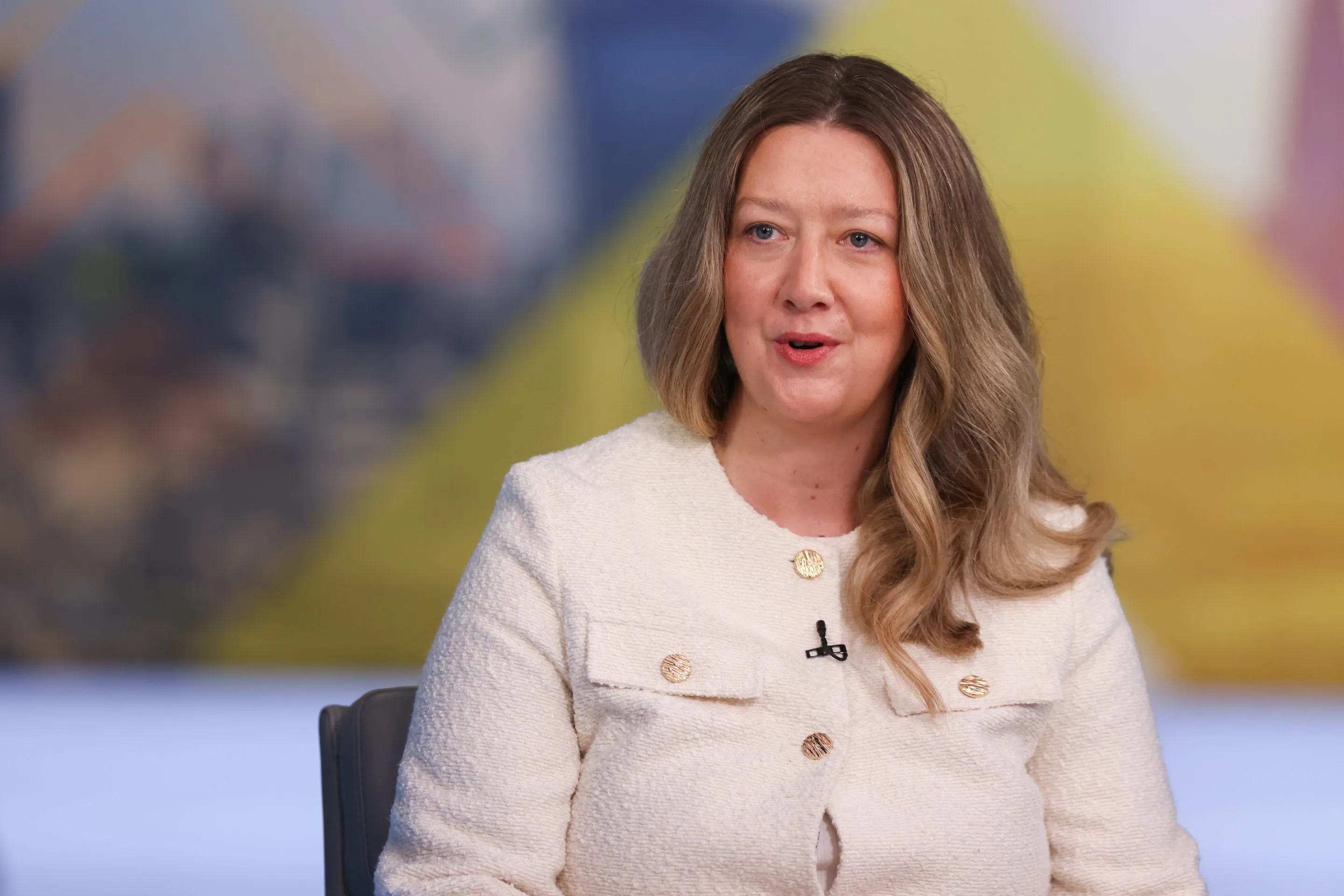


Since Febe Punsalan, the human resources director, started working at this company headquartered in Santa Clara, California, 19 years ago, NVIDIA has undergone significant changes. Twenty years ago, NVIDIA was mainly known for manufacturing GPU, chips that enabled computers to render 3D graphics in video games. Today, it has become an important player in the global artificial intelligence industry, developing computing chips that provide the computational power needed to train the most powerful models.
As employees of leading AI companies continue to warn about the so-called survival risks of artificial intelligence, NVIDIA's CEO Jensen Huang is much more cautious about the prospects of AI. He believes that the probability of AI ending the world is "zero." Despite the seemingly increasing stakes of AI transformation, Punsalan said that NVIDIA "is always faithful to our culture." She stated, "Our workforce is growing, and we use AI programming and agent tools every day."
One region where the company has expanded rapidly is Europe. NVIDIA ranks 14th on Fortune’s list of the top 100 best employers in Europe, and its infrastructure supports 90% of AI factories in Europe – the largest GPU cluster in Europe is about to be launched in the UK. Punsalan said: “Europe is extremely important to our business, and we are growing in all regions and functions.” The company has offices in 15 European countries, and Europe is also an important hub for NVIDIA’s robotics and automotive research. At the same time, NVIDIA recently appointed a EMEA regional health director to adjust benefits according to local customs.
However, whether it's cutting-edge research and development, human resources, sales, or engineering, Punsalan says that NVIDIA's guiding principle has always been "the mission is always the boss." This slogan helps all employees work towards a core goal, rather than managing them through top-down directives. She says that the company encourages everyone to speak up, and the determination of task priorities also begins with listening to employee opinions. "We start by listening. This is deeply ingrained at NVIDIA," she says, "We have a very flat structure; we don't have an organizational chart. The way we operate is to first understand what the mission is and in which direction we need to move, and then we go all in. I think this is exactly why NVIDIA has become an excellent workplace."
This also results in a more flat organizational structure compared to other companies of the same size. Those responsible for strategically important projects usually report directly to the CEO. Huang has stated that he tries to keep the company's hierarchy at a minimum level, which is why he currently has 36 direct reports. The company encourages employees to speak their minds freely and indicates that they do not place much emphasis on organizational charts or hierarchical chains.
Salaries also provide a strong incentive. NVIDIA has a market value of $5.65 trillion, allowing employees to purchase company stock at a 15% discount from the market price using their wages. This benefit has made many employees millionaires. However, some employees also mention that this is often accompanied by the expectation of working late into the night, as well as a continuously stressful "pressure cooker" environment.
Punsalan acknowledges, "When you come to work at NVIDIA, it's a place full of challenges, and the work itself is also very challenging. But this job is meaningful, and that resonates regardless of whether you're in the United States, EMEA, APAC, or India. It also means that a great deal of dedication is required."
Despite the high requirements, the employee turnover rate is still very low. NVIDIA's global turnover rate is 3.7%, while the average in the tech industry is 21.9%; in the UK, 95% of NVIDIA employees consider it a "great place to work", compared to an average of 54% for UK companies.
This flat organizational structure is an important part of NVIDIA's workplace culture. The company encourages employees to submit suggestions to management, regardless of how long they have been with the company or their level of seniority. From interns to junior employees, to senior engineers, anyone can put forward ideas through a suggestion box. These suggestions are reviewed by project managers and are at least discussed in one-on-one conversations.
Punsalan said, "We established this mechanism a long time ago, with the belief that every idea is a good idea, so we take a look at them all. It's not like other large companies that have a ticket system; every suggestion is reviewed, considered, and responded to."
This approach later led to the company implementing a "free vacation days" policy during the COVID-19 pandemic, which has continued to this day. Today, NVIDIA's employees worldwide are entitled to two additional days off per quarter. Punsalan said, "The whole company comes to a halt. When you return to work, there won't be a pile of emails waiting for you because others were working while you were on vacation. And you're not required to work either. This comes from employee feedback, listening, and various ideas."
NVIDIA’s workplace policies have recently come under criticism for being “too frugal” compared to some of its competitors, as the company does not provide free lunch and snacks for its employees. Punsalan believes that the company focuses on other more important priorities rather than offering amenities such as cafeterias or gyms like other tech companies. She says that such benefits have also been criticized in the past as a way to keep employees on-site. Instead, NVIDIA places more emphasis on improving work-life balance and maintains a hybrid working arrangement without strict requirements for returning to office.
NVIDIA also hopes to provide lifelong support for its employees. In addition to paternity leave and maternity leave, the company also helps to repay student loans, provides support for taking care of elderly parents, reimburses the costs of in vitro fertilization and surrogacy, and offers support programs for employees with neurological diversity and the parents of their children. She said, "What really matters to us is what our employees value. We achieve this by listening—this is not just about food."
Many employees may not experience the dramatic trajectory of NVIDIA's transformation from a PC graphics supplier to a AI giant, but each stage brings its own changes and challenges. Punsalan added, "We care for and support our employees at different stages of their lives. In this way, they can do their best work at NVIDIA."
For the latest insights into each company on Fortune's list of the top 100 best employers in Europe, please visit that page.
Brief note: As the scope of responsibilities for CFO continues to expand, Fortune will host "C- Suite Conversations: Conversations with Financial Leaders" on October 28th. CFO from Loewe, Standard Chartered Bank, and MUFG Americas will join forces with Sam Birchall from Fortune to discuss how to build the next generation of financial leadership. Click here to register.