

The options market is sending a clear signal: some investors are making heavy bets that U.S. long-term interest rates will experience a sharp decline.
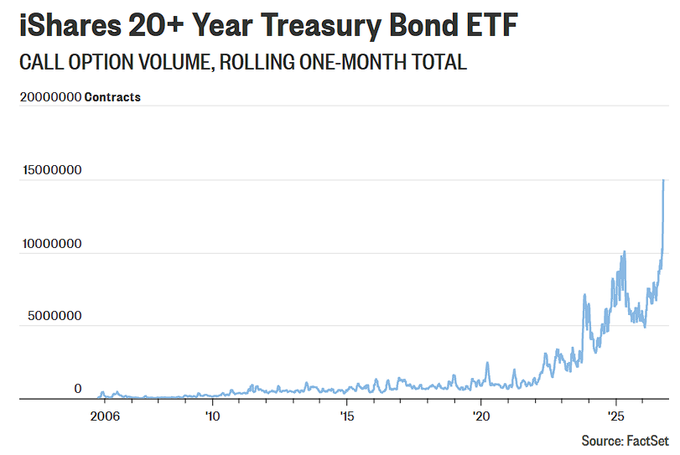
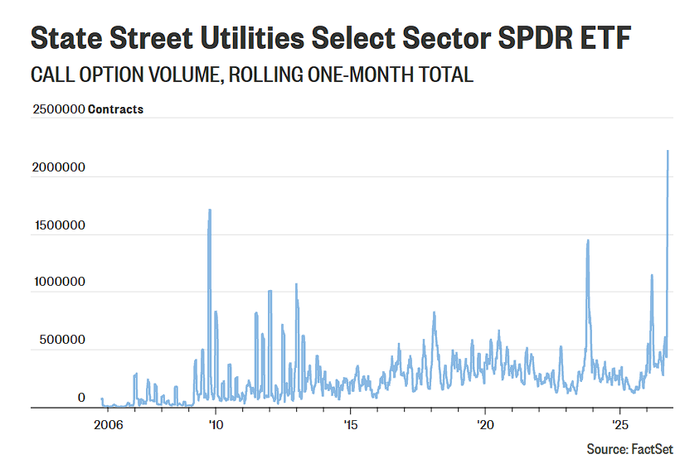
Interactive Brokers Chief Strategist Steve Sosnick stated that the expansion in call option trading volume "usually indicates that the market holds a bullish view on the underlying asset," and the increase in option activity TLT "very directly" reflects traders' expectations of a decline in long-term interest rates. Both of these types of assets—long-term government bonds and interest-rate-sensitive utility stocks—have been under pressure recently due to soaring yields, but historically, whenever U.S. bond yields have fallen, these two sectors tend to benefit first and experience a rapid rebound.
High yields, long-term US Treasury ETF has seen a decline of nearly 9% within the year
Current U.S. Treasury yields have risen to levels not seen in decades, exerting continuous pressure on long-term bond prices. According to FactSet data, the yield on 10-year U.S. Treasuries closed at 5.276% on Wednesday, while the yield on 30-year Treasuries closed at 5.660%, both at high levels in recent decades; the yield on 2-year U.S. Treasuries fell slightly to 4.762%.
The continuous upward trend in yields has dealt a heavy blow to TLT. Data from FactSet shows that TLT has experienced a total return loss of about 8.4% this year, with the September month seeing the worst monthly performance since December 2024, resulting in its cumulative loss for the third quarter expanding to nearly 9%.
Dual Logic for Utilities Stocks: Interest Rate Sensitivity Combined with AI Power Demand
The utilities sector has always been regarded as a typical interest rate-sensitive asset. Sosnick points out that the attractiveness of utility stocks to investors traditionally comes from their stable dividend payments, but when interest rates rise, the relative attractiveness of bonds increases, and the competitiveness of dividends declines accordingly, putting pressure on utility stocks.
FactSet data shows that XLU has fallen by approximately 10% in the past three months, and the total loss since the beginning of this year has reached 1.6%.
However, Sosnick also points out that the wave of artificial intelligence is changing the traditional driving logic of the utilities sector. The massive demand for electricity by data centers has deeply bound many utility companies to AI infrastructure construction. "People are extremely optimistic about the prospects of utilities, and part of that is due to the large-scale construction of AI infrastructure."
He specifically mentioned Constellation Energy – the company’s stock price soared this week due to a nuclear power supply agreement signed with Google’s parent company, Alphabet. As of last Tuesday, Constellation Energy held a 7.6% weight in XLU, making it the second-largest holding.
Option Signals: Traders Bet on an Inversion in Interest Rates Trend
A call option grants the investor the right to buy a certain security at an agreed-upon price before a specific date, but it does not constitute an obligation. When the trading volume of call options significantly increases, it usually indicates that market participants expect the price of the underlying asset to rise – in the case of TLT, this means they expect long-term interest rates to fall and bond prices to rebound.
Sosnick indicates that the increase in the activity of TLT call options is 'very direct', which means that 'bond bulls are entering the market'. Over the past few years, periodic declines in U.S. Treasury yields have triggered rapid rebounds in long-term government bonds, utilities stocks, home builders, and small-cap stocks on multiple occasions. This historical pattern may well be the core logic behind the bets made by current option traders.
It is worth noting that although the rapid rise in U.S. Treasury yields has put pressure on the stock market on several occasions, the strong enthusiasm for technology stocks and AI themes still drove both the S&P 500 Index and the Nasdaq Composite Index to record new highs on Tuesday. However, on Wednesday, there was a slight decline.
The tension between interest rate trends and the narrative of AI is becoming one of the core battlegrounds in the current market.