

Reports say that Anchorage Digital laid off 17% of its staff during the downturn in the crypto market.
It is reported that after receiving a $100 million investment from Tether earlier this year, Anchorage Digital has laid off 17% of its employees.
- It is reported that CEO Nathan McCauley informed the employees of the layoffs this week.
- If the total number of employees remains unchanged in February, a 17% layoff rate would correspond to approximately 68 positions.
- Tether announced on February 5th a strategic equity investment of $100 million in Anchorage.
- Anchorage Recent expansions include cross-chain stablecoin infrastructure, as well as providing custody support for tokenized uranium.
The Information reported on October 2nd that, according to sources familiar with the matter, McCauley has already informed its employees about the layoffs this week. The report contextualizes these layoffs within the backdrop of the long-term downturn in the crypto market.
The layoffs of Anchorage Digital are said to potentially affect about 68 positions.
In testimony submitted to Congress in February, McCauley stated that the total number of employees globally for Anchorage was approximately 400 people. If we calculate based on the reported layoff rate of 17%, and assuming that the company's employee base remains roughly the same, the number of layoffs would be around 68 people.
The figures disclosed in February cover employees worldwide; therefore, this calculation represents the potential overall scale of layoffs at the company level, rather than the confirmed number of layoffs in the United States.
According to information cited in reports, Anchorage had a valuation of $4.2 billion earlier this year. This round of layoffs occurred after that valuation was announced, and also after Tether made a recent investment; Tether has previously collaborated with USAT and Anchorage through its stablecoins targeting the US market.
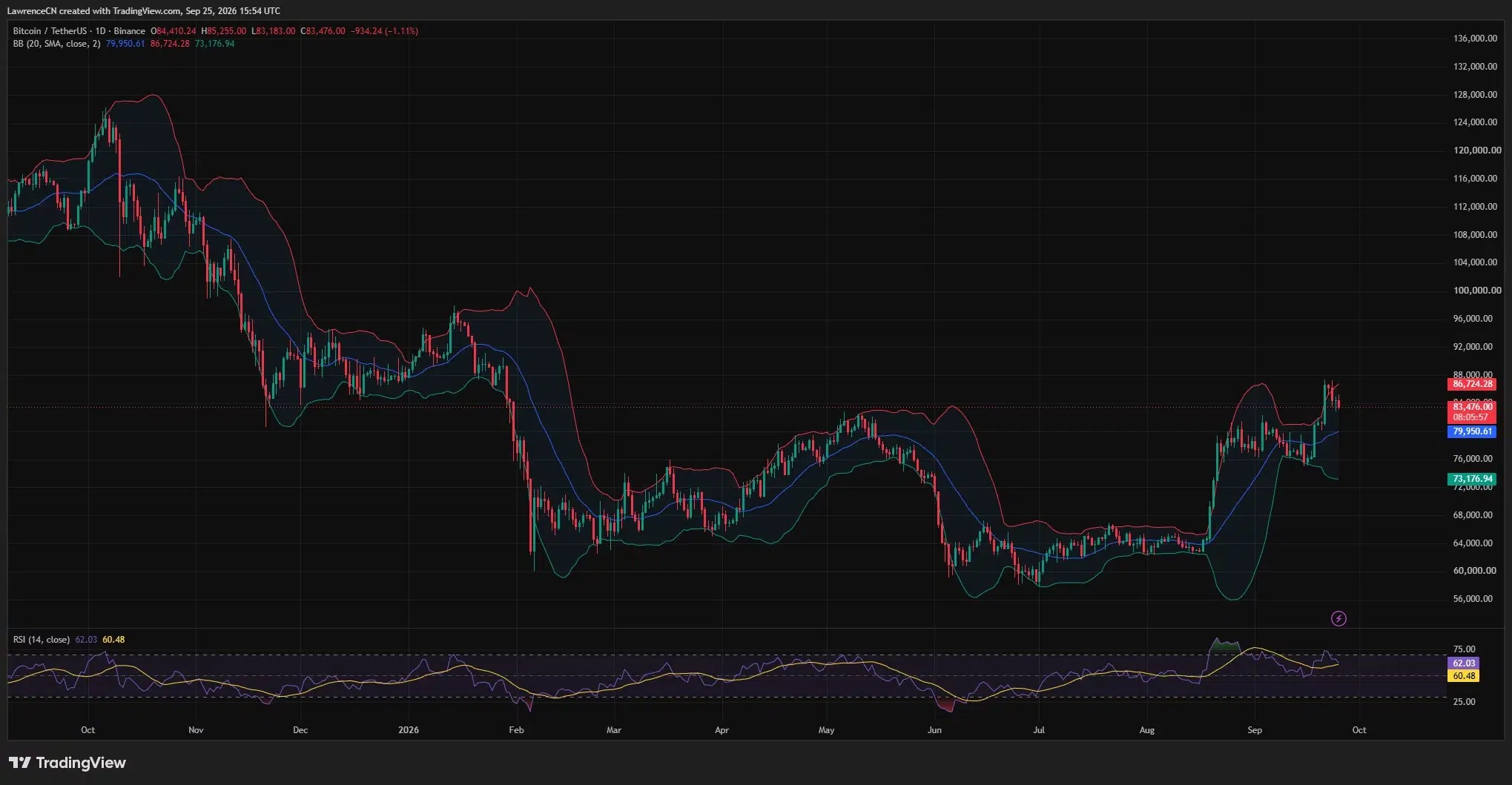
According to The Information, the weak state of the crypto market is the backdrop for this round of layoffs. The report also mentioned that Bitcoin briefly rebounded above $87,000 on Friday, but it is still below its peak of $126,000 set in October 2025.
After the launch of USAT, Tether invested 100 million US dollars.
crypto.news Previously, on February 7th, a financing report documented Anchorage this $100 million strategic financing. Two days ago, Tether Investments announced this equity transaction, stating that it was an extension of the existing cooperation between the two parties.
In the investment announcement, Tether listed custody, staking, governance, settlement, and stablecoin issuance as services provided by Anchorage. Tether also stated that its experience in collaborating with the banking and compliance infrastructure of Anchorage within the USAT project was one of the bases for its investment decision.
This transaction enabled Tether to acquire equity investments in the company responsible for issuing its new local stablecoin. According to the announcement from Tether, the legal issuer of USAT is Anchorage Digital Bank, N.A. This distinction maintains the boundary between the issuing responsibilities of that bank and the supporting role of Tether for this product.
According to the launch announcement of Tether, USAT entered the market on January 27th. The company described this token as a dollar-backed product, aimed at fitting into the US federal stablecoin framework established by GENIUS Act.
For US users, the announcement for Tether also lists the limitations on the scope of protection for this token. The announcement states that USAT is not legal tender, is not supported or guaranteed by the US government, and does not enjoy the insurance provided by FDIC or SIPC.
According to the launch schedule, Tether has designated Cantor Fitzgerald as the custodian of reserve assets and the primary tier trader. The platforms supported in the first phase listed in the announcement include Bybit, Crypto.com, Kraken, OKX, and MoonPay.
Cooperation with LayerZero in September to expand stablecoin infrastructure
In an earlier report on September 22, the collaboration on stablecoin infrastructure between Anchorage and LayerZero was detailed, with the announcement coming the day before. LayerZero stated that it would provide cross-chain infrastructure for stablecoins issued through the Anchorage banking platform, and USAT was listed as the first token to adopt this arrangement.
According to the announcement from LayerZero, this protocol makes its technology the preferred interoperable layer for qualified Anchorage to issue stablecoins. Anchorage is responsible for the regulated issuance, while LayerZero provides the infrastructure to connect the deployment of tokens across various supported networks.
The Omnichain Fungible Token standard of LayerZero allows issuers to maintain a unified token supply across multiple blockchains. The company stated that issuers can continue to control their contracts, independently choose the networks they support, and configure security settings for cross-chain messages.
On September 22, reports also mentioned that Western Union's USDPT, OSL Group's USDGO, and Falcon Finance's fUSD also belong to the product portfolio of Anchorage. Although LayerZero claims that its infrastructure supports over 170 networks, the reports also distinguish between this technical coverage and the confirmed deployment status of each stablecoin.
The same report also stated that regarding USAT, Anchorage will release monthly reserve certifications. Its first report for January indicated that there were 17.5 million redeemable tokens in circulation, with corresponding reserve assets of about 17.6 million US dollars.
Etherlink Custody expansion will bring more assets under the regulatory oversight of U.S. banks
In another report dated September 17th, Anchorage expanded its Etherlink custody services to cover 7 types of assets on the Tezos second-layer network. Anchorage indicates that institutional clients can hold these tokens through the isolated accounts provided by Anchorage Digital Bank.
The supported assets include xU3O8, wrapped, XTZ, stXTZ, USDT, USDC, USDSM, and wrapped as well as Ether. Anchorage indicates that customers can continue to use the existing custody policies and operational controls, without the need to establish a separate arrangement for holding Etherlink.
Among them, xU3O8 corresponds to physical uranium through Uranium.io. As stated by Anchorage, the addition of this asset is to enable institutional investors to hold tokenized commodity exposures within the same custody infrastructure as other digital assets.
The regulatory status of this bank in the United States can be traced back to January 2021, when the Federal Reserve Bank of San Francisco (OCC) approved Anchorage Trust Company to convert from a South Dakota trust company into a national trust bank. OCC indicates that this approval included a binding operational agreement covering capital, liquidity, and risk management requirements.
In the records of OCC for February 2026, the operating agreement initially signed by Anchorage Digital Bank in January 2021 has been listed as terminated.