














Why did Bitcoin whales transfer $30.5 billion to Binance?
The scale of Bitcoin whales flowing into Binance's stablecoins has increased by more than 40% in just over a month, pushing the 30-day cumulative total to $30.5 billion, while the trading price of Bitcoin is around $84,700.
- Darkfost reports that in the past 30 days, the scale of stablecoin transfers exceeding $1 million each to Binance reached $30.5 billion.
- In the past month or so, the scale of capital inflows by large investors („whales“) has increased by about 40%, rising from 21.7 billion US dollars to a higher amount.
- According to the data from CoinGecko for that day, Bitcoin was trading at around $84,700, with a 24-hour increase of about 1.2%.
- Stablecoins that flow into exchanges can be used for trading, but the transfer itself does not prove that a subsequent purchase of Bitcoin has taken place.
- CryptoQuant Data shows that on a certain day in September, Binance recorded a net outflow of over 13,800 BTC.
CryptoQuant wrote on October 2nd that this indicator tracks the deposits of stablecoins worth over $1 million that flow into Binance. This rolling total has risen from $21.7 billion to $30.5 billion in just over a month, indicating that large holders are transferring more dollar-pegged liquidity to this exchange.
Why did a giant whale transfer $30.5 billion to Binance?
Darkfost describes this growth as large investors gradually preparing more funds for market exposure. Stablecoins deposited in centralized exchanges can be quickly converted into Bitcoin or other crypto assets without the need to transfer funds through traditional banking channels first.
The figure of $30.5 billion is a 30-day cumulative inflow indicator. This does not mean that whales currently hold $30.5 billion in unused stablecoins on Binance, nor does it represent the total scale of the exchange's stablecoin reserves.
Compared to earlier peaks, the current level is still relatively restrained. Darkfost indicates that around October 2025, at that high point, the same 30-day indicator once exceeded $61 billion, only to then fall for several consecutive months.
During the downward trend, there were also some smaller rebounds. Darkfost associates these periods with traders attempting to capture technical rebounds or buy at lower levels, however, exchange capital flow data cannot identify the specific strategies employed after deposits were received.
His latest analysis remains cautious. Darkfost believes that as Bitcoin faces a constantly changing market environment, whales are deploying liquidity more carefully, and he also mentioned the seasonal expectations for October, as well as factors such as inflation, conflicts, and rising bond yields.
The inflow of stablecoins alone cannot confirm a buying interest in Bitcoin. Funds flowing into Binance can be used for spot purchases, derivatives margin, arbitrage, market making, or trading other cryptocurrencies.
Despite the inflow of whales, does the price of Bitcoin still face risks?
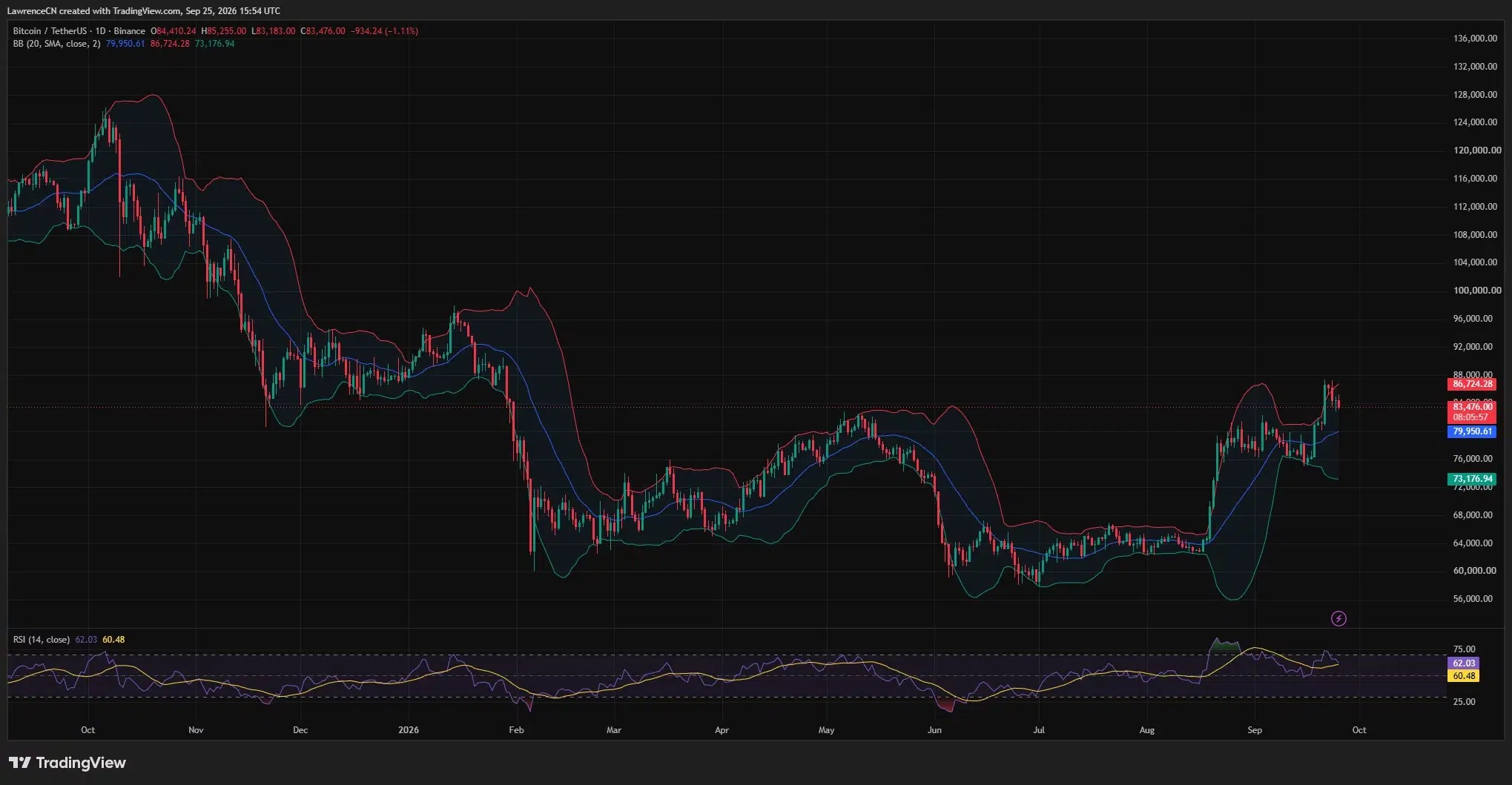
According to CoinGecko data, the current trading price of Bitcoin is around $84,700, with a rise of about 1.2% in the past 24 hours. The price range for the day was approximately between $83,182 and $85,183, while over the past 7 days it has been roughly between $82,581 and $85,518.
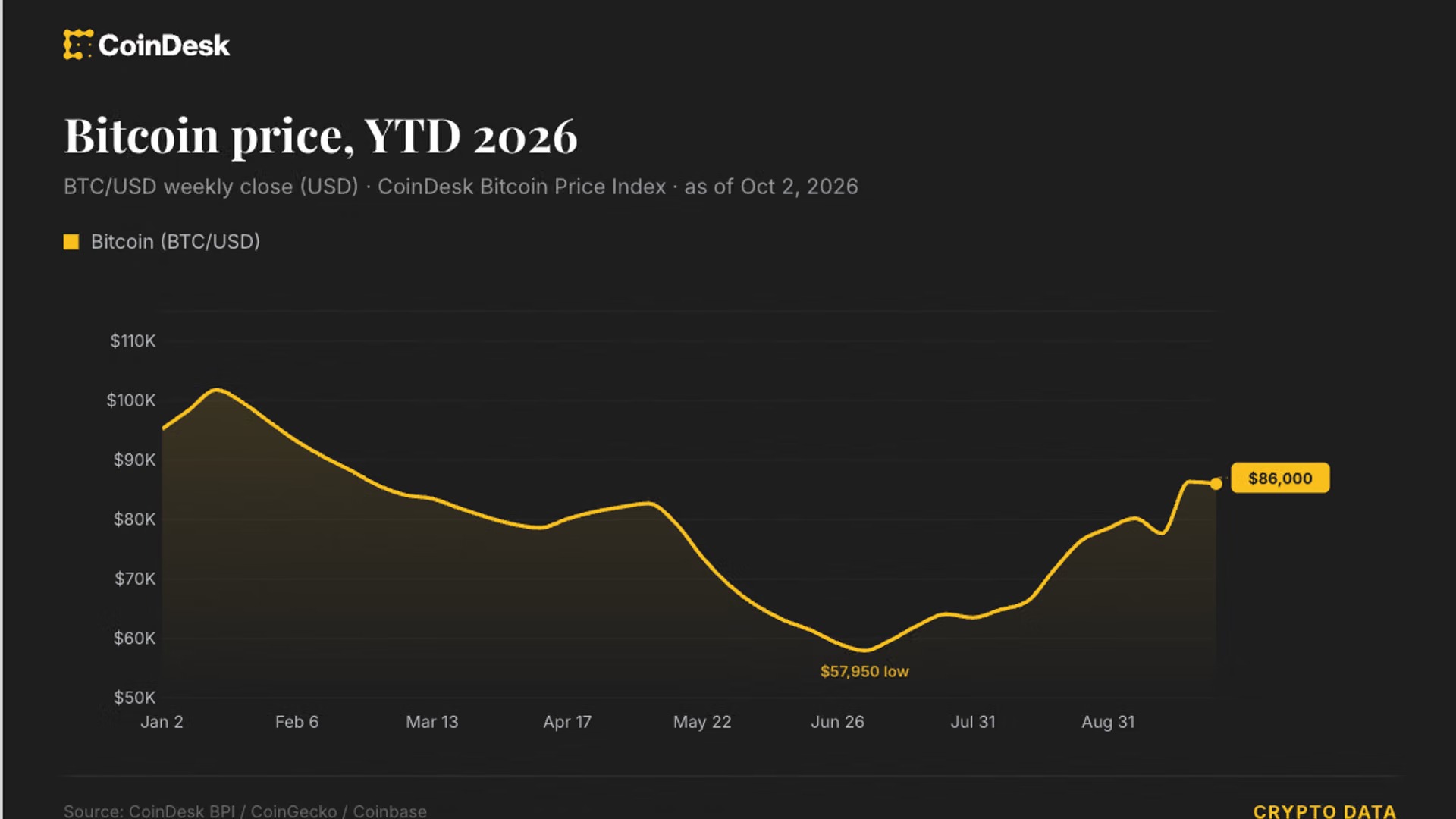
CoinGecko It shows that although Bitcoin has rebounded strongly from a low of below $76,000 in September, it is still nearly 33% lower than its historical high of $126,080. Its current market value is about $1.70 trillion, and the 24-hour trading volume is approximately $33.7 billion.
Recent price trends have brought the $82,500 to $83,000 range close to the lower edge of Bitcoin's latest weekly trading range. If this range is broken below, BTC will depart from the range that has been maintained during recent trading sessions; whereas around $85,500 represents the upper edge, which buyers have struggled to break through effectively.
The data on giant whale stablecoins cannot eliminate downside risks. The indicators for Darkfost show that more liquidity has flowed into Binance, but it does not indicate how much of this liquidity has been deployed, which assets the funds have gone to, or whether these deposits are still available.
Recently, even though other indicators have improved, Bitcoin has been struggling around the $84,000 level. Previously, in analyses where Bitcoin managed to remain around $84,000 despite the inflow of ETF funds, withdrawals from exchanges and institutional capital flows were considered supporting factors, yet the price remained below the $87,000 range.
To convert the current influx of whales into confirmed Bitcoin demand, these stablecoins need to be further converted into BTC buy orders. The CryptoQuant data cited by Darkfost does not track this second step.
While stablecoins are flowing in, Bitcoin is flowing out of Binance.
Another indicator of Binance's capital flow shows a change in the opposite direction.
According to data cited from CryptoQuant by crypto.news, on September 25th, Binance recorded a net outflow of over 13,800 BTC in a single day, which is the largest single-day net outflow since 2023. Within 4 days, Binance's Bitcoin reserves decreased from approximately 705,000 BTC to 685,000 BTC.
This represents the largest single-day outflow of Bitcoin from Binance in three years, reducing the amount of BTC that can be immediately used for trading on the exchange. However, withdrawals do not necessarily indicate that holders intend to hold the coins in the long term, as assets may also be transferred for reasons such as custody adjustments, collateral usage, over-the-counter transactions, or other purposes.
Darkfost At that time, these withdrawals were interpreted as accumulation signals, as the Bitcoin trading price was above $84,000. However, this conclusion was still an interpretation by analysts based on exchange data and is separate from the original net flow indicator itself.
Considering the latest stablecoin deposits, Binance has recently seen two different types of large-scale capital flows: BTC has flowed out of the exchange wallet, while large-scale stablecoin transfers by whales have flowed into the platform.
Looking at them separately, neither of these two indicators can confirm the direction of the transaction. Bitcoin withdrawals show that funds are flowing out of Binance, while the stablecoin indicators indicate that deployable funds are flowing in.
Counterfeit coin activities complicate Bitcoin buying signals
As large-scale stablecoin deposits flowed in, the market also saw strong activity beyond Bitcoin.
Darkfost reported on September 27th that 87% of the altcoins listed on Binance had trading prices above their 200-day moving average. Just a few months ago, 84% of the coins were still below this long-term indicator.
Since June, the market value of altcoins has increased by over $371 billion. During the Darkfost analysis period, the TOTAL2 indicator rose by about 45%. This indicator includes Ethereum, but does not include Bitcoin.
As altcoins pick up, so do deposits on exchanges. In September, the 7-day average number of altcoin deposit transactions on Binance reached approximately 31,800, which is almost four times the 8,300 transactions in July.
Binance's altcoin deposits have increased to 31,800 transactions, indicating that there are more tokens available for trading, but this does not necessarily prove that holders have sold them. Darkfost suggests that this increase "may be related to selling pressure," but also points out that the selling activity in the data has not yet reached an abnormally high level.
In his updated analysis, he stated that after a rapid increase in market breadth, the altcoin market is approaching a state of "frenzy." Among the altcoins listed on Binance, nearly 90% are trading above their 200-day moving averages, representing a clear reversal from the market conditions at the beginning of the year.
Darkfost has not provided any data to prove that these $30.5 billion of stablecoins from large whales originated from the sale of altcoins, nor has it been proven that this funds are directly flowing into Bitcoin. The latest data confirms that as Bitcoin approaches the upper range of its recent weekly trading range, the large amounts of stablecoin deposits entering Binance are accelerating.