












Pressure may rise further.
Is there more for sale?
Pressure may rise further.
According to CryptoQuant data, on September 28th, the total number of transactions related to fake coin deposits reached approximately 78,000 in seven days, compared to about 29,800 on September 14th. This is the highest figure since October 2025. More importantly, the number of deposit addresses nearly increased from 17,600 to about 51,600, indicating that this growth is widespread and not driven by a few large wallets.
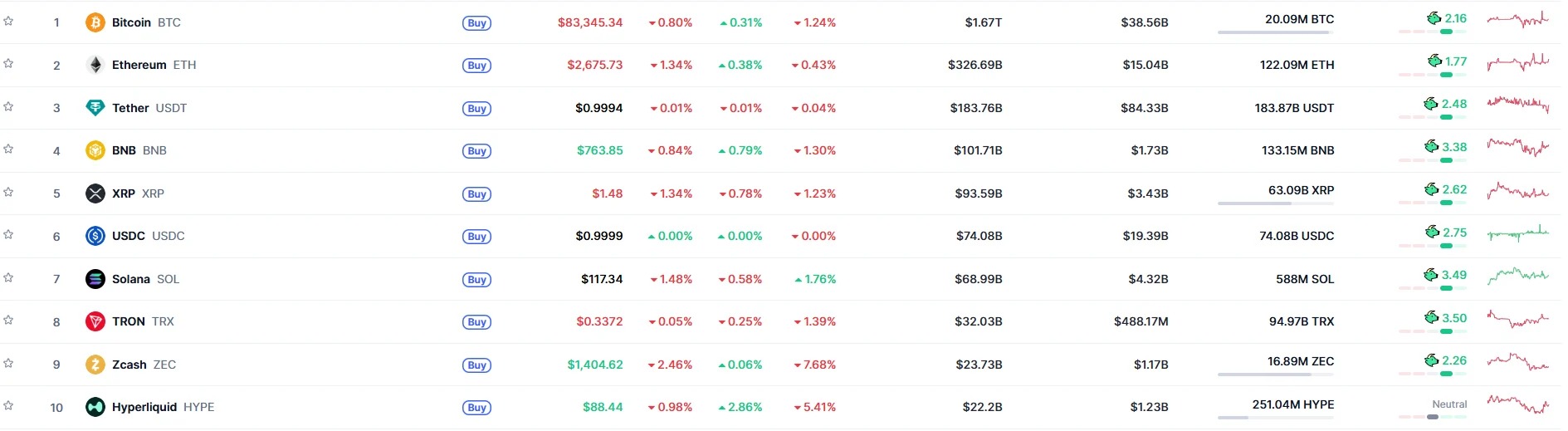
This has created an uncomfortable backdrop for some of the strongest-performing cryptocurrencies in September. According to the market data provided, Near Protocol ( NEAR ) has risen by about 21.7% in the past seven days and is currently trading at around $5.29. Stellar ( XLM ) has also seen a rise of about 9.9% this week, trading at $0.2236, while XRP has seen a significant increase in September and is now trading at around $1.48.
Is there more for sale?
The problem is that these price increases have significantly expanded the number of holders who have not yet realized a profit. Transferring tokens to centralized exchanges does not necessarily mean that investors will sell them, but it does put these assets immediately within reach of market liquidity.
Therefore, CryptoQuant interprets this surge as a sign of increasing selling pressure. At the same time, there are signs that momentum is no longer so consistent. Although NEAR and XLM have performed strongly this week, they have fallen by about 2.9% and 1.5% respectively in the past 24 hours; XRP has fallen by about 1.2%.
A broader environment also warrants caution. CryptoQuant Data shows that the spot demand for Bitcoin has decreased by about 170,000 in the past 30 days, BTC, while speculative futures demand fell by about 90% between September 14 and September 29. Investors who bought Bitcoin recently also hold an average of about 33% unrealized profits.
None of these can prove that the upward trend of XLM, NEAR, and XRP has clearly come to an end. However, high prices, widespread profitability, and deposit activities in altcoin exchanges that are near their highest levels in over a year combined to significantly increase the distribution risks. The next test will be whether market demand can absorb these deposits without breaking below the support level established during the upward trend in September.
Success!