

DogeOS hopes to transform DOGE from being merely a payment and speculative asset, but its current application still relies on designated operators rather than Dogecoin miners.
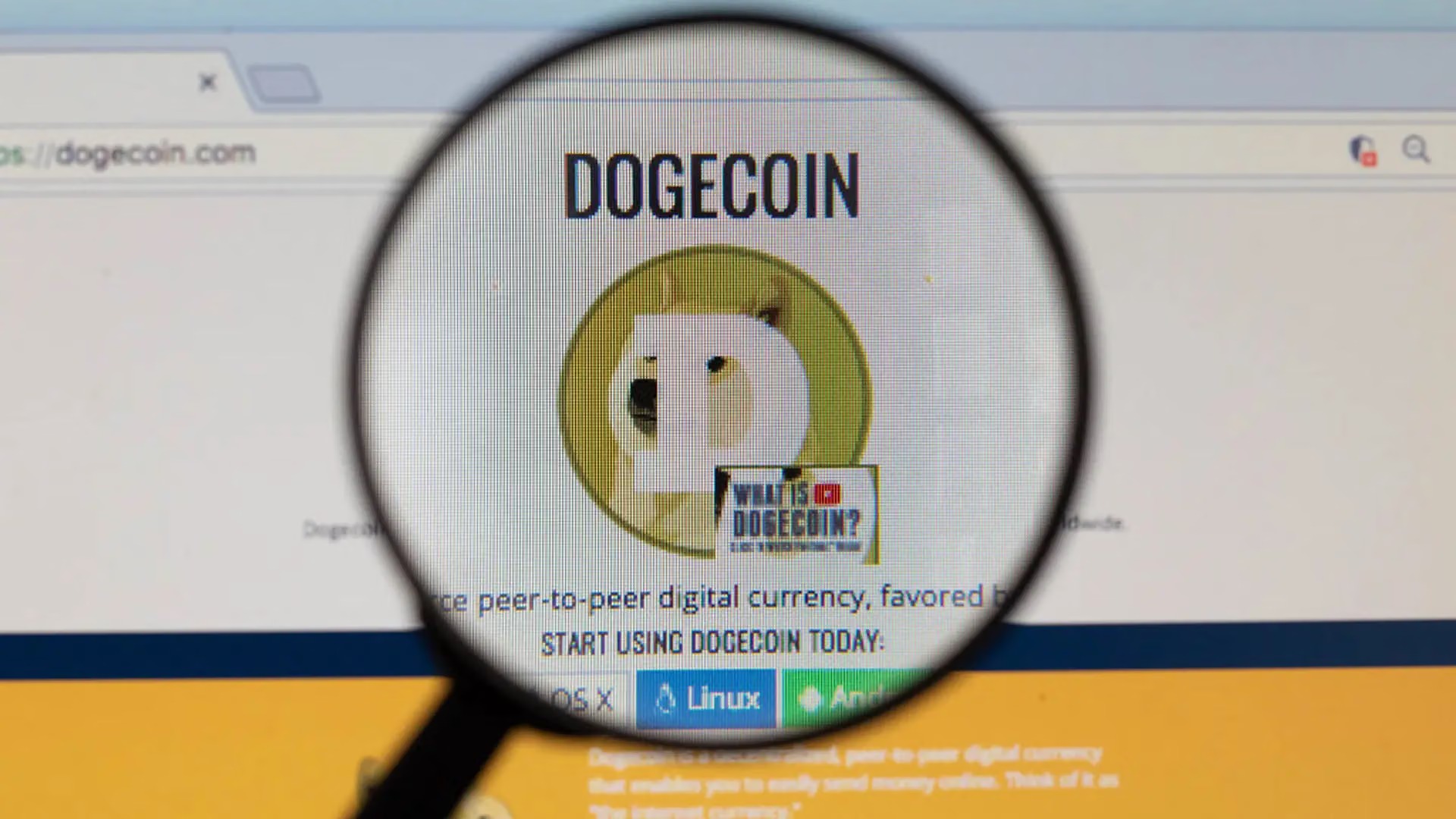
DogeOS has launched a public test network, allowing developers to use the beta version of DOGE to build Ethereum-compatible applications for trading, lending, and stablecoins.
The network initially relied on a designated operator, protected hardware, and a security committee; however, a proposed Dogecoin Core upgrade will ultimately allow Dogecoin miners to verify these proofs.
DogeOS has not yet set a mainnet launch date, and after the weak capital inflow into Dogecoin ETF and the weakening of the early memecoin application network, it still faces doubts regarding demand.
DogeOS has launched a public test network that supports the development of Ethereum-like transactions, lending, and other applications using DOGE. The aim is to provide Dogecoin holders with more ways to utilize their tokens beyond just payment and price speculation.
The network was launched on Wednesday. It is compatible with Ethereum, allowing developers to use familiar software to build applications. For trial use, the beta version DOGE is employed to pay transaction fees. Related projects are developing lending services, a trading platform, and a stablecoin secured by cryptocurrencies.
DOGE is one of the largest cryptocurrencies, with a market value of about $13 billion. However, the majority of it remains in wallets or is simply traded between exchanges.
If holders can use their own tokens for lending or trading, it will provide a reason to hold DOGE, rather than just betting on its price.
Why Dogecoin?
Dogecoin itself is designed to perform only one task: to transfer DOGE between wallets. It cannot operate lending services or exchanges. DogeOS runs these applications on an independent system and allows users to transfer DOGE into it, which means that users need to trust that the system will maintain honest records. DogeOS plans to support this trust with mathematical proofs—these proofs are concise pieces of data that show that work has been done according to the rules, without the need for anyone to repeat it; ultimately, it is also hoped that Dogecoin's own network will verify these proofs.
The first version relies on the operator and hardware selected by DogeOS. A licensed sorter, that is, an authorized operator, determines the order of transactions.
Verifiers – computers responsible for checking and approving updates – work in conjunction with a Trusted Execution Environment (TEE), which is a protected area within the hardware used for verifying proofs. Details shared by the team indicate that a committee named Security Council is responsible for overseeing this system.
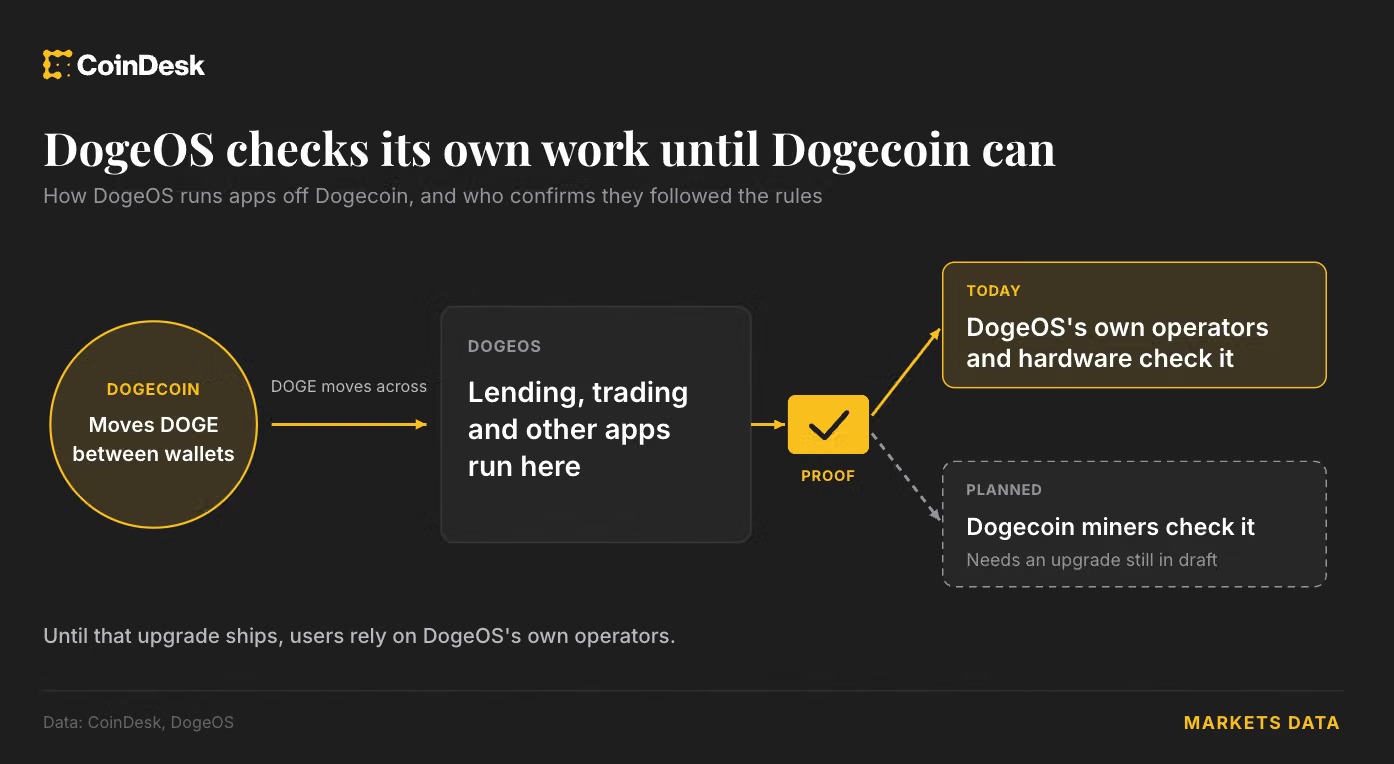
Therefore, those who use the applications within these plans will depend on the proper functioning of these operators and hardware. Dogecoin miners currently do not verify application proofs on their own.
DogeOS hopes to have them take on this role through the upgrade of Dogecoin Core. Dogecoin Core is the main software that runs this network. Its proposal, named OP_CHECKZKP, will add a rule that allows computers on the Dogecoin network to check whether calculations performed elsewhere are correct.
The proposal was released in July 2025. Another independent implementation submitted in December is still in the draft stage and includes a placeholder proof checker that requires further development before it can be activated.
DogeOS was founded by the MyDoge team, and MyDoge is a Dogecoin wallet. The founder, Jordan Jefferson, told CoinDesk this month that purchasing DOGE has become much easier. However, after Bitwise announced that it would close its Dogecoin ETF, there is a need for a stronger reason to attract institutional investors.
The demand for these funds has hardly been reflected at all. Analysis by CoinDesk shows that the three American dogecoin funds ETF have recorded a total net inflow of only about 12 million US dollars in the past 10 months, which is less than the inflow of XRP fund on September 9th alone. Moreover, there were 166 days out of 199 trading days without any net flow. The Bitwise fund had a scale of less than 700,000 US dollars when it was announced to be closed.
DogeOS is how Jefferson attempts to establish this rationale through applications that people actually use.
Jefferson told CoinDesk: “No other digital asset possesses the combination of liquidity, community, and cultural influence that Dogecoin has, and its potential has hardly even been tapped yet. With the help of DogeOS, developers can finally build applications on Dogecoin; with the help of MyDoge, they will be able to bring these applications to users from day one.”
He added, "For many years, the community has been saying 'Doge to $1.' A real economy built on Dogecoin is the way we can achieve this goal, and even more ambitious goals as well."
Related Reading: Dogecoin ETF struggles to find buyers, while competitors XRP and Solana funds have attracted $3 billion
Not the first “dog”
Previous attempts to introduce applications into memecoin were not successful. Dogechain was launched in 2022, featuring a narrative approach that allowed DOGE holders to transfer their tokens to an independent network for trading tokens, using financial applications, and purchasing digital collectibles. CoinDesk reported at the time that the network attracted approximately $4.6 million in deposits within a few days. Currently, less than $300 remains in its financial applications.
The developer of Shiba Inu subsequently launched Shibarium in 2023, building a network connected to Ethereum around its dog-themed token for financial services and gaming. According to DeFiLlama data, the financial applications tracked currently hold about $140,000, which is a significant decrease from the peak of approximately $6.4 million.
Related Reading: As Dogechain gains attention among retail crypto traders, Doge Coin prices rise.
The difference between DogeOS and Dogechain lies in their support for background and plans. Dogecoin Foundation clarified its stance when Dogechain was launched, whereas the foundation director Timothy Stebbing expressed support in the launch announcement of DogeOS, stating that it could add applications without altering the Dogecoin infrastructure. DogeOS also intends to link security with Dogecoin's own miners, but this step depends on an upgrade that is still in the draft phase.
DogeOS has not yet announced the mainnet launch date. The proposed Dogecoin upgrade also does not have an activation date.