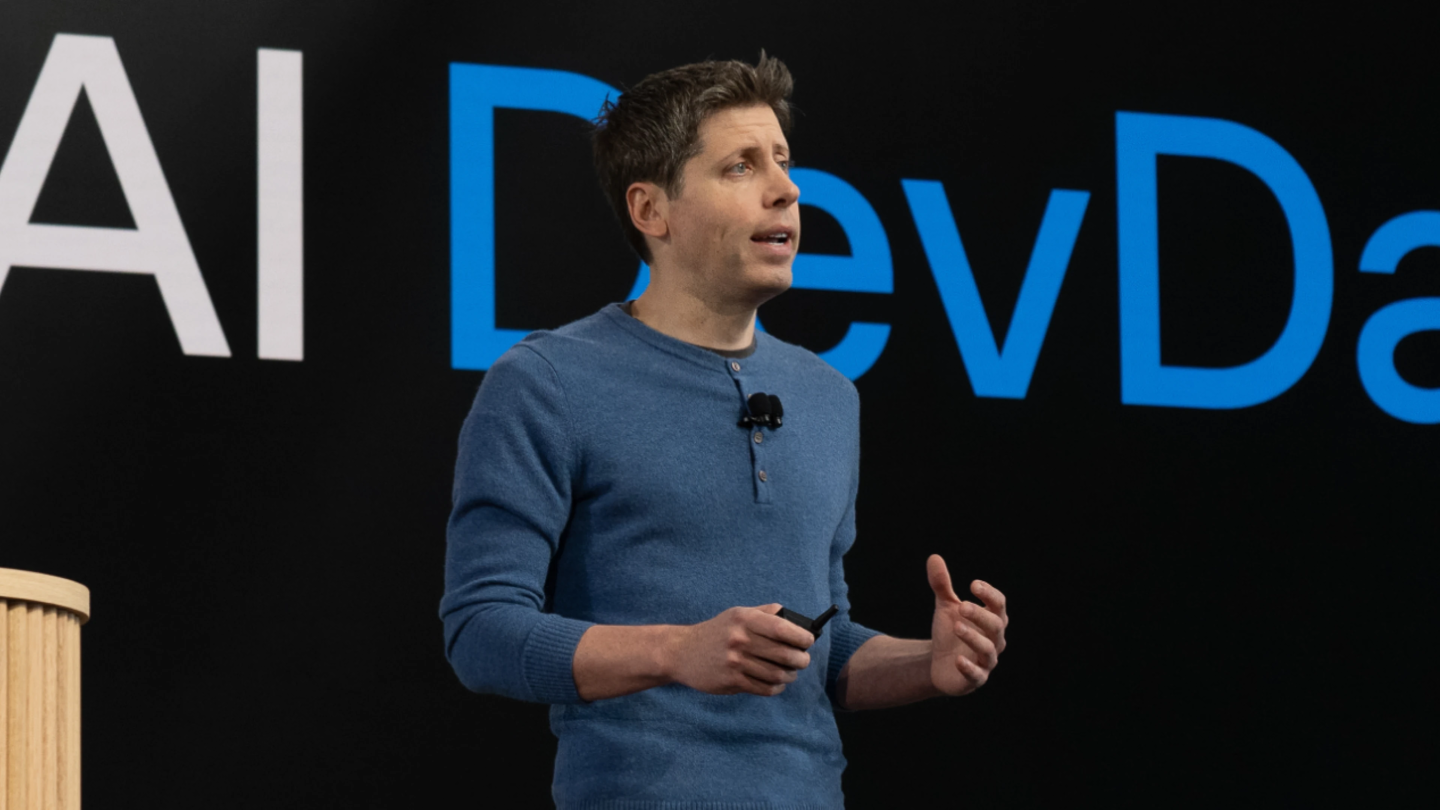


At the developer conference on September 29th, OpenAI unveiled a new product called Dots. It's not about adding an extra button to the chat window; rather, it aims to shift AI from a “ask-and-answer” model to a continuous follow-up approach: users will have their own cloud-based computers and browsers that allow them to use connected tools. Even if a task is halfway completed, they can return to ChatGPT, Slack, or Teams while retaining the context of their work. OpenAI refers to it as an “always online” proxy. This term might easily bring to mind a sleepless digital colleague, but what truly determines whether it can become a part of daily work is when it must pause to seek human assistance.
Currently, Dots has begun to be rolled out to users in Pro and Business Premium who meet the regional criteria; for enterprise, education, and medical workspaces, the test version is enabled by administrators, so not every ChatGPT user can use it directly today. OpenAI indicates that the first Dot is included in the respective packages, but more in-depth tasks have usage quotas. Codex or ChatGPT Work tasks initiated by Dot are still calculated based on the usage of those products. To interpret "available 24 hours a day to assist" as "unlimited assistance with all your work" would clearly be a misinterpretation of the product's capabilities.
From instant responses to continuous responsibility, the change occurs at the point of task handover.
Traditional chatbots wait for the next command after completing a round of responses, and users have to remember their progress themselves and restate their information and requirements each time. However, the design of Dots integrates long-term goals, work standards, connected applications, and to-do progress into a single, continuously running context. For example, developers can use it to monitor customer feedback, organize minor fixes, and submit code changes for review after testing; researchers can use it to update analyses with new data, indicating which conclusions still require manual verification. These are the applicable scenarios described by the official, but they do not guarantee a success rate for every account.
Dots is driven by GPT-6 and Astra. Officially, it claims to be capable of connecting to over 4,000 applications and boasts an independent cloud computing environment. Users can activate this cloud computer at any time to check the process. It only operates alongside the local machine with the user's explicit authorization to connect to their personal laptop; by default, the cloud computer and the local machine are separate. This distinction is crucial: a resident proxy requires sufficient tools to be useful, but if reading data, writing files, sending messages, and controlling the local machine are all lumped together under a general notion of "accessibility," permissions can lose their boundaries within the convenience offered.
There is also a phased arrangement for messaging channels. The official list includes ChatGPT for desktop, web, and mobile devices, as well as Slack and Teams; the SMS function is described as "coming soon" and cannot be stated as already widely available. Dots maintains continuity of tasks across different channels to reduce the need for people to repeatedly explain the background. However, this cross-channel continuity can also increase the complexity of information dissemination: a seemingly harmless discussion in a team channel may influence the subsequent work direction of agents. A truly usable product requires not only remembering the context but also making it clear where instructions come from and what actions were taken based on those instructions.
OpenAI provided a more realistic example in the published material: An early tester, Dot, discovered that an invoice to a publishing agency had been overlooked. It was only sent after obtaining the person's approval after preparation. What is noteworthy here is not that “AI knows how to issue invoices,” but rather that the process of preparing and sending them out is divided into two steps. Many companies are willing to have agents organize drafts and compare materials, but they would not allow them to casually promise customers payment amounts, contract terms, or product delivery dates without confirmation. For Dots to remain in the workflow in the long term, this kind of separation is more important than the speed of completing tasks as shown in promotional videos.
The stronger the initiative on the backend, the more important permissions, review, and traceability become.
OpenAI refers to the mechanism by which Dots looks for opportunities to provide assistance when the user is not actively engaging in conversation as "proactive research." The official description emphasizes that this backend phase can only be carried out using a limited read-only tool through an already connected application; it is not possible to send messages, modify application content, or control the browser or computer. Tasks that are subsequently explicitly assigned by the user can be executed within the existing rules. These two states should not be confused: just because the system may proactively identify something worthy of attention does not mean it is granted permission to take external action as a result.
Specific actions are governed by a combination of built-in rules, user-defined rules, and security requirements. Users can set certain types of actions to be permitted, requiring approval, or prohibited; the activity view allows for monitoring of background progress, but sensitive actions still need to be completed personally. The official also mentioned that automatic review will determine whether actions that may affect the account or disclose information can continue and whether approval is required. However, this is not a "zero-error" guarantee. Automatic review itself is also a software system and may miss some cases; moreover, actions that are legal but not appropriate at the time may not be stopped by security rules.
In terms of enterprise applications, OpenAI also demonstrates the preview direction of "professional Dots": they have their own identities, enterprise-configured hardware, and deeper system integration, and are capable of undertaking well-defined organizational responsibilities. This part is currently a pilot project designed in collaboration with enterprises and does not mean it is already officially available for sale to all companies. The integration with Microsoft Agent 365 is also described as a goal of ongoing cooperation. When editing enterprise procurement plans, it is necessary to evaluate separately the already launched personal Dot, the enterprise tests initiated by administrators, and the professional agents that are still in the pilot phase.
For users, the most practical way to judge is not to ask whether Dots can “take care of everything” on its own, but to choose a process that can be rolled back and accepted for testing: define a clear scope of materials, specify what can be read, what can be modified, and what must be approved beforehand, and then verify the results against activity records. If the time saved on communication is outweighed by the cost of rechecks, having a permanent representative in place does not bring real benefits; only if they can continuously track changes within the defined boundaries and deliver verifiable semi-finished products can working methods potentially change. What OpenAI showcases this time is a new entry point. Whether continuous proxying is trustworthy will still have to be proven through authorization, documentation, and error correction in actual tasks.