


Bitcoin has recorded negative returns in the fourth quarter in every previous U.S. midterm election year, which makes the price trend at the end of 2026 worth close attention.
BTC is currently still above its short-term holder cost base of $73,000, but if this level is breached, it may indicate further downward pressure.
The momentum of Bitcoin prices weakened as it entered the last quarter of 2026, falling from a recent high of nearly $87,400. Previously, BTC saw a strong rebound in September, but then began to pull back. Now, prices are facing resistance near their recent highs, and traders are deciding whether this latest weakness is just a short-term correction or the beginning of a deeper pullback.
On the other hand, the 2026 mid-term elections in the United States are scheduled to take place in November, and Bitcoin recorded negative returns in the fourth quarters of 2014, 2018, and 2022, which has raised questions about whether the same pattern will occur again. With the current BTC price showing mixed signals of strong institutional demand and weakening price momentum, the coming weeks may determine whether it will once again become a source of volatility for Bitcoin during the mid-term elections.
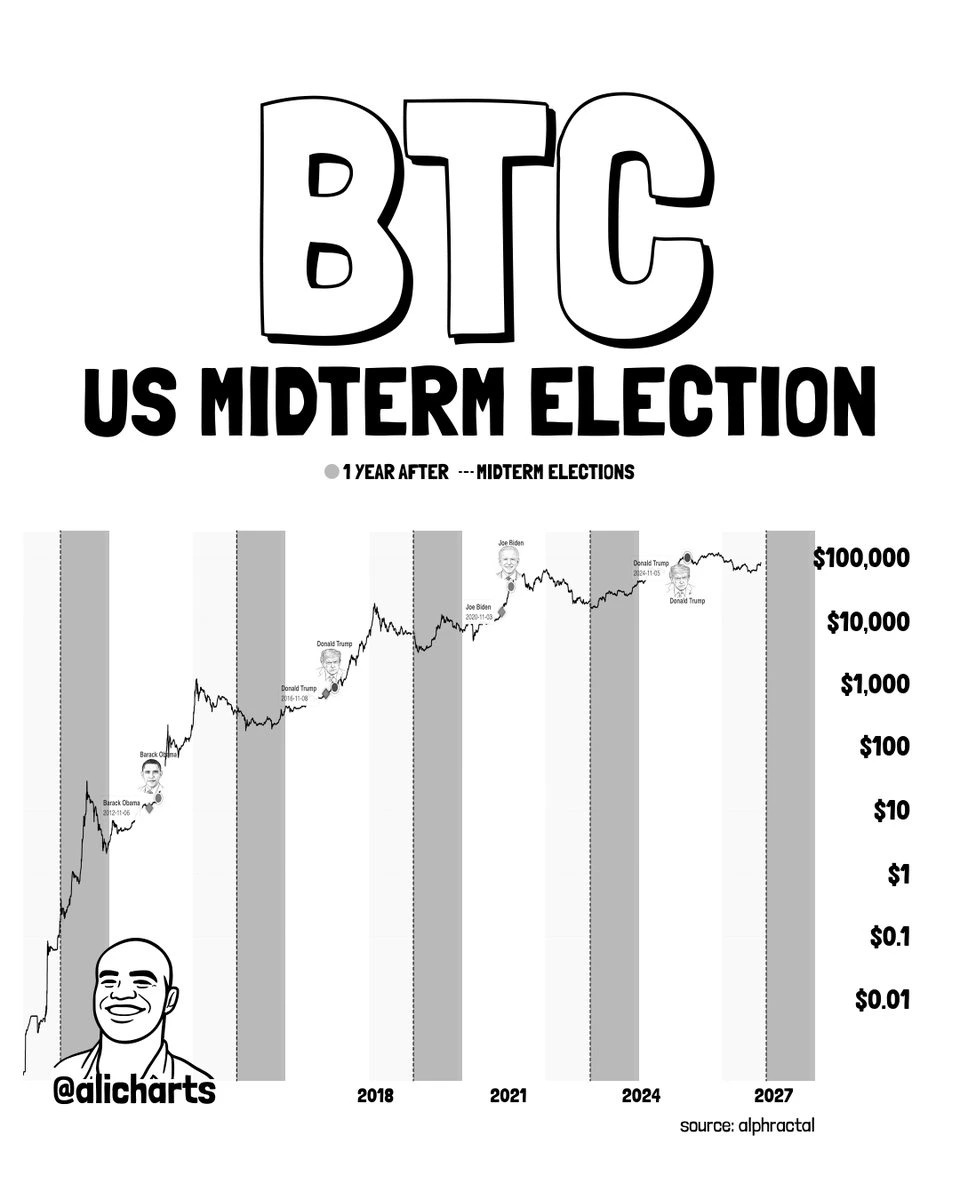
Bitcoin strengthened in history after the mid-term elections
This forms an important contrast with the situation at the end of 2026. Although Bitcoin has historically experienced weakness and volatility around election cycles, the charts show that these phases do not necessarily indicate the end of a bull market cycle for Bitcoin. For the current market, the key question is whether the potential pre-election pullback is just another consolidation before the next round of larger gains.
Bitcoin has recorded negative returns in the fourth quarter in every previous midterm election year.
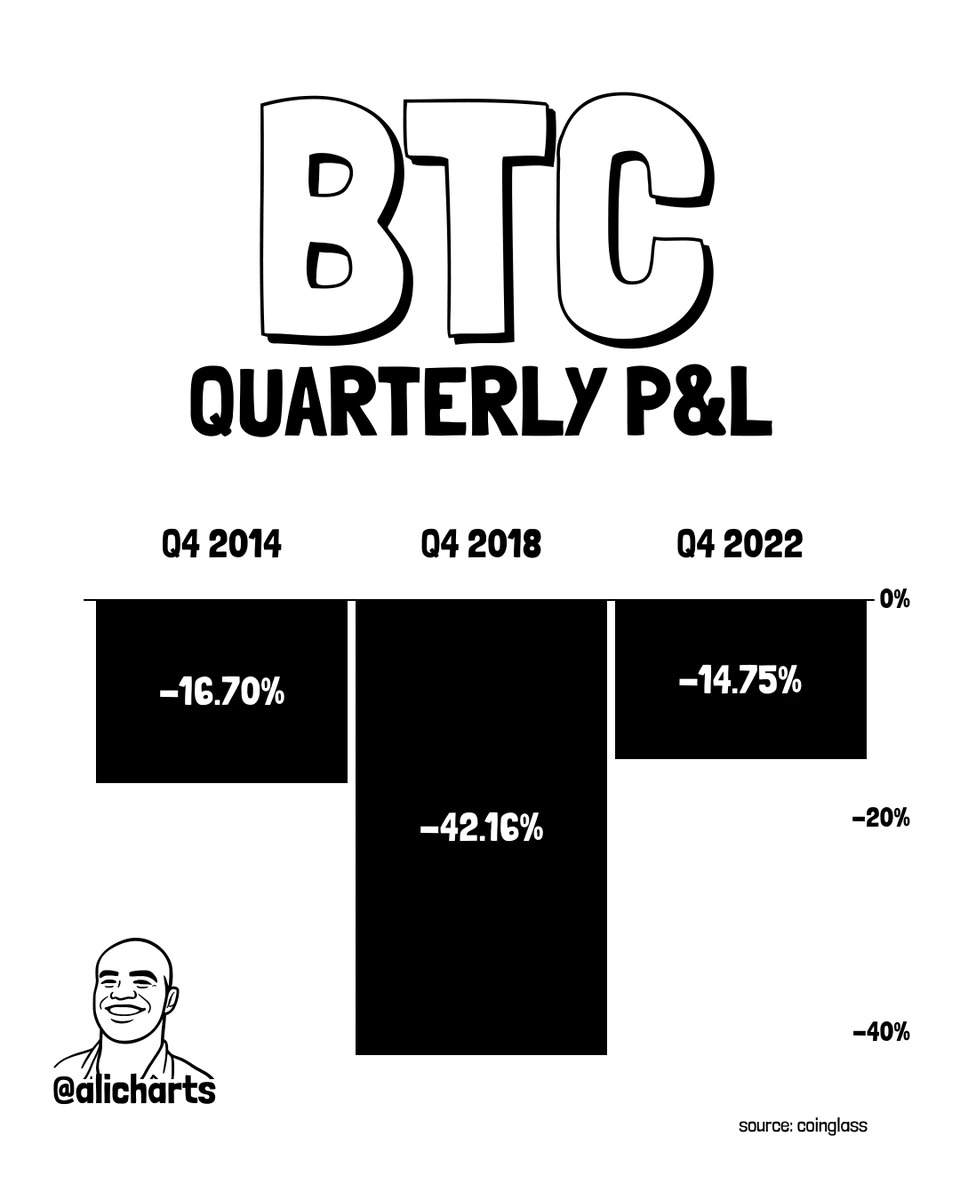
The fourth quarter of Bitcoin's history adds another layer of meaning to the argument regarding mid-term elections. Coinglass Charts show that this star token closed below its opening level in the fourth quarters of the previous three U.S. mid-term election years.
The degree of decline varies, but it is quite significant. Bitcoin fell by 16.70% in the fourth quarter of 2014, by 42.16% in the fourth quarter of 2018, and by 14.75% in the fourth quarter of 2022. As BTC enters its final quarter, historical records once again remind traders to pay close attention to prices. If BTC begins to lose key support, and the broader market environment continues to deteriorate, the patterns observed in previous midterm election years may become increasingly relevant.
Bitcoin remains above the cost base for key short-term holders
The current trading price of Bitcoin is higher than the cost basis for short-term holders. Charts show that BTC is around $84,276, while the cost basis for short-term holders is close to $73,000. Charts based on Glassnode indicate that this cost basis serves as an important reference during both upward movements and pullbacks, as it follows Bitcoin's broader price cycles.
The current price difference provides some cushion for Bitcoin, giving the market some room before reaching levels where buyers may face greater pressure in the near term. If BTC continues to fall, the $73,000 range could become an important test for the current market structure. If this level can be held, it will sustain a broader rebound; if it continues to break below, it may indicate that selling pressure is becoming more significant as the mid-term elections in the United States approach.
What will happen next to the rebound in the price of Bitcoin ( BTC )?
As Bitcoin enters the last quarter of 2026, the overall landscape is rather mixed. The cost basis for short-term holders, which is BTC, remains above $73,000, but recent prices have shown signs of cooling down after rebounding to $87,400. At the same time, Bitcoin's historical performance during previous mid-term election years in the United States also keeps the market cautious, as losses were recorded in the fourth quarters of 2014, 2018, and 2022.
This pattern does not necessarily mean that the election will trigger a sharp drop in the price of BTC; however, if BTC begins to lose its key support, and both liquidity and institutional demand weaken at the same time, the importance of this pattern will increase. Currently, the reaction in the range of $84,000 to $85,000, as well as the subsequent cost base level of $73,000, may be more indicative of whether the price of BTC is merely going through another round of adjustment or is entering a more sustained period of weakness.