



















At its latest hardware launch event, Apple further advanced the capabilities of AI to wearable devices. According to foreign media reports from TechCrunch, the new real-time audio processing, transcription, and summarization features of Apple Watch are turning "constant device monitoring" into a daily routine that is more easily accepted by consumers. This also poses a new challenge to Apple's consistently emphasized privacy image.
From assistive functions to daily records
The article mentions that the audio-related features introduced by Apple this time are not entirely the same. Among them, Audio Intelligence is more closely related to assistive functions, mainly used for identifying environmental sounds such as alarms, doorbells, and baby cries, and then sending reminders to the wearer through the device's AI. For users with hearing impairments or those with limited mobility, such functions have a clear purpose and therefore generate relatively less controversy.
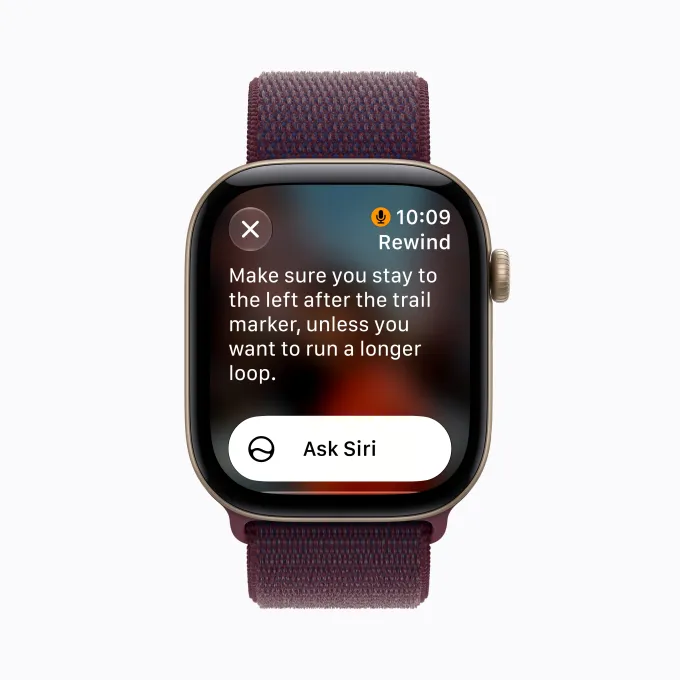
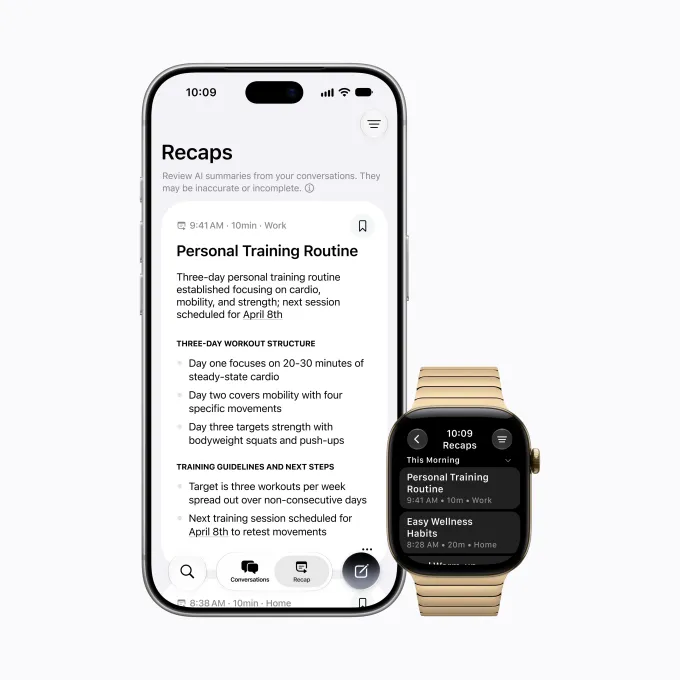
However, the other two features expand the use cases beyond just auxiliary reminders to include conversation recording. Live Rewind allows users to press the crown on their watch to review the voice content from the past 15 seconds and generate a text transcript. The transcript can also be saved in a separate Siri application for later viewing.
The controversy focuses on consent and boundaries.
TechCrunch believes that such designs first raise issues of consent. Unlike taking photos or videos, the act of raising a phone to take a picture is usually more easily noticed by those around, whereas the audio capture action on a watch is more concealed. Although Apple claims that there is a notification sound and a full-screen microphone animation when the function is activated, it remains doubtful whether such reminders are sufficient to ensure that the other party in the conversation is clearly informed.
The article also mentions that several startups in the market have bet on the transcription needs of AI, with use cases including meeting minutes, class notes, and interview summaries. There are also products that attempt to turn AI into 24/7 companion devices that continuously record users' information throughout the day. Apple has not directly followed this approach this time, but its new feature also strikes a balance between practicality and intrusiveness.
Difficult to dispel concerns even without the original audio
Apple emphasizes that these features will not be enabled by default at all times. Users can set the time periods during which they wish to use them and can also turn them off at any time. The company also states that the system does not create or save the original audio, and even Apple itself cannot access the original sound data; the generated transcripts and summaries are protected by end-to-end encryption.
However, the article argues that not saving the audio does not mean that the controversy disappears. If only text transcripts are retained, there are still uncertainties regarding how such content will be recognized in the event of legal disputes in the future, whether it can be used as evidence, and how different states will apply relevant laws. At the same time, consumers have become more wary in recent years of surveillance cameras, AI applications, and the expansion of data centers. Therefore, Apple's push for features such as "continuous environmental monitoring" may face additional resistance at this time.
Siri Recap Expand usage scenarios
Another feature mentioned is Siri Recap. This feature generates high-level summaries of conversations through environmental monitoring, and automatically organizes titles, summaries, and key points for users to view on iPhone. Typical use cases provided by Apple include meeting minutes and organization of parent-teacher conference information.
TechCrunch believes that the issue is not just about whether the technology is feasible, but also whether users are truly willing to accept this form of product. For Apple, this could be a test between convenience and privacy concerns: if users approve, it will drive the further popularization of AI wearable devices; if resistance increases, Apple may face a new round of public opinion pressure regarding privacy.