




Preliminary data released by Germany's Federal Statistical Office on September 4 showed that in July, real new orders in manufacturing increased by 2.5% month-on-month after seasonal and calendar adjustments, and by 13.1% year-on-year. This overall figure appears strong, but when large orders are excluded, new orders decreased by 1.4% month-on-month. The growth came almost entirely from large contracts for aircraft, ships, trains, and military vehicles, among other transportation equipment; therefore, the 2.5% increase cannot be directly interpreted as a full recovery of Germany's manufacturing sector.
The statistics bureau also revised the month-on-month increase for June from an initial value of 3.1% to 3.7%. From May to July, new orders increased by 2.9% compared to the previous three months, but after excluding large orders, there was actually a decrease of 2.2%. There is a clear divergence between the short-term trend and underlying demand: a few large projects have boosted the overall index, while regular orders covering a wider range are still insufficient.
Large orders for transportation equipment mask the decline in the automotive industry
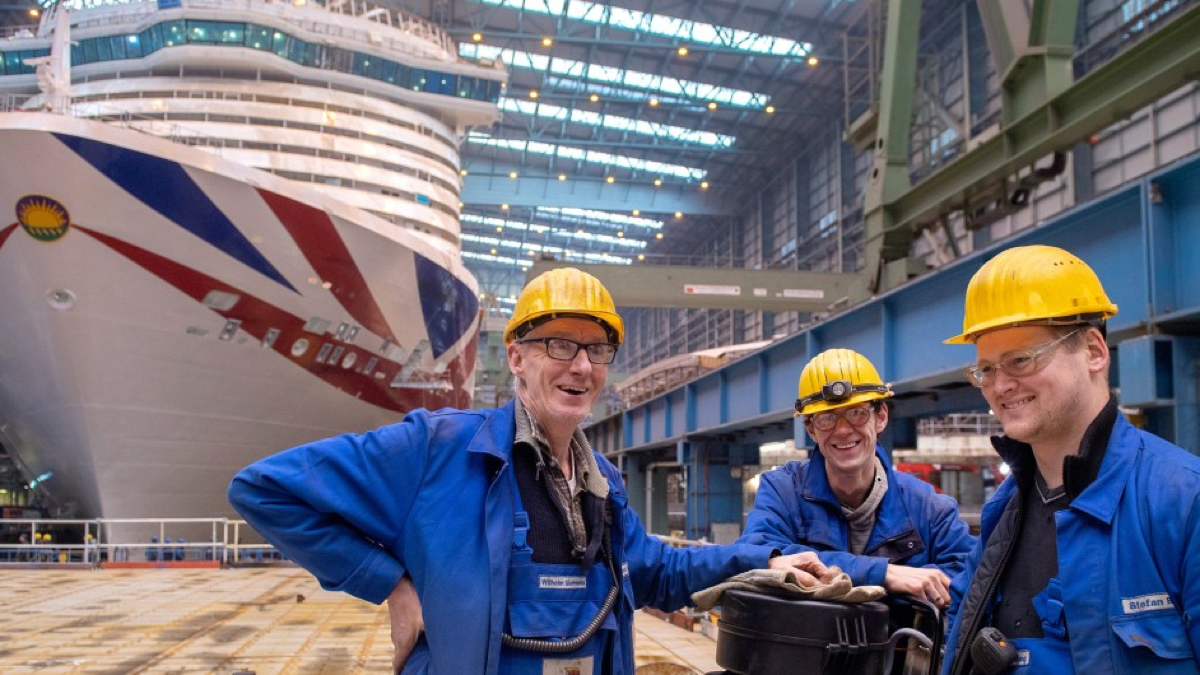
In July, orders for other transportation equipment increased by 126.4% month-on-month, with large orders for new ships, railway vehicles, and aircraft being the main reasons. Such projects involve large amounts of money and long delivery cycles, and a single month's worth of contracts can significantly boost the index. However, the impact on a large number of small and medium-sized suppliers will be felt in phases. While these orders allow them to increase their future production reserves, it does not mean that every manufacturing industry will experience the same level of demand in that month.
Automotive industry orders fell by 12.5% month-on-month, posing a significant drag on the overall sector. Germany's automotive industry, which connects components, machinery, chemicals, and exports, is an important link in assessing industrial cycles. The decline in automotive orders may be influenced by model cycles, overseas demand, and inventory adjustments, and it will still require confirmation over several consecutive months. However, it serves as a reminder to the market that the rise in the overall index does not cover the most representative industrial chains.
By product category, orders for capital goods increased by 2.4%, those for intermediate goods by 4.3%, while those for consumer goods decreased by 4.8%. The improvement in orders for capital and intermediate goods is related to large-scale projects and corporate investment, whereas the decline in consumer goods indicates weak demand at the end-user level. If household consumption and retail sales recover only limitedly, manufacturing companies may remain cautious about expanding their regular production capacity, even if they receive some large orders.
The sources of orders also show differentiation. Domestic orders increased by 9.1%, while overseas orders decreased by 2.1%; among them, orders from the eurozone grew by 12.1%, and those from outside the eurozone decreased by 10.1%. German industry is highly dependent on exports, so the decline in demand from outside the eurozone is worth noting. Exchange rates, global investment cycles, and trade policies can all affect these orders, and a single month's increase in large domestic orders is not enough to completely offset the weakening of external markets.
Order improvements have not yet been reflected in the current period's sales.
In July, the actual turnover of the manufacturing industry decreased by 1.5% month-on-month and by 0.6% year-on-year. Orders are a leading indicator for future production, while turnover is more closely related to current deliveries; the different directions of these two indicators are not contradictory. Large orders may require several months or even years to produce, and the current utilization rate of factories and cash flow are still determined by existing orders and actual deliveries.
In terms of macro analysis, large orders cannot be ignored, nor should they be overly emphasized. They represent actual contracts that will support the future revenue and employment of related companies; however, they are highly volatile and do not accurately reflect the broader momentum of the economy. Therefore, the Federal Bureau of Statistics provides a metric that excludes large orders, and data over three months is more stable than data for a single month. By examining both sets of data together, it can be concluded that the industry is supported by these projects, but the foundation of regular orders remains weak.
Enterprises will next focus on energy costs, financing conditions, external demand, and inventory. If orders in the eurozone continue to grow and the automotive industry stabilizes, the improvement in July may spread; however, if demand in the eurozone continues to decline and consumer goods orders remain weak, the high growth brought about by large orders will fade as the base effect subsides. At the policy level, it is also necessary to distinguish between supporting large strategic projects and improving overall business needs, as the two cannot replace each other.
Large-scale transportation projects also have long delivery cycles. Shipments or train orders confirmed today may be produced and generate revenue over the course of several years, so their contribution to short-term gross domestic product (GDP) will not be realized all at once. Companies typically also need to purchase components, arrange financing, and confirm their production capacity, which means there is a time lag before the supply chain benefits. Treating the amount of orders received as current month's output would overestimate the current state of industrial prosperity.
On the contrary, excluding large orders does not completely negate these projects. The manufacturing of large-scale equipment is inherently a part of German industry, and an increase in orders will improve the visible revenue and employment prospects for related companies. The correct approach is not to choose just one favorable figure, but to compare total orders, the value after excluding large orders, three-month trends, and turnover: each of these indicators addresses four different questions: project reserves, widespread demand, trends, and actual deliveries.
Financial conditions also lag behind. Interest rate cuts or improved credit conditions typically first affect businesses' willingness to invest, then proceed through approval and contracting before finally translating into production. If the financing environment becomes more favorable, orders for machinery and capital goods may precede a recovery in consumption; however, if businesses remain concerned about external demand, they may not expand production even though funds are cheaper. Therefore, the order structure reflects business confidence more accurately than simply the direction of interest rates.
The data presented this time is still preliminary, and it will be revised in the future as companies submit additional reports. The data for June has already been upward adjusted by 0.6 percentage points, indicating that short-term figures are not fixed. The market should pay more attention to whether production, turnover, exports, and corporate confidence are in line with orders, rather than relying on a headline of 2.5% to determine the direction.
The real picture of Germany's manufacturing industry in July is that large-scale transportation equipment contracts pushed up overall orders, but demand declined after excluding these large orders. Orders for automobiles, consumer goods, and those outside the eurozone were also weak. This reduces concerns about an immediate and deep decline in industry, but it is not enough to prove a full recovery. Only when regular orders and actual turnover follow suit will growth shift from project-driven to a broader cyclical improvement.