

Foreign media believes that although Ethereum has returned above $2,500 recently as the market has rebounded, compared to Bitcoin, the level of capital support is still insufficient. After Bitcoin rose to $82,000, ETH did not see a corresponding increase in its gains, which reflects a discrepancy between ETF capital flows, on-chain activity, and large-value transactions.
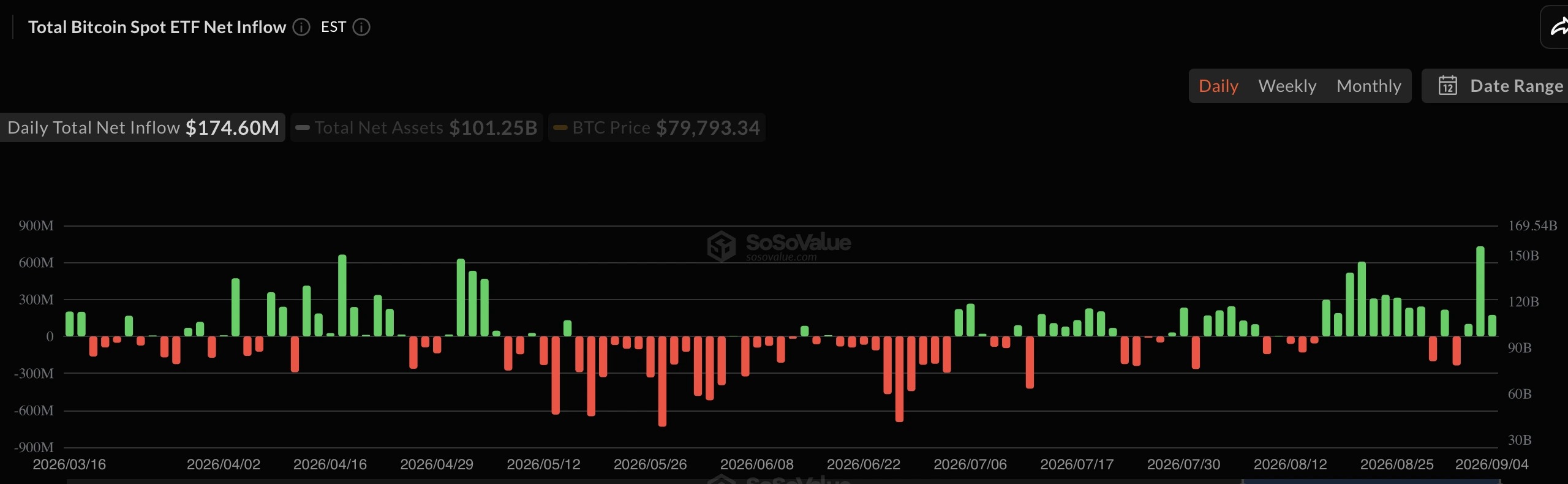
Bitcoin ETF is more stable in its ability to “suck money” (i.e., attract investors).
The article states that institutional funds have recently been more noticeably flowing into Bitcoin. Since the beginning of this month, Bitcoin has attracted nearly $1 billion in capital inflows, becoming an important support for BTC to return to high levels.
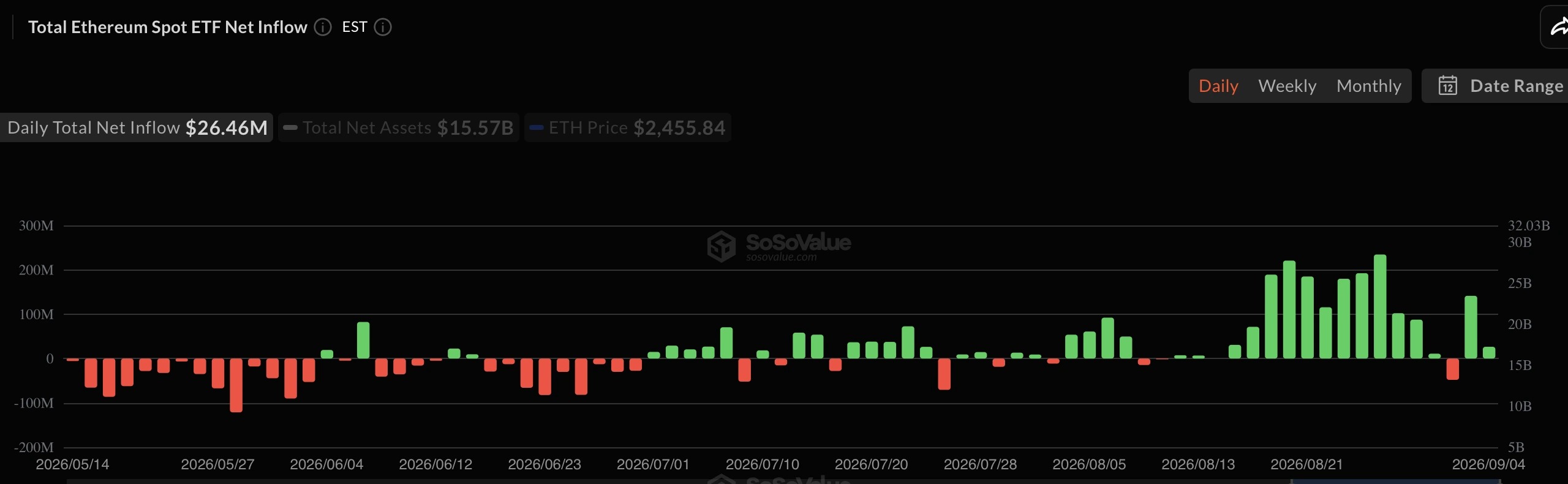
In contrast, although Ethereum ETF has not lost its attention from investors, the inflow has not been continuous. The article mentions that since September, the highest single-day net inflow for Ethereum ETF was only about $59,300. Although there were 12 consecutive trading days with net inflows during that period, with a cumulative amount exceeding $1 billion, the overall strength is still weaker than that of Bitcoin.
The online activity has not yet kept up.
This means that the institution has not given up on ETH, but the current more definitive configuration direction still leans towards BTC. Based on this, the article argues that the recent rebound in ETH ETF alone is not sufficient to prove that the market is ready to push it rapidly towards $3,000.
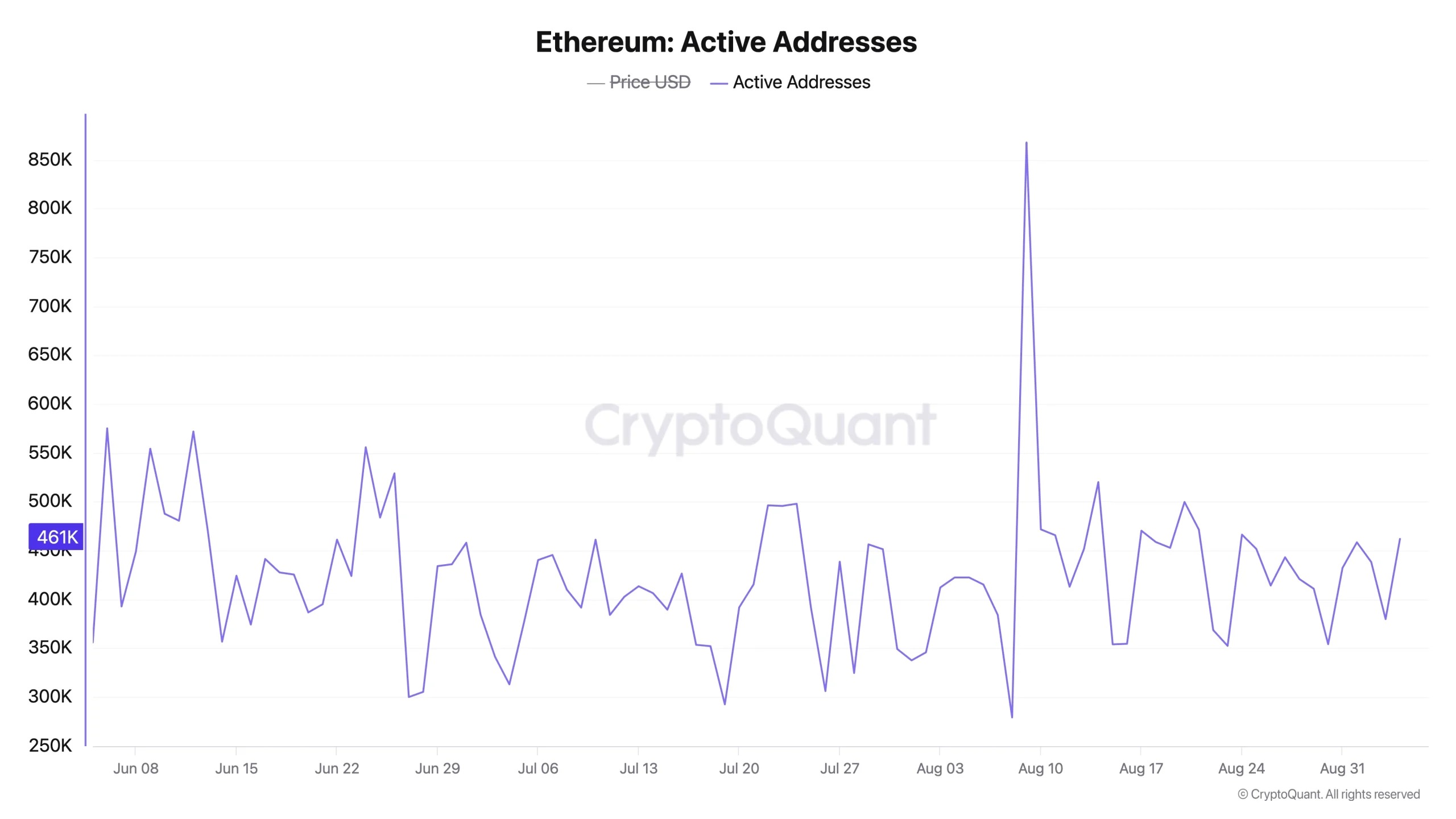
The article points out that the price rebound has not been accompanied by a corresponding increase in network participation. If ETH is to further expand its upside potential, it usually requires more active wallet usage and an increase in the number of addresses. However, the latest data shows a decline in the number of active addresses.
The range of $2,500 to $2,650 remains the key area.
In terms of the movements of large whales, the article reminds that large transfers of ETH do not necessarily equate to an increase in holdings. The related capital flows may come from exchanges, adjustments in institutional custody, wallet reorganizations, or over-the-counter settlements, and they could also correspond to potential selling pressure.
Therefore, foreign media believes that the current large-scale trading activity is more appropriately understood as a adjustment of positions and a shift in potential supply, rather than a clear signal of accumulating shares. For ETH, the range of $2,500 to $2,550 remains a challenge at present. Only if it can firmly hold above $2,650 will the $3,000 target once again become the focus of the market.
If there are further obstacles, prices may return to the range of around $2,000 to $2,100. Overall, the article maintains a bullish but cautious view on ETH, suggesting that the market is still waiting for broader demand catalysts.