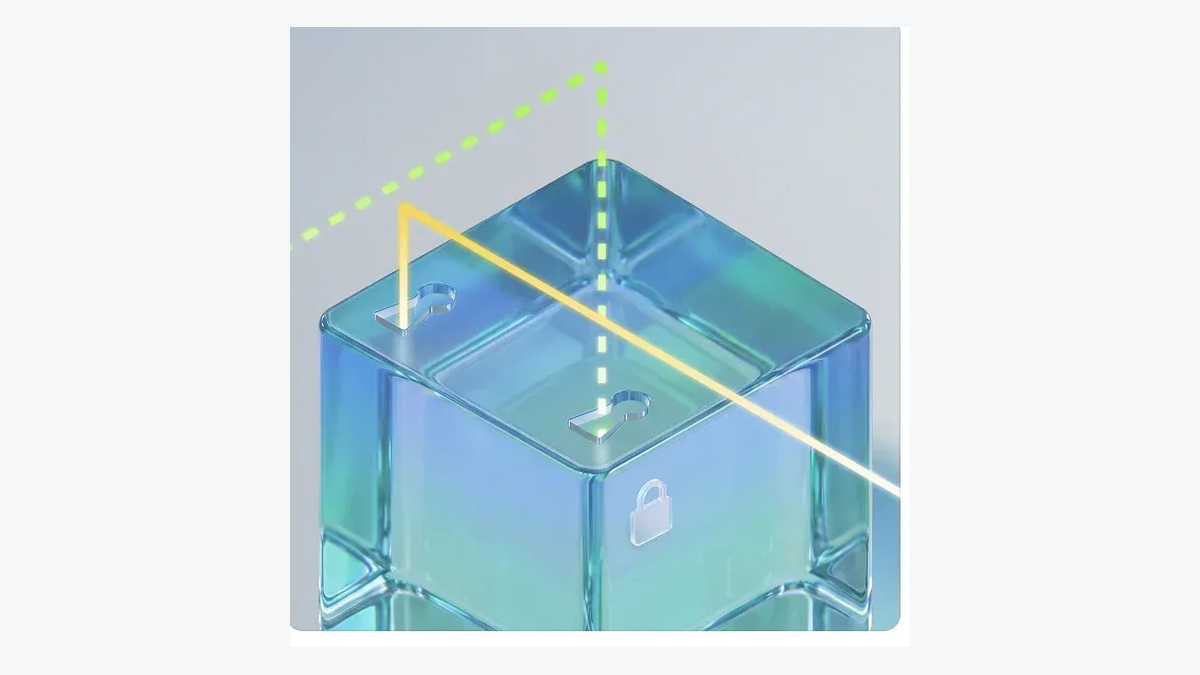


There is an increasingly awkward issue in large model evaluations: when benchmark questions become widely available online and training teams can repeatedly adjust their parameters for the rankings, does a high score truly represent the model's capabilities, or does it indicate that the model is more familiar with the test questions? On August 27th, Google DeepMind announced a "double-blind" evaluation methodology, attempting to isolate both the model developers and the evaluation question bank from each other. This approach draws on the ideas used to reduce bias in clinical trials, but instead of sealed envelopes, it utilizes a computational environment protected by cryptography.
This work is introduced by William Isaac, Sol Messing, and Kristian Lum. The core arrangement is as follows: the evaluators do not need to hand over the private test set to the model companies, and the model companies do not have to expose the unpublicized model weights and complete systems to the evaluators. Both parties perform calculations in a controlled environment and only obtain results within the agreed scope. This design is aimed at addressing the most challenging trust issues in proprietary model evaluations—preventing test questions from entering the training and optimization processes prematurely, while also protecting the trade secrets of the model providers.
The credibility of the rankings is being eroded by those who have “seen the answers.”
In the past few years, large-scale models have been tasked with an excessive number of responsibilities. Researchers use them to assess technological progress, companies rely on them to narrow down their selection of candidates, and ordinary users regard them as a concise answer to the quality of products. However, once a particular set of tests becomes an industry standard, these models quickly shift from being used to solve “unknown problems” to becoming targets for training. Such tasks may appear in academic papers, code repositories, and discussion forums, or they may be incorporated into subsequent training datasets. Even if a team does not deliberately cheat, as long as the data sources are diverse enough, the likelihood that the model has encountered similar content continues to increase.
Another type of bias comes from repeated experimentation. Once developers become familiar with the evaluation criteria, they can adjust prompts, the length of reasoning processes, sampling methods, and tool settings until they achieve the best possible scores. The results obtained in this way may not be fraudulent, but they no longer reflect how the model would perform on truly unknown tasks. For external evaluation agencies, keeping the test set completely hidden helps to maintain a sense of freshness; however, for the model companies, entrusting the weighting parameters to third parties can pose risks related to intellectual property and security. Traditional approaches often force one of the parties to make concessions first.
The value of a double-blind pilot lies in breaking this binary choice. A protected environment allows the evaluation code to run on the model, while simultaneously restricting both parties from accessing content that they should not see. The results can be produced in a pre-agreed statistical manner, while the original questions, model details, and intermediate data remain within these boundaries. If the process is properly designed, the model team cannot optimize the model in reverse based on a single question, and the evaluators cannot replicate or probe the model either. This is more enforceable than a mere confidentiality agreement, as the restrictions are implemented by the technical environment, rather than relying solely on the self-discipline of the participants.
However, the claim of "the world's first double-blind AI evaluation" should not be interpreted as meaning that the challenges of evaluation have been resolved. Cryptographic isolation can reduce leaks, but it cannot automatically guarantee that the test questions themselves represent true capabilities. A narrowly defined test set with incorrect labels or that is irrelevant to user needs may still lead to distorted conclusions, even if it is kept completely confidential. The system also needs to clarify who configures the operating parameters, how tool calls are handled, whether failed samples are included in the results, whether the results can be reproduced, and whether the environment operators have excessive management privileges. Double-blind protection safeguards the boundaries of information, not the overall quality of the methodology.
From a pilot project to industry standards, there is still a need to ensure recheckability.
This pilot is initially suitable for high-value, low-frequency assessments of cutting-edge models. For example, in areas such as security capabilities, complex reasoning, or professional domain testing, the cost of redesigning is very high in case the question bank is leaked. For these tasks, putting the models and test sets in an isolated environment may be more meaningful than having public rankings. Procurement parties can also entrust independent institutions to conduct private tests that are closer to their own business needs, without having to directly hand over sensitive business data to model suppliers.
The problem is that the more closed an evaluation is, the more likely it is that the outside world will only accept one final score. To establish credibility, the process needs to disclose enough non-sensitive information: which abilities are being tested, how samples are selected, what the scoring errors are, what the operating configurations are, whether there is manual review, and who can audit the environment. It would also be ideal if multiple independent institutions could reproduce the results using the same protocol. Otherwise, the excuse of "the test set cannot be made public" may turn from a reasonable measure to prevent leaks into a shield to block any doubts.
Cost and availability are also practical barriers. Encrypted computing, controlled execution, and audit trails increase the complexity of the engineering process, and cutting-edge models themselves require substantial computational power. Running the entire process again with each model update is not necessarily suitable for small teams that iterate quickly. Therefore, double-blind evaluations are more likely to become a high-standard option for key assessments rather than immediately replacing all public benchmarks. Public testing is still beneficial for academic replication and quick comparison, while private double-blind testing is responsible for examining the models' ability to handle unknown tasks; the two can complement each other.
In the longer run, what this pilot initiative changes is the way models are presented and validated when they are released. In the past, companies would use a list of rankings they selected themselves to demonstrate their models' superiority; in the future, important capabilities may need to be endorsed by both isolated environments and independent evaluators. For the industry, this will gradually shift from a situation where "we can achieve higher scores" to one where "others can also achieve higher scores using pre-agreed methods." Scores will still not equate to real-world performance, but at least it will reduce the possibility of getting an advantage by seeing the questions in advance before taking the "test."
What really lacks in this evaluation is not more decimal places, but rather trust in how the conclusions are reached. The pilot project of DeepMind provides a technical puzzle piece: allowing the question bank and the model to meet without exposing each other to each other. What remains to be seen is whether the participants can institutionalize the operating rules, statistical methods, and audit responsibilities as well. Only in this way will "double-blind" not just be a nice-sounding label, but become a verifiable layer of evidence within the model’s capability statement.