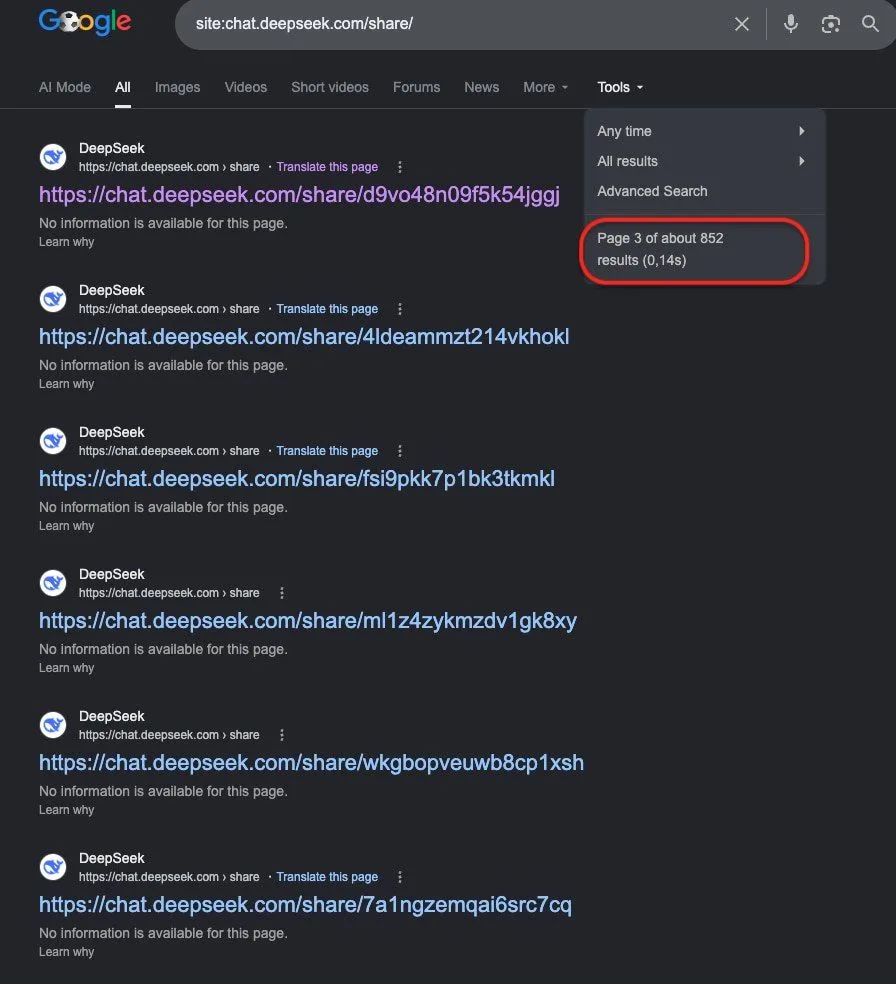


Claude's shared chat links were discovered over the weekend to be searchable via Google, though official figures on the extent of the exposure are currently unavailable. Foreign media reports indicate that some pages contained medical records, internal company documents, and the names and phone numbers of minors. By Monday afternoon, when TechCrunch tested the same method, the relevant search results were no longer displayed.
The problem lies in the sharing link.
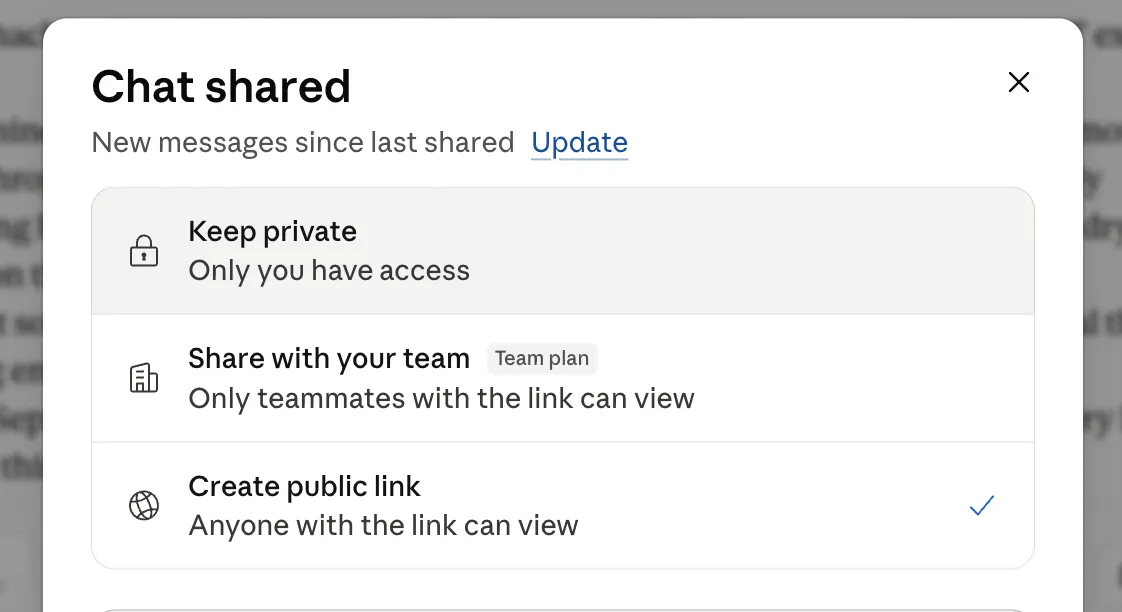
This incident is related to Claude's "Share Chat" feature. Once a user generates a link, anyone who obtains that link can view the corresponding conversation or item. The interface states "Anyone holding the link can view it," but this wording is more akin to small-scale forwarding than allowing content to appear in public search results.
Anthropic spokesperson Amie Rotherham stated that the company does not provide chat directories or sitemaps to search engines like Google. These shared links are not easily guessed either. She explained that content only exists as a public webpage and may be archived by third-party services after a user actively shares it.
Reddit users were the first to discover this.
The question was first raised by a Reddit user on Saturday, and 404 Media subsequently reported on it on Monday. Users found numerous shared discussion pages by entering search terms such as "site:claude.ai/share" into Google.
TechCrunch reports that when the same method was tested again on Monday afternoon, Google no longer returned results. However, it is unclear how many pages were previously indexed, or whether the scale of this exposure is similar to that of last year.
- Last year, Forbes reported that hundreds of Claude conversations were indexed by search engines.
- At the time, Google estimated that the number of pages indexed was slightly less than 600.
- Last year, researchers also scraped approximately 100,000 publicly shared ChatGPT conversations.
Some pages contain sensitive information.
Futurism reports that before the issue was fixed, search results showed detailed medical reports from real patients, clinical trial results with patients' names, documents containing elementary school students' names and phone numbers, as well as company documents and employee evaluations marked "for internal use only".
Google spokesperson Ned Adriance told TechCrunch that Google and other search engines cannot decide which web pages are published on the internet, but website owners can decide whether a page is allowed to be crawled or indexed through explicit settings, and search engines will follow these instructions.
The report also mentioned that Anthropic's usage policy explicitly prohibits Claude from generating explicit content. However, it remains unclear whether such content appeared in the exposed chat pages and how it was generated. Anthropic has not yet responded further to this case.