

















On-chain data shows that Chun Wang, the founder of the Bitcoin mining pool F2Pool, has recently been transferring his ETH and WBTC back to Binance. In the previous two months, he had been consistently withdrawing assets from centralized exchanges and transferring them to self-custodied wallets and DeFi protocols.
Transfers continued from May to June
According to reports, Shenyu transferred out approximately 91,945 ETH and 973 WBTC in May and June. Based on the prices at the time, these assets were worth over $200 million.
This type of action is often interpreted by the market as a signal of long-term holding. This is because once an asset leaves the exchange, the likelihood of it immediately entering the sell market decreases, and the available supply in the market also decreases accordingly.
Funds began returning to Binance in July.
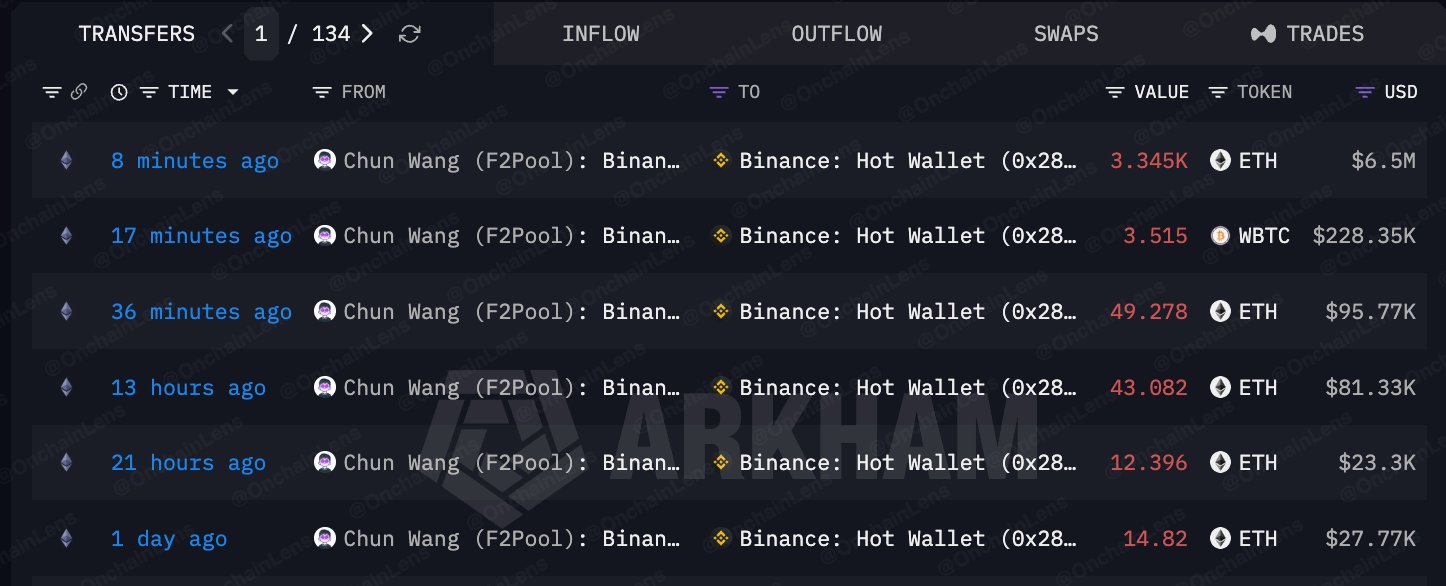
This trend changed in July. On July 2, the relevant address transferred 16,800 ETH and 60 WBTC to Binance; on July 3, another 9,800 ETH were transferred to the exchange.
On July 27, Arkham recorded a new inflow, including 3,345 ETH, worth approximately $6.5 million according to the article. Following these transactions, the market began to focus on whether these assets would create new short-term selling pressure.
Markets are focused on potential selling pressure.
In the crypto market, large transfers of assets from addresses to exchanges are typically seen as liquidity preparation. Tokens entering Binance hot wallets are closer to being marketable than assets remaining in personal wallets or DeFi protocols.
However, transferring funds to an exchange does not necessarily mean a sale has been made. The funds may be used for portfolio rebalancing, staking, on-exchange trading, or other liquidity arrangements. Whether an actual sell-off has occurred still needs to be observed in conjunction with subsequent trading volume and on-chain flows.
From a market perspective, these large transfers initiated by well-known mining companies and early crypto participants tend to amplify sentiment fluctuations in the short term, especially on mainstream assets such as ETH and WBTC, where they are more likely to trigger tracking fund reactions.