

After Robinhood CEO Vlad Tenev's X account was hacked, it was used to promote a fake meme token called Vladhood (VLAD). The token subsequently saw a rapid increase in trading volume on the Robinhood Chain, with transaction volume rising to approximately $22 million within hours. The incident has once again drawn market attention to the combination of social media account theft and on-chain token issuance scams.
The attacker withdrew 650 ETH in transaction fees.
Reports indicate that this operation was not a traditional "carpet-pulling" scam. After creating tokens through the Pons launch platform, the attackers could not directly withdraw funds from the pool because the platform locks liquidity. However, the platform allows token creators to withdraw transaction fees. The attackers then repeatedly called these functions, ultimately withdrawing approximately 650 ETH, equivalent to about $1.2 million to $1.3 million at the time.
As related posts spread, trading in VLAD quickly heated up. The post stated that the token price once surged by over 90,000% to approximately $0.0026, with the contract attracting a total of 5,266 holding addresses and generating approximately 137,000 transactions.
- The transaction volume was approximately $22 million.
- The attackers withdrew approximately 650 ETH.
- There are approximately 5,266 cryptocurrency holding addresses.
The platform will issue a risk warning approximately 40 minutes later.
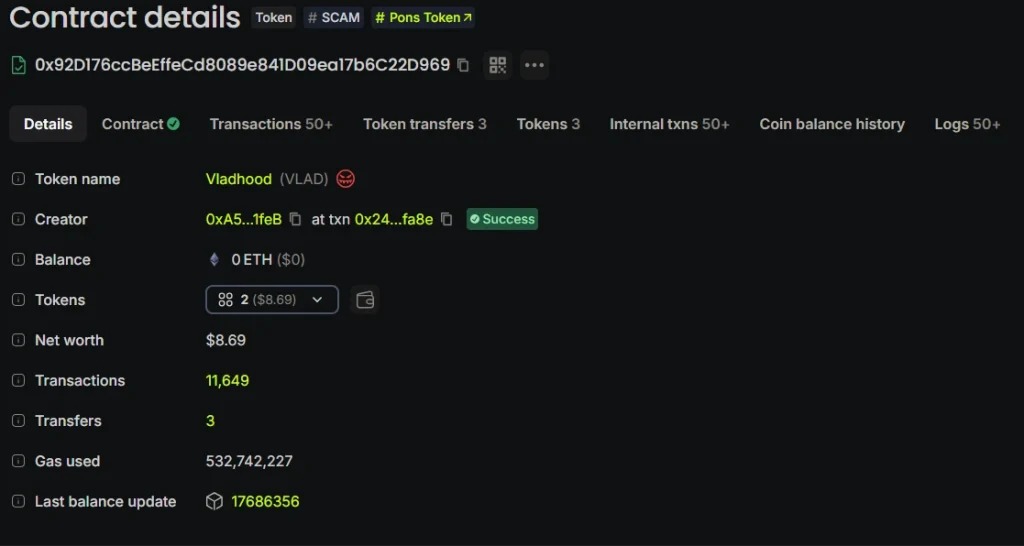
Robinhood Communications' X account confirmed the breach approximately 40 minutes after the incident and ed users to the risks. Subsequently, related posts on the Vlad Tenev account were deleted by X, and the Robinhood Chain block explorer also flagged the project as a "potential scam."
However, after the original post spread, several counterfeit VLAD tokens quickly appeared on the market, indicating that similar incidents may continue to spread in the short term, bringing additional risks to traders who chase hot topics.
Riding the wave of Meme coin popularity
The report mentions that Robinhood had previously stated it was integrating meme tokens along with Real-World Assets (RWA) into its ecosystem. This attack capitalized on this context, along with the recent popularity of meme token trading and the low on-chain transaction fees, to rapidly attract a surge of funds.
This incident is similar in method to the hacking of Starlink and SpaceX-related X accounts on July 12. At that time, attackers also used social media accounts to promote fake meme coins, causing approximately $2 million in "carpet-pulling" losses. Both incidents demonstrate that once celebrity or corporate accounts are hacked, they are often used to amplify on-chain speculation and fraudulent activities within a short period.