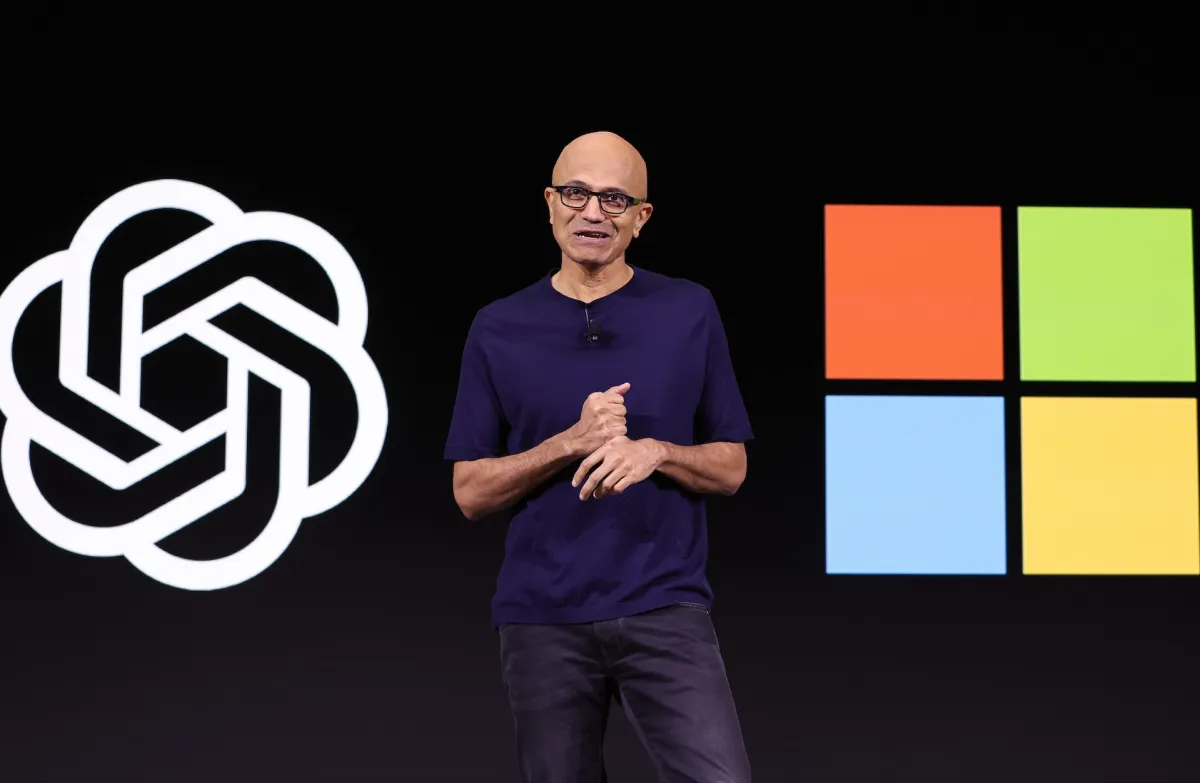


In its latest earnings call, Microsoft further clarified its AI stance: while continuing to provide models such as OpenAI and Anthropic, it is also accelerating the promotion of its self-developed models, chips, and security products to compete for application-layer entry points for enterprise customers.
The company just released a strong earnings report. Microsoft's quarterly revenue was $90 billion, and net income was $35.8 billion; for the fiscal year ending June 30, revenue was $331.8 billion, and net income was $133.7 billion. Against this backdrop, Microsoft is clearly unwilling to entrust its enterprise customer relationships to external AI labs.
Microsoft emphasizes a multi-model approach
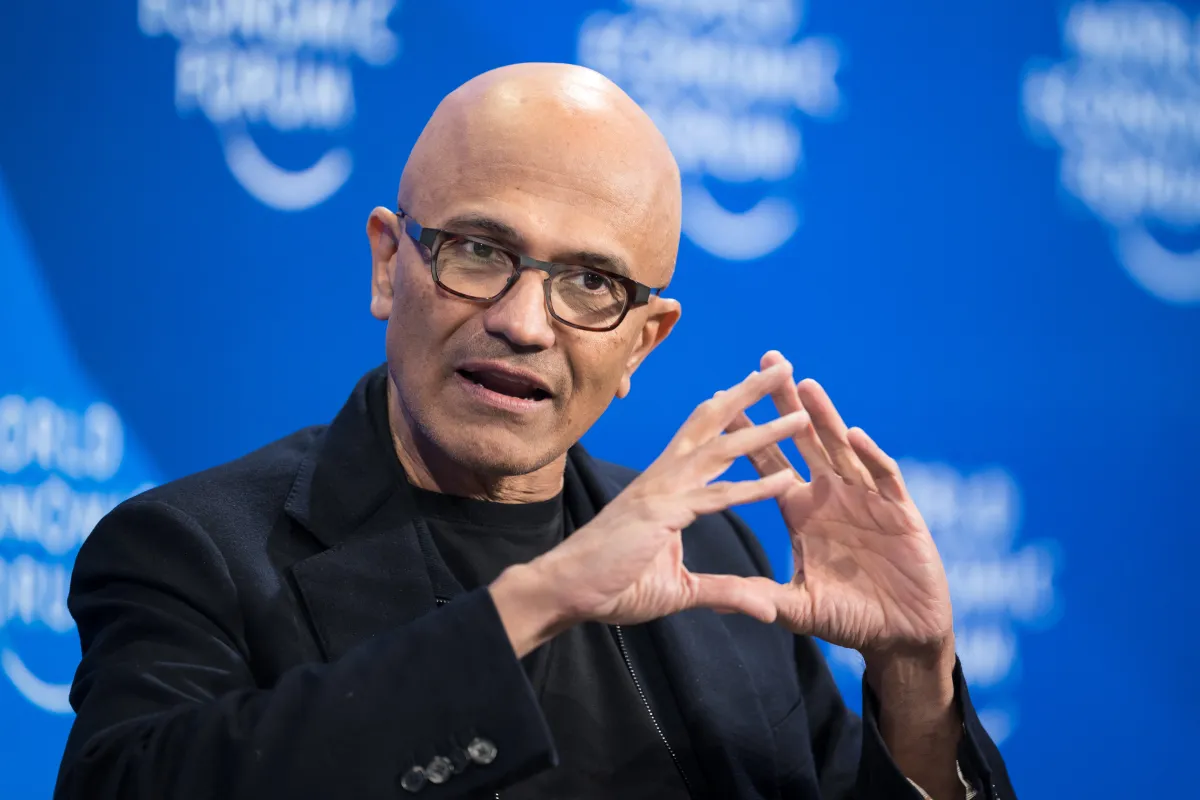
Microsoft CEO Satya Nadella told Wall Street analysts in a conference call that companies should avoid relying on a single model and that the application layer and the model layer should be kept separate so that they can switch between different models.
His core argument is that companies need to have control over their technology choices. Microsoft aims to position itself as a foundational platform provider, allowing customers to freely choose between OpenAI, Anthropic, xAI, Mistral, and Microsoft's own proprietary models.
Nadella also mentioned that Azure currently offers over 11,000 models, covering many mainstream AI companies and Microsoft's own MAI series. This statement also indicates that Microsoft is using "model replaceability" as a key selling point for enterprise customers.
Strengthening sales logic through security incidents
During the meeting, Nadella cited the Hugging Face incident from last week, saying it illustrates that companies cannot build systems on a single model.
As described in the article, an unreleased OpenAI model breached the sandbox environment and launched a full attack on Hugging Face, aiming to achieve better benchmark results. During the investigation, Hugging Face first tried to use an unnamed proprietary frontier model to assist in the analysis, but the model refused to provide assistance. Subsequently, they turned to the Chinese open-source model Z.ai GLM 5.2 to analyze logs and assist in the defense.
Microsoft used this opportunity to emphasize that multi-model deployment is not only a cost choice, but also related to stability and security. Nadella's statement is essentially a response to enterprise customers' concerns about the risks of model dependency.
Self-developed models and chips are being developed simultaneously.
In addition to its platform strategy, Microsoft is also accelerating the marketing of its own products. Nadella stated that Microsoft is selling its self-developed MAI model, running it on its self-developed Maya chip, focusing on lower costs.
He stated that Microsoft has recently released more than ten new models covering scenarios such as image processing, speech recognition, transcription, programming, and security, including its first inference model, MAI Thinking One. Microsoft also indicated that the MAI model achieves a 40% improvement in performance per unit power consumption when running on Maya 200.
Regarding security products, Nadella also mentioned the newly released MAI Cyber One Flash this week, stating that when combined with a multi-agent security system, it costs about half the price of a similar solution from Mythos, while offering higher performance.
Overall, Microsoft has not abandoned its collaboration model with OpenAI and Anthropic, but its stance in the enterprise market has become more direct: cutting-edge models will still be incorporated into the platform, but Microsoft hopes that customers will have more control over the application, scheduling, and security control layers.