

SK Hynix's stock price fell significantly on Tuesday, as market focus shifted from just quarterly earnings to whether the AI infrastructure investment boom could continue to support the chip sector's high valuations. The stock rebounded slightly in after-hours trading, but failed to reverse its intraday decline.
Operating profit was lower than expected.
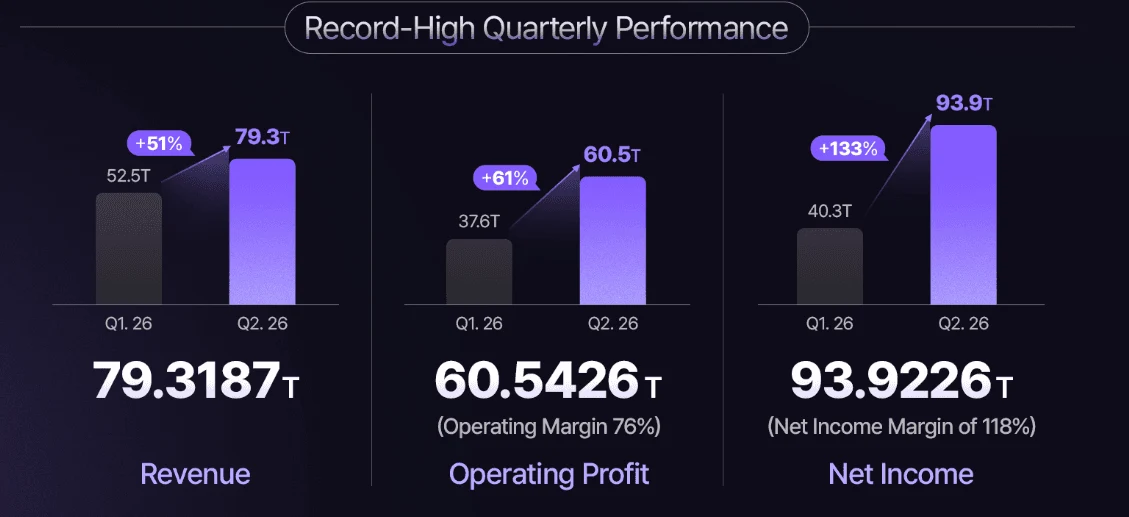
The company reported operating profit of 60.5 trillion won for the June quarter, a 557% increase year-over-year, but below analysts' average expectation of 64.2 trillion won. Revenue for the same period was 79.3 trillion won, also below market expectations of 83.9 trillion won.
Net profit increased by 1242% year-on-year, exceeding expectations, partly driven by one-off investment gains. However, the market focuses more on the performance of the core business, so the lower-than-expected operating profit and revenue still put pressure on the stock price.
- Operating profit was 60.5 trillion won.
- Market expectations are 64.2 trillion won.
- Quarterly revenue was 79.3 trillion won.
AI investment concerns drag down valuations
SK Hynix is one of the major beneficiaries of this round of AI infrastructure expansion, and has therefore received a high valuation. However, as the market begins to question whether tech companies can achieve sufficient returns after massive investments in AI, related chip stocks have generally come under pressure recently.
The report noted that since June, SK Hynix's market capitalization has shrunk by more than $50 billion, with its valuation falling by about 45% in about a month. This indicates that investors are increasingly concerned about the sustainability of AI capital expenditures, rather than just reacting to single-quarter results.
Chip prices and demand are attracting attention.
Several brokerages have recently lowered their quarterly profit forecasts for SK Hynix, partly due to a slowdown in the growth rate of average chip selling prices. The market is concerned that the price factors that previously drove rapid profit growth are weakening.
In addition to valuation pressures, rising debt levels in the technology and semiconductor sectors have also exacerbated investor caution. Continued increases in chip prices could drive up the cost of electronic products such as computers and smartphones, thereby suppressing end-user demand and prompting manufacturers to adjust production volumes.
However, chip companies remain relatively optimistic about the long-term outlook. SK Hynix CEO Guo Luzheng recently stated that with cloud service providers increasing orders and AI workloads driving up demand for high-end storage, the severe storage shortage may persist beyond 2030.
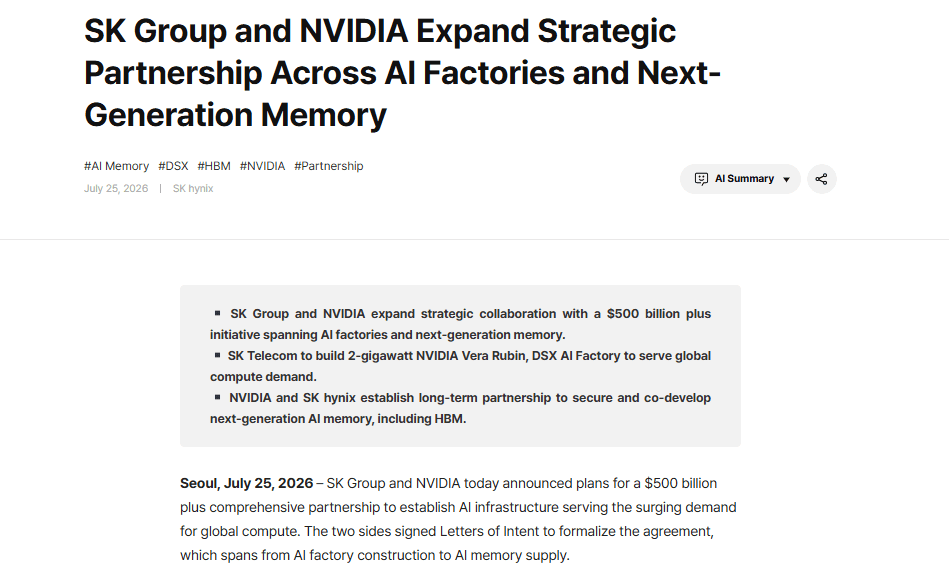
Additional information:SK Group recently signed a cooperation agreement with Nvidia. Both parties stated that the related business could exceed $500 billion, including Nvidia's purchase of memory chips and SK Group's purchase of supercomputers equipped with Nvidia technology.