

SpaceX shares fell back to around $110, a significant drop from its post-IPO high, but Wall Street's long-term outlook on the company did not weaken accordingly. Morgan Stanley maintained its "overweight" rating and continued to give a $300 price target, based on the successful completion of several key missions during Starship's 13th test flight.
The 13th test flight achieved multiple milestones.
Morgan Stanley believes this test flight gives the market more confidence in SpaceX's development path. Although the Super Heavy V3 booster's performance during the sea landing phase was still less than ideal, the overall results were an improvement over the previous test flight.
- All 33 Raptor engines ignited and took off normally.
- Thermal separation was completed, and 20 Starlink V3 satellites were deployed.
- Re-igniting a Raptor engine in space
The agency also noted that the spacecraft achieved its smoothest landing to date. However, only about 5 of the 13 booster engines operated during the final landing ignition phase, a point that may still be subject to scrutiny.
The next catalyst looks to the 14th test flight.
Morgan Stanley suggests that the next key point to watch may come from Starship's 14th test flight. According to Musk's previous statements, SpaceX may attempt to recover the Starship upper stage from the launch tower for the first time during that mission.
If this action is accomplished, it will be another key milestone on the project's reusability path. The agency anticipates that the 14th test flight could take place as early as late August or early September. If all goes well, the 15th mission may even attempt to recover both the spacecraft and the V3 booster simultaneously.
The stock price is still affected by the lock-up period and performance.
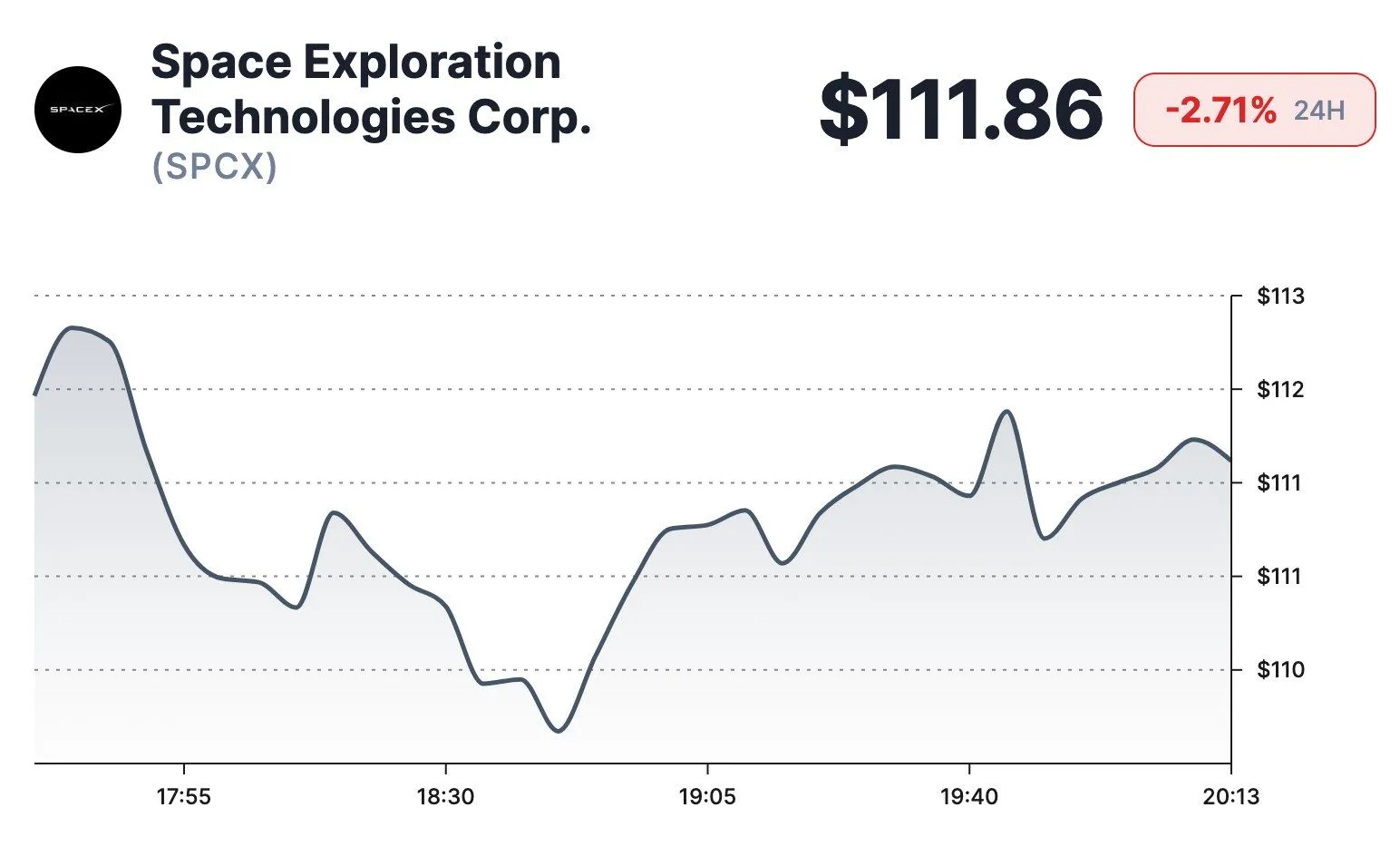
Despite maintaining optimistic price targets, SpaceX's current stock price still faces multiple real-world pressures. Reports indicate that the stock is currently trading at approximately $111, down more than 50% from its post-IPO high of $225.64.
- After the lock-up period expires, pressure from insiders to reduce their holdings may increase.
- The upcoming earnings release may trigger a valuation reassessment.
- The delay of the Starship project remains a focus of market attention.
The report also stated that SpaceX has begun reducing some Falcon 9 dedicated launch orders after 2028, shifting more resources to Starship. This adjustment may strengthen the company's long-term strategy, but it will also raise discussions about execution and revenue pacing in the short term.
Other institutions maintain high target prices.
In addition to Morgan Stanley, Raymond James also maintained a "strong buy" rating on Starship after its 13th test flight, with a target price of $800. The firm believes that the satellite deployment, on-orbit engine restart, and successful landing at sea have reduced the project's execution risks.
Morgan Stanley stated that SpaceX still holds a unique position in launch, connectivity services, and AI-related infrastructure. For the market, the results of the next few Starship test flights will continue to directly impact the pace of the company's valuation recovery.