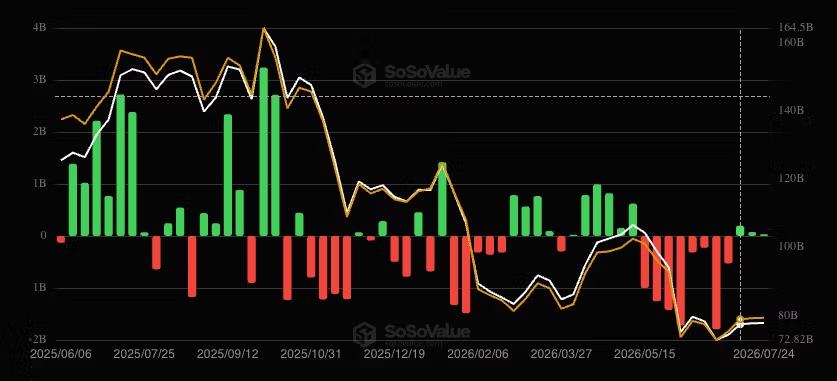
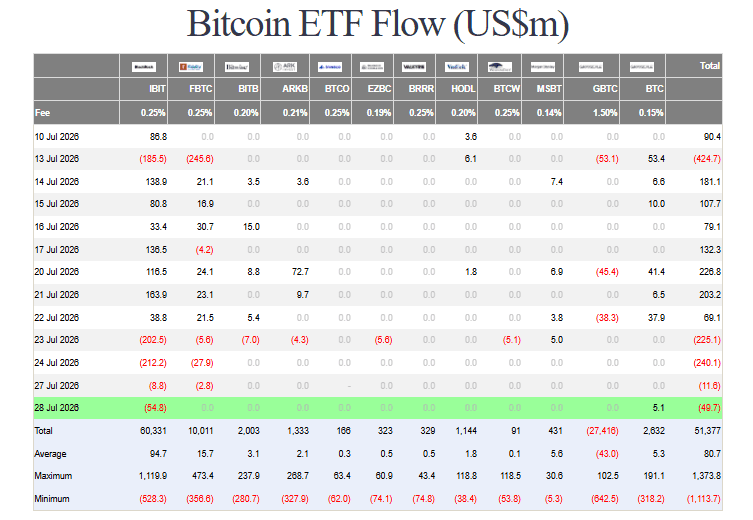
U.S.-listed spot Bitcoin ETFs saw net outflows on July 23, ending a seven-day streak of net inflows. SoSoValue data shows a net outflow of $225.2 million across the market that day, compared to nearly $1 billion in inflows during the previous period.
This marks the first time this type of product has experienced a single-day net outflow since July 13th. For ETFs, a net outflow means that redemptions exceed subscriptions, requiring the fund to sell some Bitcoin to facilitate exits.
IBIT saw the largest outflow.
Looking at individual products, BlackRock's IBIT saw the largest outflow of funds that day, with a net outflow of $202.5 million. Morgan Stanley's MSBT was one of the few Bitcoin funds to record net inflows, attracting $5 million that day.
Despite the weakness on the single day, these Bitcoin spot ETFs still saw a net inflow of approximately $274 million over the past five trading days ending Thursday, indicating that the funds replenishment from the previous week has not been completely wiped out.
The situation in Iran is disrupting risk assets.
The shift in funds was in sync with the market environment that day. The ongoing military standoff between the US and Iran, coupled with high oil prices and a decline in US stocks on Thursday, put pressure on risk assets overall. Bitcoin briefly fell below $65,000, hitting a low of $64,600.
The report noted that this round of net inflows over seven days occurred after eight consecutive weeks of significant outflows. Earlier, similar funds had seen cumulative outflows exceeding $8.2 billion, indicating continued volatility in liquidity.
Ethereum ETFs continue to attract funds
Unlike Bitcoin ETFs, the US spot Ethereum ETF recorded a net inflow of $26.3 million on the day, extending its consecutive five-day streak of net inflows. This divergence in fund performance reflects ongoing rotation within the crypto market, rather than a complete withdrawal.
Next, market attention will shift to the Federal Reserve's interest rate meeting on July 28-29. The interest rate decision will influence short-term macroeconomic expectations and may continue to affect the price movements of risk assets such as Bitcoin.