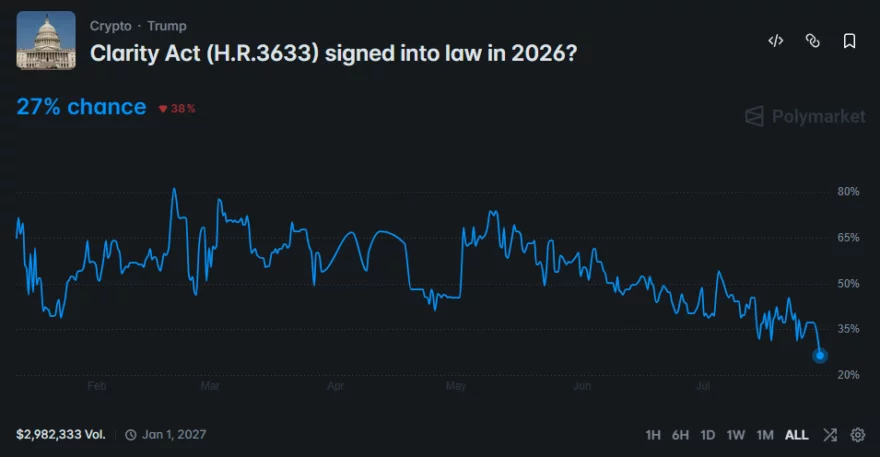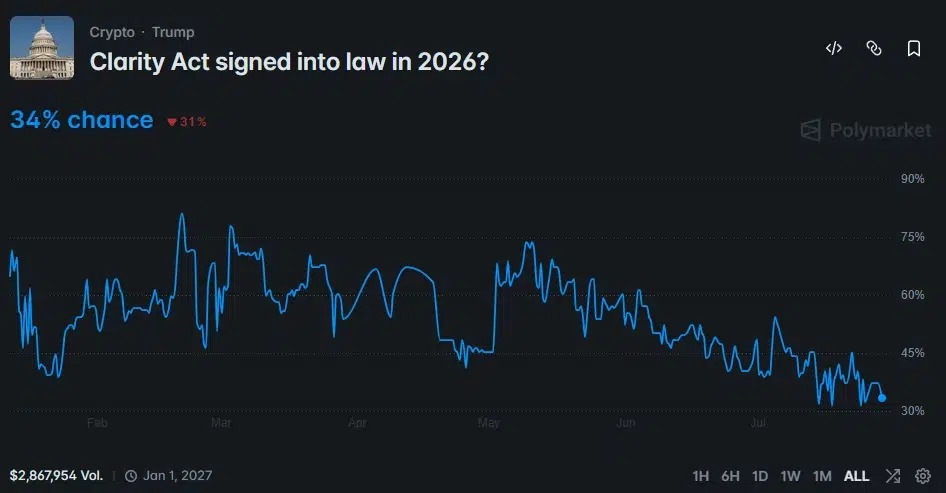


The CLARITY bill, which aims to establish a regulatory framework for digital assets in the United States, has encountered renewed resistance in the Senate. Several Democratic senators oppose the current version, arguing that the text is insufficient in terms of ethical constraints, consumer protection, anti-illegal financing, and market integrity. However, the opposition has not withdrawn from negotiations and remains willing to continue discussions with Republicans.
The controversy centers on ethics and law enforcement
The most prominent point of contention currently lies in whether public officials and senior government officials should be subject to stricter constraints on their involvement in crypto activities. Democratic lawmakers want to introduce stronger restrictions to prevent officials from influencing digital asset policy while simultaneously profiting personally from crypto businesses.
Besides ethics provisions, enforcement authority is another key point of contention. Some lawmakers believe the current draft bill does not adequately grant state attorneys general sufficient enforcement power, a point that has drawn attention from both parties. The report mentions that Senator Thom Tillis opposes the lack of ethics amendments, while Angela Alsobrooks criticizes the insufficient enforcement arrangements for state attorneys general.
The 60-vote threshold remains a key obstacle.
The goal of the CLARITY Act is to establish a clearer regulatory division for digital assets, clarify the responsibilities of different regulatory agencies, and reduce regulatory uncertainty for crypto businesses and investors. However, the bill still needs 60 votes in the Senate to move forward.
- Will ethical restrictions be further tightened?
- Have state attorneys general been granted greater law enforcement powers?
- Should consumer protection and anti-illegal financing provisions be strengthened?
Both parties still retain room for continued negotiations.
This means that even if Republicans want to expedite the process, the bill will be difficult to pass quickly as long as Democrats retain reservations about the core provisions. Judging from current statements, Democratic lawmakers opposing the current draft have not completely abandoned the bill, but rather hope to push for a bipartisan agreement after revisions.
The outcome of the subsequent negotiations will determine whether the United States can reach a bipartisan consensus on this cryptocurrency regulatory reform. If issues such as ethics, law enforcement, and consumer protection remain unresolved, the vote on the CLARITY bill is likely to be further postponed.