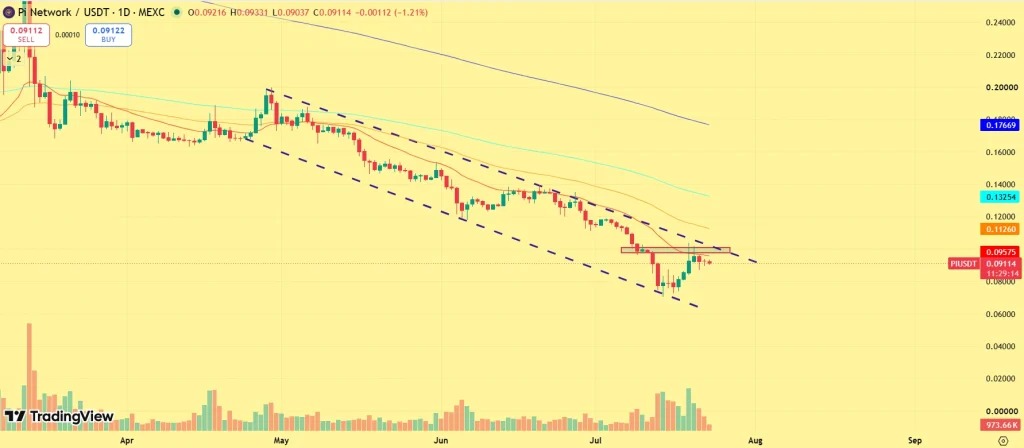

















Foreign media, citing analysts, reported that XRP's recent charts are simultaneously releasing both bearish and bullish signals. On the one hand, the price has broken below several key moving averages, indicating weak short- to medium-term momentum; on the other hand, it has risen above the downtrend line that has been suppressing it for months, causing the market to focus on whether this rebound has the potential to continue.
Breaking below multiple moving averages
Analysts point out that XRP is currently trading below its 20-day, 50-day, 100-day, and 200-day exponential moving averages. This typically indicates weakening buying pressure across multiple timeframes.
Once these moving averages are breached, they often turn from support to resistance. Holders who bought at higher levels may choose to exit during a rebound; short-term traders may also sell when prices recover, while funds waiting for clearer recovery signals may not immediately flow back in.
The downtrend line was broken.
The other set of signals is relatively positive. XRP has broken through a downtrend line that had been suppressing the rebound for months. Previously, this trend line had repeatedly limited the price's upward movement and created lower and lower temporary highs.
Analysts believe this indicates that buyers are beginning to attempt to break the existing downward trend. However, simply breaking the trendline is not enough to prove that the market has reversed.
Follow up by monitoring support levels.
More importantly, it depends on whether the price can hold the breakout area. If the original resistance level subsequently turns into support, the credibility of this breakout will increase; if the price falls back below the trendline, it may become an invalid breakout, or even form a bull trap.
Analysts say that what's more important than large single-day fluctuations going forward is the market's reaction to support levels. If prices briefly pull back and then quickly recover, it usually indicates that buying pressure is still defending the breakout level.
Conversely, if XRP continues to close below support and fails to regain key levels after multiple rebounds, the market may gradually accept a lower price range. Based on this assessment, for a clearer recovery to materialize, XRP first needs to hold its current breakout area and then gradually recover several key moving averages.